 Writers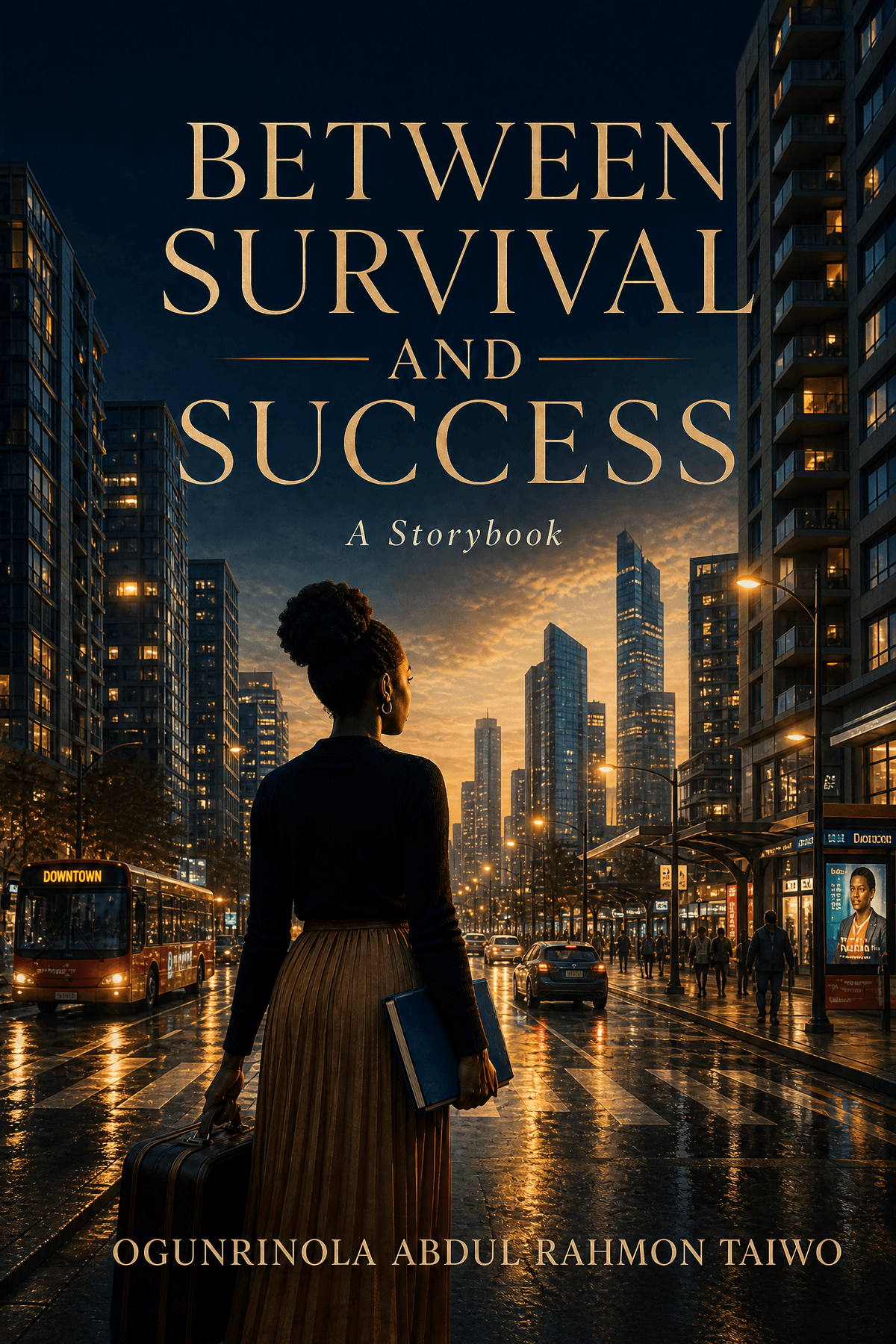
Between Survival and Success
An Article-Style Rewrite of the Story of Uswat
Original author: Ogunrinola Abdul Rahmon Taiwo
Dedication
For everyone who has ever been told to be realistic while carrying an impossible dream.
Contents
1. The Space Between Fear and Courage
2. The House of Small Things
3. A Scholarship and a Promise
4. The Beautiful Beginning
5. The Price of Being Promising
6. The Shape of Betrayal
7. The City That Did Not Care
1. The Space Between Fear and Courage
The letter inside Uswat’s faded denim jacket was not an acceptance letter. Years earlier, an acceptance letter had made her scream. This one was an invitation to speak at a national conference for young entrepreneurs. The organizers said her work had inspired thousands of people and asked her to explain how she had built Lantern House from a rented room and a secondhand laptop.
She read the letter in the dark while rain tapped against her window. Pride came first. Fear followed close behind. Uswat knew how to write about courage, but she was less certain that she could stand before strangers and claim that she possessed it.
The city did not pause for her achievement. It still demanded transport money, electricity bills, sick relatives, and replies to clients. A delivery motorcycle splashed muddy water onto her skirt. A bus conductor argued with a passenger. Two schoolboys wrestled over a pen beside a gutter. Life continued without making room for her success.
That ordinary morning taught her something important: pride and fear could occupy the same heart. Courage was not the disappearance of fear. It was the decision to carry fear without allowing it to choose the destination.
On the morning Uswat turned twenty-three, she stood at a crowded bus station with one suitcase, three hundred and twenty naira, and a letter that had already changed her life twice. Around her, buses coughed smoke into the pale morning. Conductors shouted destinations. Women arranged oranges into bright pyramids. Men dragged sacks across wet pavement. Somewhere nearby, a child laughed as if the world had never disappointed anyone.
Uswat had once believed success would announce itself. She imagined a clean office, a glass door with her name on it, enough money to stop her mother from counting coins, and applause from people who had once ignored her. At the bus station, however, she understood that success was not a destination at the end of a road. It was the road itself: the bruised feet, the missed turns, the people lost, the people who offered help without knowing its value, and the stubborn decision to keep moving when no one was clapping.
Three years earlier, Uswat had believed she had only two choices: survival or success. She did not yet understand that most lives were built in the narrow, trembling space between them.
2. The House of Small Things
When Uswat was young, she believed the family house became larger at night. During the day, every room was occupied by work. Her mother cooked near the doorway. Her father repaired taxi meters at the table. Her younger brother, Kelechi, scattered schoolbooks across the floor. Uswat studied wherever a small space remained.
At night, when the lamps were dimmed, the house seemed to breathe. Its walls held the family’s secrets without judging them. Everything in the house had a second use. Curtains had once been school uniforms. The dining table had belonged to a neighbor who moved abroad. Her father’s radio worked only when struck on the left side, and her mother’s cooking pot carried a silver patch where it had been repaired after cracking during a storm.
The house was small, but pressure made it smaller. Uswat woke to her mother coughing in the kitchen and Kelechi searching for a missing sock. Her father left before sunrise to drive his taxi and returned with tired eyes and a pocket full of coins that never seemed to equal the distance he had traveled.
Two doors away lived Shewa, Uswat’s oldest friend. Shewa understood the difference between Uswat’s angry silence and her frightened silence. Whenever home felt too crowded, Uswat climbed over the low wall between their compounds and found Shewa waiting with roasted corn, gossip, or both.
Shewa was also the first person outside the family to understand that Uswat’s ambition came from love rather than dissatisfaction. When Uswat said she wanted to leave town and study literature, Shewa threw a pebble at the mango tree.
“Leaving does not mean you hate this place,” she said. “It means you want to return with something useful.”
Uswat worried that leaving might turn her into a stranger. Shewa promised to remind her of the girl who borrowed blue pens and never returned them. The joke became a promise. In a world that constantly asked Uswat to become someone else, Shewa gave her permission to remember who she had been.
At school, Uswat learned that intelligence did not protect anyone from embarrassment. During a debate competition, her shoes opened at the toes. She spoke while hiding one foot behind the other. She won the debate, but afterward she cried behind the assembly hall because winning had not erased the shame.
Her literature teacher, Mr. Daramola, found her there. He did not tell her to stop crying. He sat beside her and said, “A difficult beginning is still a beginning.” Uswat wrote the sentence in the margin of her notebook. Years later, she would repeat it to young people who mistook difficult circumstances for evidence against their future.
At seventeen, she was the brightest student in her final year. Her teachers admired the essays she wrote about ordinary people: the woman selling roasted corn under the bridge, the boy repairing shoes beside the school gate, and the grandmother who could stretch one chicken into four meals.
“Your mind travels,” Mr. Daramola told her. “One day, you will take it somewhere.”
“Where?” Uswat asked.
“Wherever you can afford to go.”
He meant it as a joke, but the words followed her home.
Her father wanted her to study accounting because it was respectable, useful, and safe. When he said that writers needed luck, Uswat replied that she wanted to write. Her father answered that writing was what people did after they had eaten.
In their house, dreams were tolerated only when they could be converted into salaries. Her father saw education as a door and believed the family was pushing her toward it. Uswat understood that he was trying to protect her, but she also knew that a safe direction was not always her direction.
That year, she met Tunde Adebayo beside the school library. He was reading a business magazine upside down and claimed he was testing whether its ideas remained good from another angle. Tunde wanted to build companies and become rich enough that his children would never hear the word no. Uswat wanted to write stories that made people feel less alone.
“You want to change the world with words?” Tunde asked.
“I want to change one person’s day.”
He called that a small ambition. Uswat called it a large responsibility. Their friendship grew through walks home, roasted groundnuts, edited scholarship essays, secrets, and plans for a future neither could yet see clearly.
A week before the national examinations, her father brought home a newspaper clipping about a bank hiring junior accountants. The woman in the photograph looked unhappy to Uswat. To her father, she looked employed.
That night, Uswat climbed onto the roof outside her room and wrote in her exercise book:
> Some people inherit maps. Others inherit only the courage to get lost.
She did not know then how many times the years ahead would ask her to get lost.
3. A Scholarship and a Promise
The scholarship application required a personal statement. Uswat wrote it three times. The first version sounded like a speech designed to impress strangers. The second was so modest that it erased her effort. The third began with the smell of kerosene in the family kitchen and ended with a promise to use education to widen the road for others.
She submitted the application without telling her father. She respected him, but she knew his fear could become heavier than her hope. When the acceptance letter arrived, guilt and happiness arrived with it. She felt guilty for being excited about leaving and happy that leaving might give the family a chance.
The scholarship covered four years at Westbridge University, including accommodation, books, and a modest allowance. The program was for students with excellent grades and demonstrated leadership potential. Uswat did not know what leadership potential looked like. She knew only what it felt like to be tired and continue.
Her mother pressed the letter to her chest and cried. Her father asked where the university was. When Uswat said it was across the country, he warned that scholarships could end. She answered that everything could end. After a long silence, he folded the letter and said, “You will go.”
It was not joy, but it was permission.
The weeks before her departure became a series of small ceremonies. Neighbors congratulated her mother. Teachers spoke about Uswat as if she had already become important. Aunties advised her to avoid bad friends, boys, and expensive shoes.
Shewa gave her a small blue cloth purse for the money she would earn when she became famous. Tunde gave her a blue notebook for her great ideas. When she asked about his own great business, he said it was thinking about her. Their first kiss happened beside the old science block under a sky heavy with rain. It was brief, awkward, and perfect.
On the morning Uswat left, her mother packed fried plantain, boiled eggs, and enough advice to fill the suitcase. Kelechi made her promise to call every evening. Her father drove her to the bus station in silence. Before the bus left, he told her not to forget where she came from.
The bus pulled away. Her family grew smaller through the window. Uswat felt afraid, but beneath the fear was something brighter.
For the first time, her life seemed to belong to her.
4. The Beautiful Beginning
Westbridge University was beautiful and expensive. Its red-brick buildings and broad lawns impressed Uswat, but the hidden costs frightened her. Books cost money. Printing cost money. Laundry cost money. Even belonging appeared to have a price measured in clothes, phones, accents, and the ease with which students entered spaces she had to study before entering.
Her roommate, Zainab Bello, came from a wealthy family and owned three suitcases for a four-month semester. They negotiated their differences. Zainab played music while Uswat studied. Uswat demanded silence during examinations. Zainab shared snacks, and Uswat shared lecture notes. Their room became a small republic with its own laws, arguments, and midnight laughter.
At the campus newspaper, Uswat met Aleeyah Martins, a photography student who believed every important story needed both a voice and a face. Aleeyah encouraged her to look beyond obvious suffering.
“Show their hands,” she said, “not only their burdens.”
Uswat began writing a column called “The Ordinary Life.” She wrote about unpaid student workers, cafeteria cooks, security guards, and the invisible economies that kept the university alive. Students quoted her articles in the cafeteria. Lecturers began asking who she was. One article was shared by a national news platform, and for one sparkling week she believed she had found the road to success.
Then her allowance was delayed.
The scholarship office blamed the finance office. The finance office blamed the bank. The bank blamed a missing document. For three weeks, Uswat lived on noodles, tea, and Zainab’s kindness.
She resisted taking help because she thought independence meant refusing it. Zainab corrected her: independence was choosing what to do with help.
During the same period, Tunde’s calls became fewer. Messages replaced calls, and short answers replaced messages. When he finally called, he said Uswat sounded like one of those university people who thought they were too good for home.
Uswat reminded him that she wrote about people from home. Tunde answered that writing about people was not the same as remembering them. She said she was trying to move forward. He replied that perhaps moving forward and leaving him behind were the same thing.
After the call, Uswat sat on the floor with her knees against her chest. Zainab brought tea and offered to break the heart of whoever had hurt her. Uswat laughed despite herself.
That night, she wrote in Tunde’s blue notebook:
> Love should be a bridge, not a rope.
She did not yet know whether she believed it.
5. The Price of Being Promising
In her second year, Uswat entered a national writing competition. The winner would receive money, a publishing contract, and an internship at a respected media house. She spent two months writing a novella about a girl who sold bread at a bus stop while dreaming of becoming an engineer.
She wrote between lectures, in noisy cafeterias, and beneath the thin light of the dormitory bathroom while Zainab slept. The story was not perfect, but it was honest. Uswat submitted it three hours before the deadline.
Soon afterward, a student named Chike invited her into a creative collective. He was confident, charming, and surrounded by people who made important things happen. He praised Uswat’s ideas and called her the strongest writer in the group. The collective met in a bright apartment where members drank expensive coffee and discussed creative disruption.
When the competition shortlist was announced, Uswat saw Chike’s name.
Her story had been submitted under his name.
Chike called it collaboration. Uswat called it theft. There was no written agreement, and Chike produced an earlier draft with his name on it. Uswat had messages, dates, and witnesses, but not enough money for a lawyer.
The competition disqualified both of them. Uswat lost the prize. Chike lost nothing he could not replace.
The betrayal changed the shape of ordinary kindness. Praise sounded like preparation for another theft. When a lecturer admired her essay, she wondered whether he wanted to use it. When a classmate asked for notes, she searched for hidden motives.
Aleeyah refused to let the betrayal define her. She printed every draft and placed them in a folder. On its cover she wrote:
> Evidence that you existed before they noticed you.
She urged Uswat to trust carefully rather than never.
“Never,” she said, “is loneliness wearing a uniform.”
Uswat’s grades suffered. She tried so hard to prove that the stolen story had not broken her that she exhausted herself. Then she failed an examination.
For one night, she imagined returning home, accepting an office job, and never again offering her imagination to people who might misuse it.
A cleaner named Mrs. Bisi found her outside a lecture hall and said, “Failure is not a funeral. It is a report. Read it and improve.”
Uswat retook the examination and passed. She began to understand that success was not built by avoiding failure. It was built by refusing to waste what failure had taught.
Mr. Daramola later called her from an unknown number. When Uswat said she had stopped writing because she had been foolish, he told her that foolishness and betrayal were different things. Her story had been stolen, he said, but not her ability to tell another one.
The next morning, Uswat returned to the cafeteria and listened. She heard workers arguing about rent, a first-year student crying over a failed examination, and a cleaner humming while sweeping the floor.
By evening, she opened the blue notebook and wrote one sentence, then another.
She did not feel healed, but she had begun.
6. The Shape of Betrayal
The end of Uswat and Tunde’s relationship was painful because there was no villain. They had loved each other honestly and then grown in directions neither could control. Their dreams had once fitted together. Later, each dream belonged to a different frame.
Their relationship faded through missed calls, postponed visits, and resentments neither could name. Tunde studied computer engineering and worked nights repairing phones. Uswat spoke about articles and internships. Tunde spoke about customers and rent.
She feared he thought she was changing. He feared she thought he was not changing fast enough.
Their final conversation came on a Sunday morning. Tunde asked whether they were still together. Uswat admitted she did not know.
He said that was not an answer.
She replied that it was the most honest answer she had.
They ended the call without saying goodbye.
Three months later, Zainab showed Uswat a photograph of Tunde with another woman. The caption called the woman his answered prayer.
Uswat wanted not to care, but caring was not a switch. It was a tide. It returned when she passed the science block, found the blue notebook, or received good news and instinctively searched for Tunde’s name.
Shewa stayed with her through the heartbreak. When a telephone connection failed, Shewa called again. She did not demand an explanation. She simply told Uswat to stay on the line.
Sometimes companionship is not advice. Sometimes it is the decision to remain present while another person breathes through pain.
At the same time, pressure at home grew. Kelechi needed examination fees. Her father’s taxi had been damaged in an accident. Her mother’s cough required treatment. Uswat began to believe that every personal desire was selfish while her family needed practical solutions.
She wrote two columns in her notebook:
What I owe my family**
and
What I owe myself.
The first filled quickly. The second remained blank until she wrote:
> A life I can live without disappearing.
That sentence became a boundary. Helping her family would remain part of her life, but sacrificing every dream would not be the only proof of love.
Uswat took jobs editing essays and entering data at a pharmacy. She slept four hours a night until a lecturer offered her a paid research assistant position. The work was demanding, but it paid enough to send money home and keep herself fed.
At graduation, she wore a borrowed gown. Her mother and Kelechi attended. Her father could not travel because of his injured leg, but he called before the ceremony and said he was proud of her.
It was the first time he had said it plainly.
Uswat carried the sentence with her for years.
7. The City That Did Not Care
After graduation, Uswat moved to the capital with two bags, a recommendation letter, and the confidence of someone who had not yet been rejected by enough employers.
The city tested her in ways school never had. At university, failure came with grades and explanations. In the city, rejection often arrived without a reply. Applications disappeared into inboxes. Interviews were canceled without apology. Employers praised her portfolio and offered salaries that could not cover transport.
She rented a room in a house divided among six tenants. The roof leaked, the water supply was unreliable, and every morning she joined a river of commuters moving through dust, traffic, and impatience.
She eventually found work at a small digital agency run by Mr. Vale.
The salary was low, but the agency produced campaigns for restaurants, schools, and small businesses. Uswat wrote advertisements, social media posts, speeches, and sometimes entire websites under other people’s names.
Mr. Vale praised her talent by giving her more work.