 Writers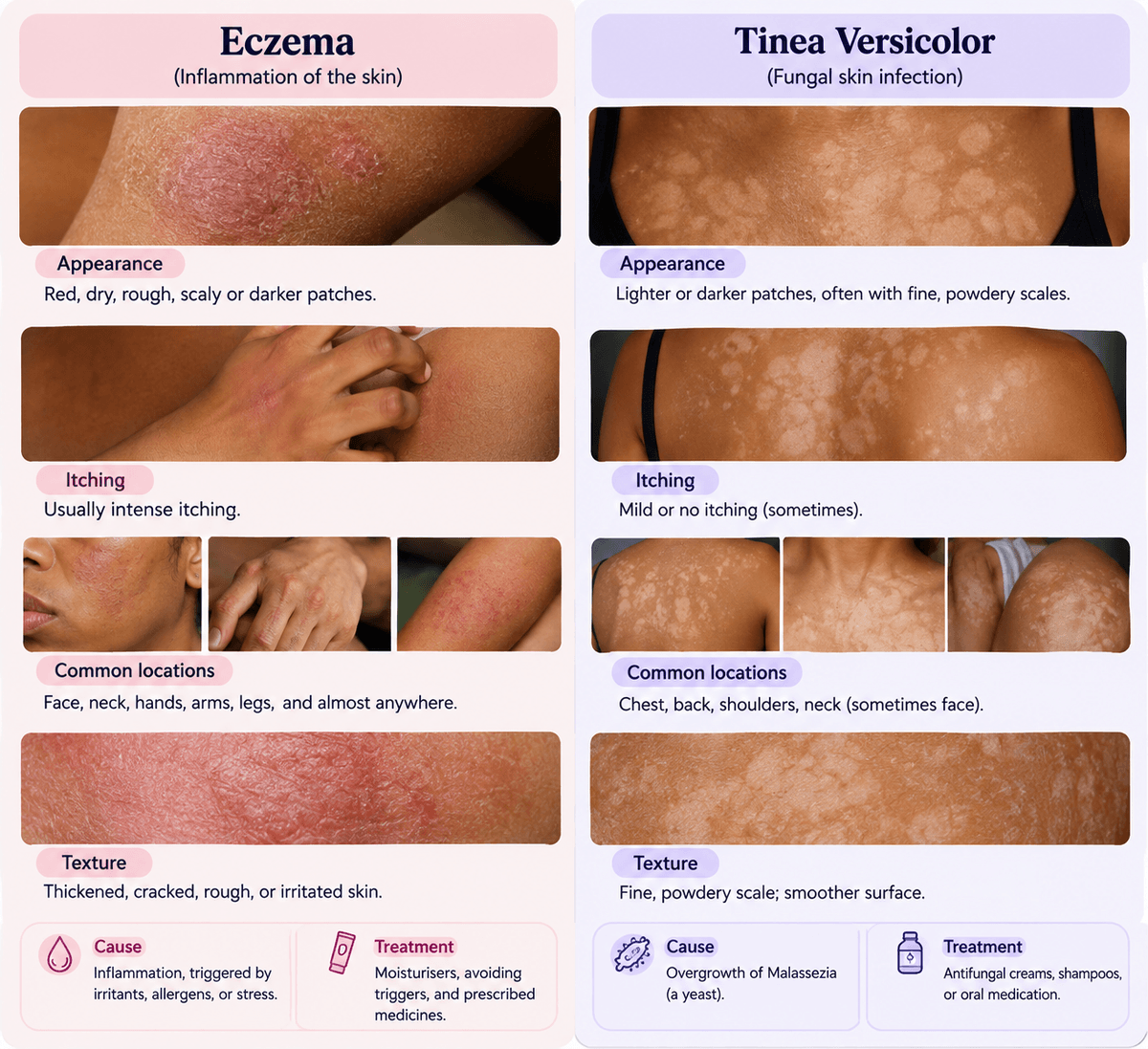
Have you ever noticed patches on your skin and wondered whether they were eczema or a fungal infection? These two skin conditions can look similar, especially on darker skin, but they have different causes, symptoms, and treatments. Understanding the difference can help you make better decisions about your skincare and know when to seek professional advice.
What Is Eczema?
Eczema is a skin condition that causes inflammation, dryness, itching, and irritation. It can affect different parts of the body, including the face, neck, hands, arms, and legs. Depending on your skin tone, eczema may appear red, brown, grey, or darker than the surrounding skin.
One of the most noticeable signs of eczema is itching. The affected area may feel rough, become scaly, or develop small bumps. In some cases, scratching can worsen the irritation and damage the skin barrier.
Eczema is not contagious. It can be triggered by factors such as harsh soaps, fragrances, certain skincare products, stress, weather changes, and other irritants. Although it can be managed with appropriate skincare and prescribed treatment, symptoms may return from time to time.
What Is Tinea Versicolor?
Tinea versicolor is a common fungal skin condition caused by an overgrowth of Malassezia, a yeast that naturally lives on the skin. When this yeast grows excessively, it can interfere with normal pigmentation and produce patches that look lighter or darker than the surrounding skin.
These patches commonly appear on the chest, back, shoulders, and neck, although they can sometimes affect the face. They may have a fine, powdery scale and can occasionally cause mild itching, especially in hot or humid weather.
Tinea versicolor is not a sign of poor hygiene, and it is not usually spread from person to person. It is more common in warm, humid climates and may return even after successful treatment.
How Can You Tell the Difference?
The first clue is the appearance of the affected skin. Eczema often causes dry, inflamed, rough, and intensely itchy patches. Tinea versicolor, on the other hand, usually appears as scattered lighter or darker patches with fine scaling.
The second clue is the level of itching. Eczema can be very itchy, while tinea versicolor may cause little or no itching. However, symptoms can overlap, so itching alone cannot confirm either condition.
Location can also provide a clue. Eczema can occur almost anywhere on the body, whereas tinea versicolor commonly affects areas such as the upper back, chest, shoulders, and neck.
Finally, consider the texture. Eczema may cause thickened, cracked, or irritated skin, while tinea versicolor often has a finer scale and smoother surface.
Do They Have the Same Treatment?
No. Eczema is commonly managed with moisturisers, avoiding triggers, and medicines recommended by a healthcare professional. Tinea versicolor usually requires antifungal treatment, such as an appropriate antifungal cream or shampoo.
Using the wrong treatment can worsen certain skin conditions. In particular, steroid creams should not be used to treat a suspected fungal infection unless a healthcare professional has advised you to do so.
Even after tinea versicolor has been treated successfully, the skin may take weeks or months to regain its usual colour. This does not necessarily mean the fungus is still present.
When Should You Seek Medical Advice?
If you are unsure what is causing your patches, a dermatologist or other qualified healthcare professional can examine your skin and may perform a simple skin scraping to help confirm the diagnosis.
Remember: Healthy skincare begins with understanding your skin, not guessing what it needs. Eczema and tinea versicolor can look alike, but recognising their differences can help you find the right treatment and protect your skin's health.