Writers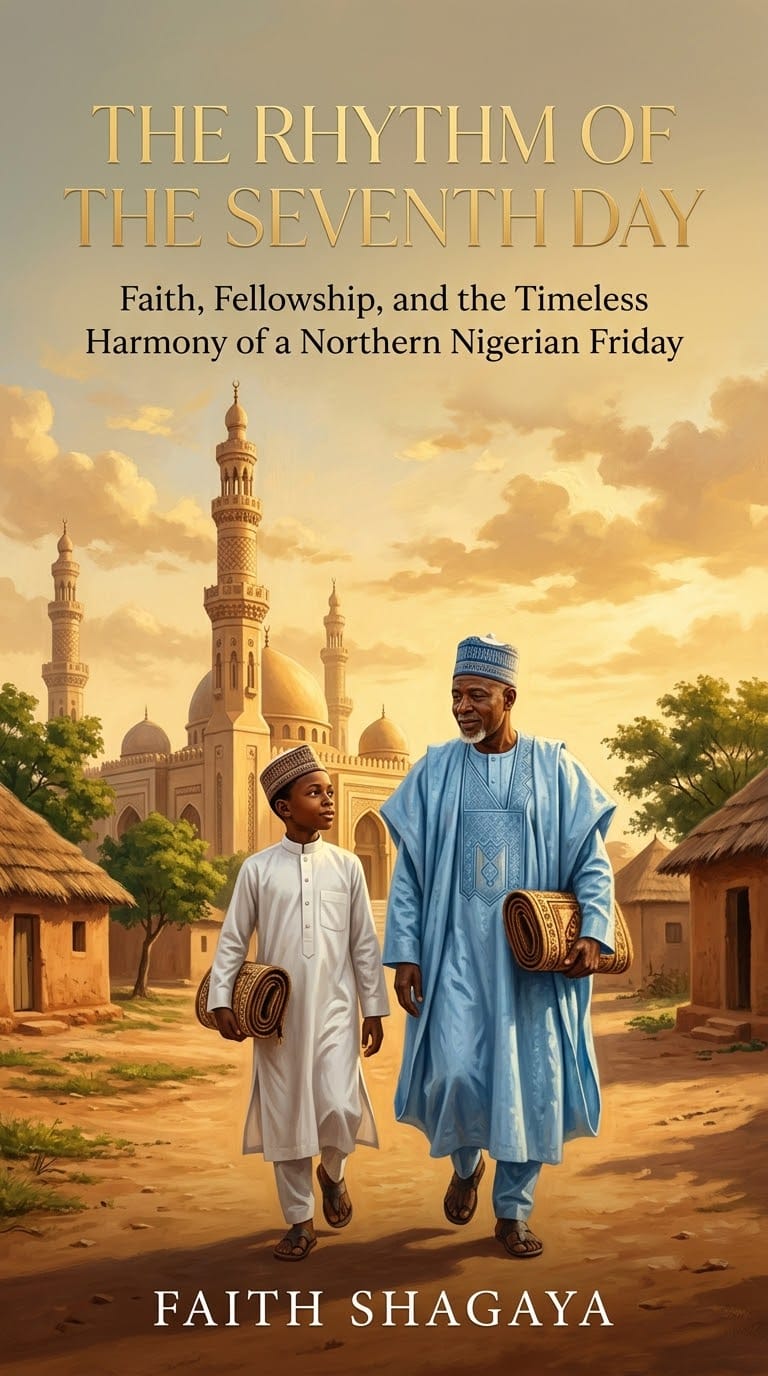
In Minna, Friday doesn't arrive with a bang. It unfolds slowly, like a familiar song that everyone knows by heart. Long before the sun touches the reddish-brown rooftops, the whole city is quietly getting ready.
For twelve-year-old Usman, the day begins with the sound of water splashing on stone in the courtyard. Fridays call for extra cleanliness. His mother, Hajiya Amina, has been up since dawn, heating big pots of water over charcoal fires. By six o'clock, the air smells of menthol soap, crushed eucalyptus leaves, and fresh laundry drying on the line.
**Morning Preparation**
Friday mornings are calm, unlike the rush of other weekdays. Everyone in the house moves with purpose but without hurry. Usman helps his father, Malam Ibrahim, brush out the family's best robe, a heavy sky-blue embroidered Babban Riga that smells faintly of sandalwood and lavender.
In the kitchen, the Friday meal is already underway, because in Northern Nigeria a big shared meal after the afternoon prayers is part of the day. A large pot of tuwo shinkafa, a soft rice swallow, is being stirred with a long wooden spoon. Next to it, miyan kuka, a dark green baobab leaf soup made with dried fish, locust beans, and tender beef, simmers slowly over low embers.
After a thorough bath, Usman puts on a clean white kaftan and a hand-knotted kufi cap. His mother dabs sweet, alcohol-free perfume on his wrists and behind his ears, so a warm scent follows him wherever he goes.
**Prayer at the Grand Mosque**
By half past twelve, the neighborhood has turned into a sea of white, cream, and sky-blue clothing. The streets, usually crowded with motorcycles, fall quiet as thousands of men and boys walk together toward the Central Juma'at Mosque.
Walking beside his father, Usman feels proud. He matches his father's steady pace and greets the elders they pass with respectful bows. The boys call out "Sannu da Juma'at, Baba," and the elders answer with warm blessings.
Inside the mosque courtyard, thousands of people spread their prayer mats beneath the tall minarets. The Imam's voice carries over the speakers as he preaches about charity, kindness to neighbors, and patience. A deep calm settles over the crowd. When everyone stands shoulder to shoulder for the prayer, the sense of unity is powerful. Thousands bow and kneel together, their voices rising as one.
**An Afternoon of Community**
The prayers end around two o'clock, and the city comes alive with friendly energy. Outside the mosque gates, people greet each other happily. Elders stand in circles sharing neighborhood news, while young men laugh and make plans for the weekend.
At home, the compound gates stand wide open. In Northern tradition, Friday lunch is meant to be shared. Neighbors, distant relatives, and passing visitors drop by without a formal invitation and gather around large trays of steaming tuwo shinkafa. They also drink cold glasses of fura da nono, a refreshing mix of millet balls mashed into fresh milk and sweetened with ginger.
Usman sits with his cousins in the shade of the big mango tree, dipping his fingers into the green soup. Laughter and conversation flow as freely as the food, and nobody feels like a stranger.
As the sun sinks and paints the Gwari hills a soft red, the gentle sound of a musician's molo lute drifts over from a nearby tea stall. Usman leans back against the tree trunk, full, relaxed, and happy. The week had brought its share of rush and heat, but Friday had given him what it always promises: peace, friendship, and the warmth of home.
Would you like a cover page for this one too, or a few title options?