Writers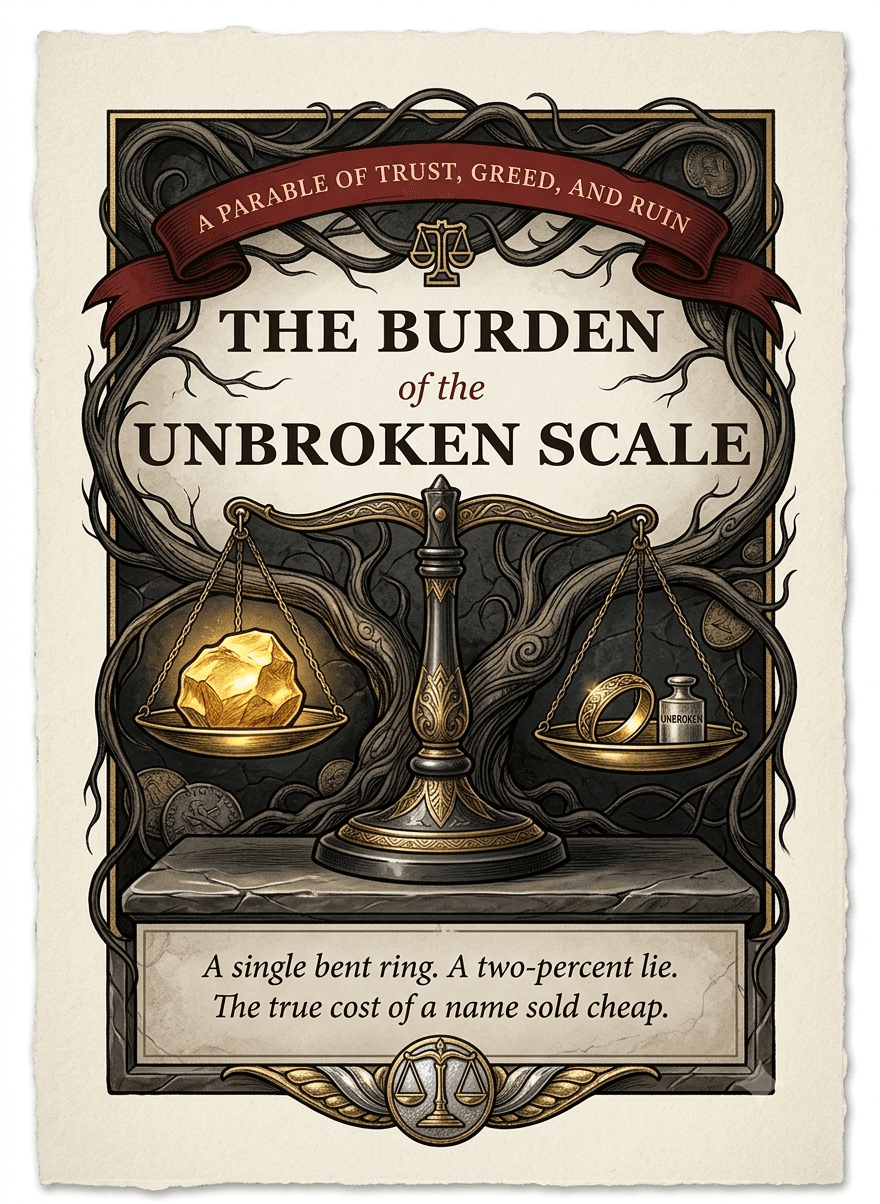
In the town of Wushishi, 23-year-old Ibrahim took over his father's grain shop at the market. Along with the shop, he inherited an old brass scale — the same one his father, Old Usman, had used for thirty years. People called his father "Usman the Trustworthy" because his weights were always honest, down to the last grain.
After his father died, Ibrahim ran the business, but he was impatient. He watched other merchants driving nice trucks and wearing fine clothes, and he felt his father had been "too soft," leaving behind only a modest shop instead of real wealth. His sister Aisha disagreed — she believed their father had built something more valuable: a trusted name.
One day, Ibrahim noticed something strange about the old scale. One side was slightly bent from years of use, so it quietly cheated buyers by about two percent — just a couple of cups of grain per sack. It was nearly impossible to notice. Ibrahim knew he should fix it, but he told himself it was harmless and that the extra profit would help him build a bigger warehouse.
So he left it broken — on purpose.
At first, this "extra" grain made him rich quickly. His profits doubled, he hired workers, and expanded his shop, while still boasting to customers about his family's honesty. Farmers trusted him, especially an old man named Pa Bello, who sold his best sorghum to Ibrahim to help pay for his granddaughter's education — never suspecting he was quietly being cheated.
Then came a huge opportunity: the government needed 300 bags of sorghum for flood relief, and a strict official named Director Garba offered Ibrahim the contract — remembering how honest his father had been. Excited, Ibrahim rushed to buy enough grain, weighing everything on his faulty scale, unaware that every bag was actually missing weight.
When he delivered the sacks to the government depot, they were weighed on an accurate digital scale. Every single bag was short — consistently, exactly two percent light. This wasn't an accident; it was proof of deliberate cheating. Director Garba was furious. He canceled the contract, tore up the payment voucher, and banned Ibrahim from ever doing business with the government again.
Word spread quickly. When Ibrahim returned home, a crowd — including Pa Bello — had already gathered. Someone tested his scale properly, and it was obvious to everyone: it had been broken and unfair the entire time. Ibrahim had been secretly stealing from his neighbors and customers for months.
Pa Bello, heartbroken, told Ibrahim quietly that he hadn't just lost grain — he had lost his faith in honesty itself. Then he walked away in silence.
To repay his debts and refund the farmers he had cheated, Ibrahim had to sell everything. He lost his license, his warehouse deal, and his new sign came down. Soon, the shop stood empty.
Sitting alone on the floor, Ibrahim stared at the old scale. Beside him were small tools he had bought to fix it — tools that would have cost almost nothing months earlier, if only he had used them honestly from the start.
His sister Aisha came in quietly, sat beside him, and gently held his hand. She told him the money was gone. Through tears, Ibrahim admitted the truth: he had tried to tip the scale in his favor, but in doing so, he had only proven how little his own integrity was worth.
Then, slowly, he picked up the file and began repairing the scale — not to cheat anymore, but to make it honest again, and to start rebuilding, piece by piece, the trust he had broken.