Writers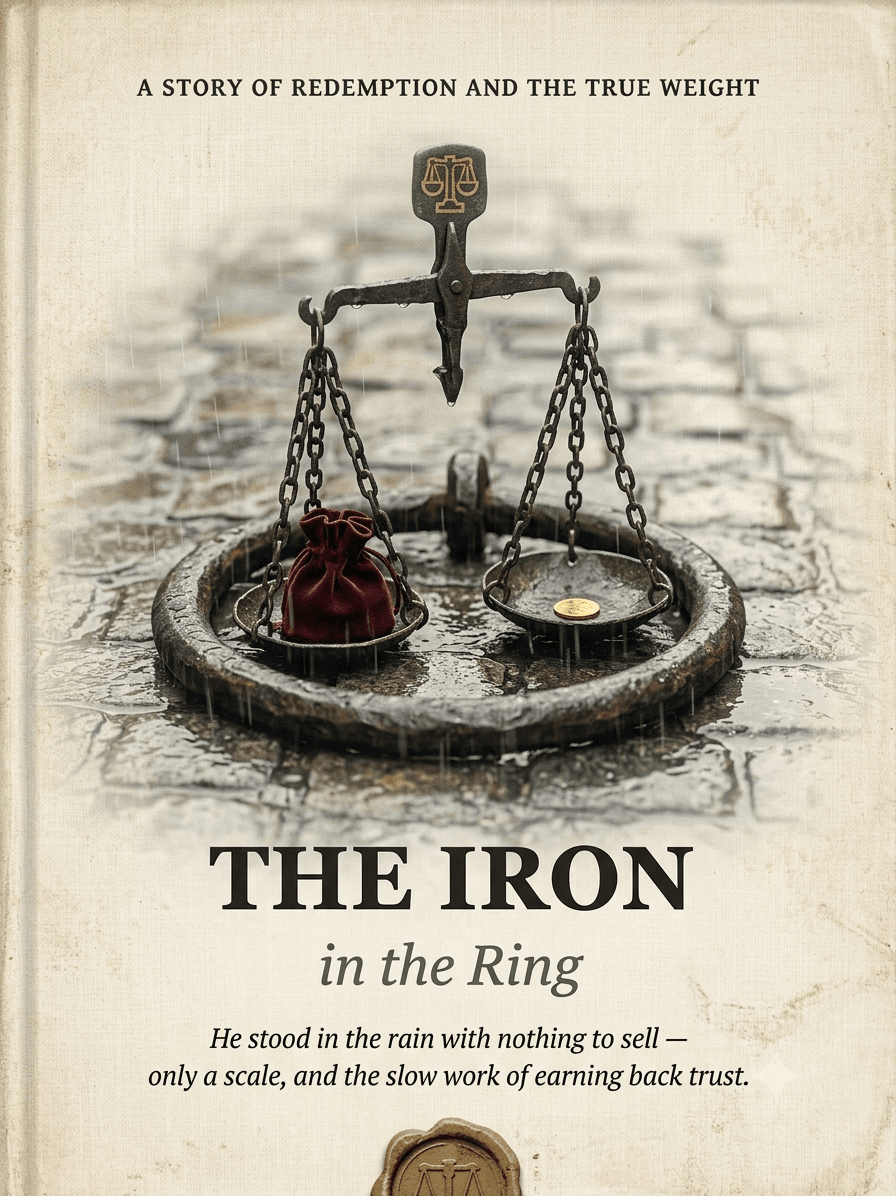
Heavy rains turned the market town of Wushishi muddy in early May. Most shop owners stayed inside, but 23-year-old Ibrahim stood outside his father's empty stall in the rain. He had no trading license and no grain to sell. He only had his father's old brass scale — now fixed and perfectly accurate — along with a barrel of water, a brush, and empty sacks.
When a porter named Bawa asked what he was doing, Ibrahim said simply, "I'm not trading. I'm cleaning sacks and double-checking people's grain weight — for free." Bawa doubted anyone would trust him again, but Ibrahim said he'd wait as long as it took.
For three weeks, Ibrahim showed up every day. He helped farmers unload their carts and offered to verify their purchases on his accurate scale, asking for nothing in return. Many people ignored or mocked him, remembering how he had cheated them before. Ibrahim never got angry — he just kept helping.
Then, one hot afternoon, everything changed. A young farmer named Danjuma — Pa Bello's nephew — rushed into the market with a truck full of maize. His wife was in labor, and he urgently needed money for the hospital. He sold his maize to a wealthy merchant, Chief Mallam, whose scale showed each sack weighing less than it should. Danjuma knew his maize was full-weight, but Chief Mallam refused to budge, knowing Danjuma had no time to argue.
Ibrahim saw what was happening and stepped in. Though he had no license and no right to trade, he offered his personal scale as a neutral, honest test — and promised to pay for any shortfall out of his own pocket if his scale was wrong. A crowd gathered to watch as Ibrahim weighed the sacks. Every single one came out to a perfect fifty kilograms — proving that Chief Mallam's scale had been secretly cheating Danjuma out of hundreds of kilograms of maize.
Caught in front of everyone, Chief Mallam was forced to pay Danjuma fairly. Danjuma thanked Ibrahim with tears in his eyes and rushed off to be with his wife.
News of what happened spread fast. People began to see that the same man who once cheated others with his scale was now using it to protect them.
A few days later, Pa Bello — the farmer Ibrahim had wronged earlier — walked up to his stall. Without saying much, he placed a small bag of sesame seeds on the scale and asked Ibrahim to weigh it. The scale showed exactly ten kilograms. Pa Bello looked at Ibrahim, then at a photo of his late father, and smiled gently.
"Your father's scale is true again," Pa Bello said. "Come with me. It's time to get your license back."
By October, with the support of over fifty local farmers — led by Pa Bello and Danjuma — the government restored Ibrahim's trading license.
When Ibrahim reopened his father's shop, he didn't rush to buy a fancy sign or a big warehouse. Instead, he carved a small wooden plaque and hung it beneath the scale. It read simply:
**THE TRUE WEIGHT**
From then on, every single morning before doing any business, Ibrahim tested his scale with a certified weight, watched it settle evenly, and reminded himself of something important: true wealth isn't measured by how full your warehouse is — it's measured by how honest you remain, even when no one is watching.