 Writers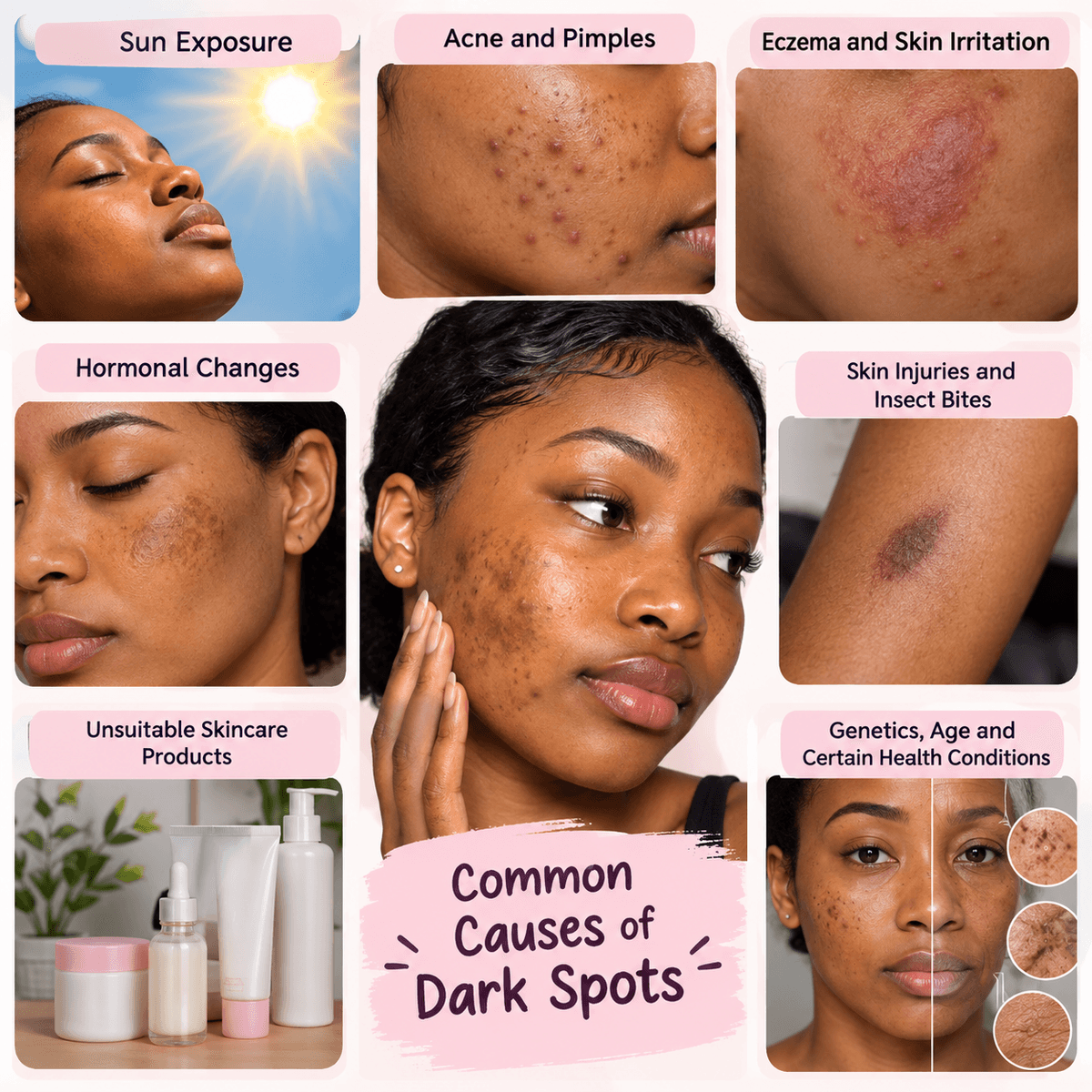
Have you ever noticed dark spots appearing on your face or body and wondered where they came from? Dark spots are a common skin concern that can affect people of all skin tones. They may appear on the cheeks, forehead, chin, neck, hands, or other parts of the body. Understanding what causes these spots is the first step toward caring for your skin properly.
Dark spots are often associated with a condition called hyperpigmentation, which occurs when the skin produces excess melanin, the pigment responsible for its natural colour. Several factors can contribute to this change in pigmentation.
1. Sun Exposure
One of the common causes of dark spots is exposure to sunlight. Ultraviolet (UV) rays stimulate the skin to produce more melanin as a protective response. When melanin accumulates unevenly, dark patches or spots may develop, especially on areas frequently exposed to sunlight, such as the face, neck, and hands.
Without adequate sun protection, existing dark spots may also become darker and take longer to fade.
2. Acne and Pimples
Have you ever noticed a dark mark where a pimple used to be? This is a common example of post-inflammatory hyperpigmentation.
When acne develops, the inflammation can stimulate excess melanin production in the affected area. After the pimple heals, a brown, dark brown, or greyish mark may remain. Picking, squeezing, or scratching pimples can increase inflammation and make these marks more noticeable.
3. Eczema and Skin Irritation
Skin conditions such as eczema can cause inflammation, itching, and irritation. As the skin heals, it may leave behind darker patches, particularly in people with darker skin tones.
Harsh skincare products, allergic reactions, and products that irritate the skin can also contribute to dark spots. Ingredients that cause burning, stinging, redness, or persistent itching should not be ignored. Continuing to use an irritating product may worsen the problem.
4. Hormonal Changes
Hormonal changes can trigger certain types of hyperpigmentation. One example is melasma, which appears as brown or grey-brown patches, commonly on the cheeks, forehead, and upper lip.
Melasma may be associated with pregnancy, hormonal medications, and other hormonal influences. Sunlight can make these patches more noticeable.
5. Skin Injuries and Insect Bites
Cuts, burns, scratches, and insect bites can sometimes leave dark marks after healing. This happens because inflammation or injury may stimulate the skin to produce additional pigment.
Avoiding repeated scratching and allowing the skin to heal properly can help reduce further irritation.
6. Using Unsuitable Skincare Products
Not every skincare product works for every skin type. Products containing irritating ingredients, or using too many active ingredients at once, can damage the skin barrier and trigger inflammation.
Some unregulated skin-lightening products may also contain harmful ingredients. Instead of improving the skin, inappropriate products can cause irritation, uneven pigmentation, and other complications.
7. Genetics, Age, and Certain Health Conditions
Genetics can influence a person's tendency to develop freckles or pigmentation. Sun-related spots may also become more common with age and years of sun exposure.
In some cases, medications or medical conditions affecting hormones or other body systems can contribute to skin darkening. Persistent or unexplained changes should therefore be assessed by a healthcare professional.
How Can You Prevent Dark Spots?
Preventing dark spots starts with understanding their cause. Use gentle skincare products, avoid picking pimples, and protect your skin from sunlight with shade, protective clothing, and a broad-spectrum sunscreen of SPF 30 or higher if your skin tolerates it. Introduce new products carefully, especially if your skin is sensitive.
Dark spots often fade gradually, but this can take months or longer. Avoid harsh scrubs, bleaching products, and unprescribed treatments that promise instant results.
Remember: Healthy skin does not have to be perfectly even in colour. If a spot changes rapidly, develops irregular borders, bleeds, or looks unusual, seek medical advice. A dermatologist can help identify the cause and recommend suitable care.
Your skin deserves patience, protection, and gentle care—not punishment.