Writers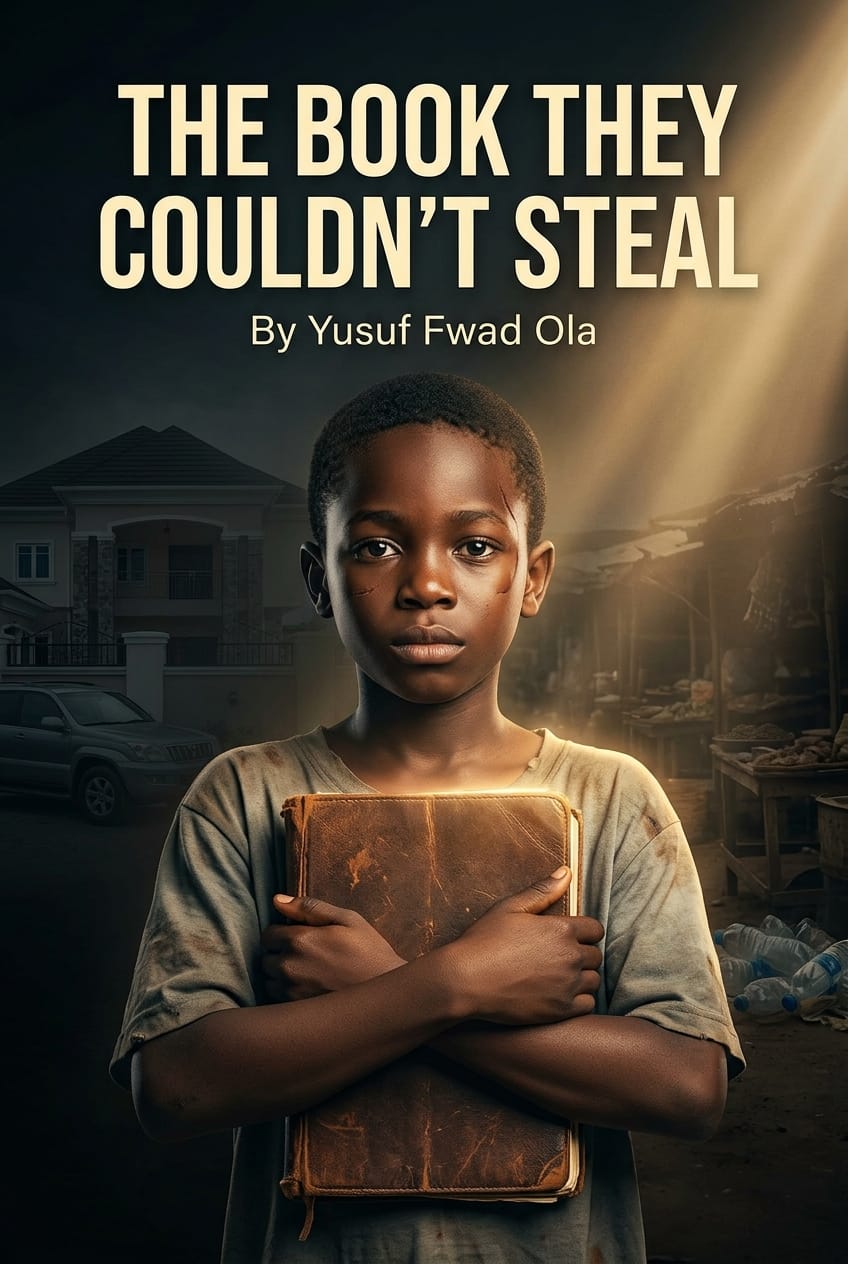
Their new home was a single room in a face-me-face-you compound in Tanke, a busy and noisy part of Ilorin far removed from the quiet, gated street Suleiman had grown up on. The room had one small window, a bare cement floor, and just enough space for a mattress, a small table, and the few boxes of belongings they had managed to keep.
It smelled different from home of other people's cooking, of dust, of a kind of life Suleiman had never had to notice before because it had never touched him. Ten other families lived in the same compound, sharing two bathrooms and one outside tap that sometimes ran and sometimes didn't.
His mother, once a woman who oversaw a household staff, now took whatever work she could find. She cleaned houses five streets away. She washed clothes for neighbors who could afford to pay someone else to do it. Some weeks, she sold sachets of pure water at a junction nearby, balancing a tray on her head under the sun for hours, the same woman who used to sit in a cushioned chair and sip tea while discussing her son's school fees with quiet confidence.
There were weeks so lean that Suleiman's mother had to knock on Mama Ada's door to borrow garri, just enough to soak in cold water with a little sugar and groundnut for dinner, promising to return it as soon as something comes. Suleiman remembers those nights strangely, not only for the hunger, but for the odd, aching comedy of watching his mother, a woman who once instructed a cook on how to prepare jollof rice for forty wedding guests, now carefully rationing spoonfuls of soaked garri between the two of them, counting each spoon out loud like it was gold. "One for you, one for me, one for you," she would say, and despite everything, they would sometimes end up laughing at how seriously they both took the counting, as though a miscounted spoon of garri might start a war.
Suleiman watched his mother shrink in some ways and grow in others. She lost weight. Her hands became rough and calloused. But her spine never bent. Every single night, no matter how exhausted she was, she still asked him about his day, still made sure he said his prayers, still insisted even when there was barely enough food for one that he eat before she did.
"I'm not hungry," she would say, and Suleiman, even as a child, knew it was a lie.
School fees became a battle fought every single term. The private school was long gone, replaced first by a public school, and later, when even that became difficult to maintain, by long stretches where Suleiman didn't attend school at all. He watched other children his age walk past in uniforms while he sat outside their compound, doing nothing, waiting for a version of normal life he wasn't sure would ever return.
It was during one of those long gaps, when there was no fee money and no clear plan for when there might be, that Suleiman began going to Tanke market to look for work.
He was eleven years old the first time he picked through a rubbish heap for something to sell.
At first, it was small things like; helping traders carry goods for a few money, sweeping stalls before they opened for the day. But the money was inconsistent, and hunger doesn't wait patiently for consistency. Eventually, an older boy from the compound showed him how to search through the refuse behind the market for empty plastic bottles and scrap metal, which a recycling dealer nearby would buy by weight.
It felt like a betrayal of everything he used to be. The boy who once had a driver now dug through other people's trash with his bare hands, sweating under a sun that showed no mercy, competing with flies and stray dogs for the same pile of rubbish.
He never told his mother exactly what he was doing to earn the small coins he brought home. He simply said he was "helping traders," and she, drowning in her own exhaustion, didn't press him further. Perhaps some part of her already suspected. Perhaps some part of her, like him, had learned that certain truths were easier to survive if they remained unspoken.
Every evening after scavenging, Suleiman would return to their small room, wash his hands and arms thoroughly, and take out his father's notebook. He still hadn't opened it to read because some fear kept him from doing that but he would hold it, run his fingers along its worn leather cover, and remember, for a few quiet minutes, that he had once been someone else. Someone with a father. Someone with a future that felt certain.
Mama Ada, the food seller who had once loaned them garri without complaint, also had a habit of loudly narrating her own life to anyone within earshot, whether they asked or not, and Suleiman found himself, on his better days, genuinely entertained by her. "This economy," she would announce to the entire compound while stirring a pot big enough to bathe a toddler in, "has dealt with me like a debtor who refuses to pick calls. I have called it, I have sent it text message, nothing" The other tenants would laugh despite themselves, and even Suleiman, carrying the weight he carried, occasionally found a small, surprised laugh escaping him — the kind of laugh that felt almost illegal in a life as heavy as his had become.
One evening, as he sat outside their room cleaning mud off a pair of bottles he'd found, Mama Ada stopped and looked at him for a long moment.
"You don't talk like the other boys around here," she said, not unkindly. "You don't act like them either. Where did you people come from before this place?"
Suleiman looked up at her, unsure how to answer. How could he explain three buildings and a driver and a father whose name once meant something? How could he explain that he used to be someone people respected, before he became just another boy digging through rubbish for bottles?
"We came from somewhere, ma" he said simply, and returned to his bottles.
Mama Ada studied him a moment longer, something like understanding or perhaps pity crossing her face. "This life you're living now," she said quietly, "it is not the end of your story, you know. I have seen boys like you before. Something in your eyes says you are not finished yet."
Suleiman didn't respond. He didn't believe her.
He had no way of knowing that her words would return to him years later, at the exact moment he needed to remember them most or that the very market where he now scavenged for survival was about to become the place where his life changed forever, in the worst possible way, before it could ever begin to change for the better.