Writers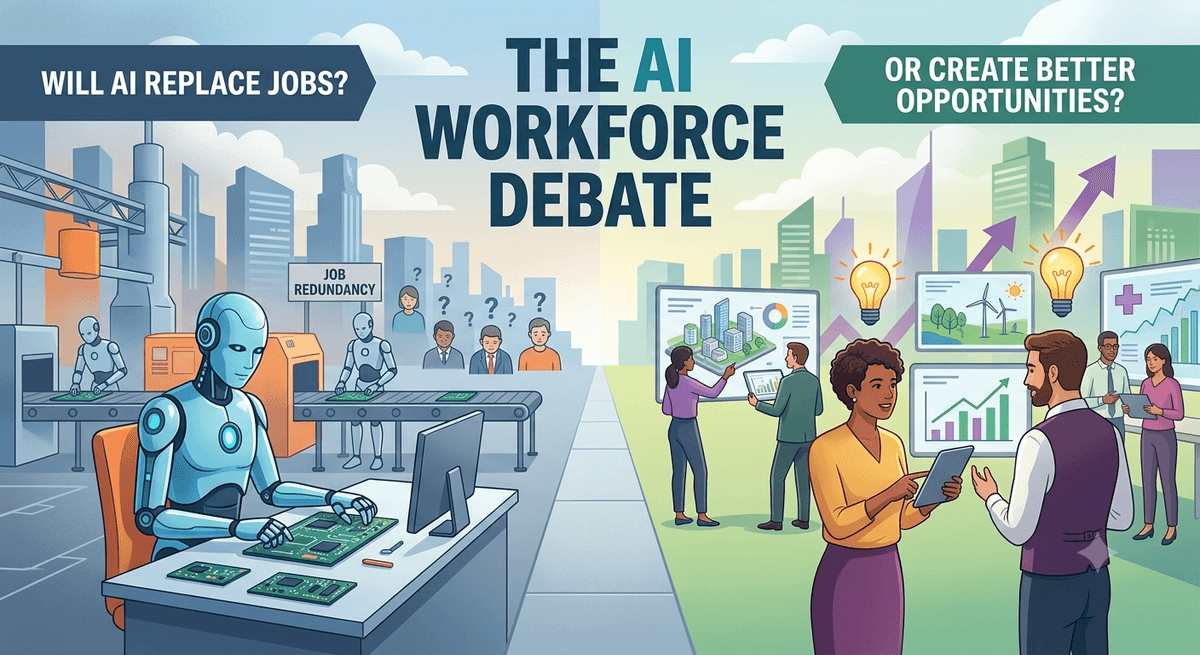
Will AI Replace Jobs or Create Better Opportunities?
1. Introduction
Artificial intelligence, commonly known as AI, is changing the way people work. From chatbots and automated customer service to advanced software used in healthcare, finance, education, and manufacturing, AI is becoming part of everyday working life. This rapid development has created an important question: will AI replace human workers, or will it create better opportunities for people?
The answer is not as simple as saying AI will destroy jobs or create millions of new ones. AI is likely to do both. The real challenge is learning how humans and machines can work together effectively.
2. Jobs That AI May Replace
AI can perform many repetitive and predictable tasks faster than humans. Companies can use AI to process large amounts of information, respond to basic customer questions, generate reports, detect errors, and automate routine administrative work.
Because of this, some jobs may become less necessary. Workers whose responsibilities mainly involve repetitive tasks could face changes or even job losses. For example, automated systems can already handle certain customer service functions, data entry tasks, and basic content production.
However, this does not necessarily mean that entire professions will disappear. In many cases, AI will replace specific tasks rather than completely replace the people performing them.
3. New Opportunities Created by AI
Just as technology has eliminated some jobs in the past, it has also created new ones. The growth of AI is increasing demand for professionals who can develop, manage, monitor, and use AI systems.
New opportunities can emerge in areas such as AI development, data analysis, cybersecurity, robotics, digital marketing, and AI-assisted content creation. Even traditional professions may benefit from AI because workers can use these tools to complete tasks more efficiently.
For example, a teacher can use AI to prepare learning materials, while a business owner can use it to analyze customer trends. Instead of doing everything manually, people can focus more on decision-making, creativity, and solving complex problems.
4. The Importance of Learning New Skills
The biggest advantage in an AI-driven workplace may belong to people who are willing to learn and adapt. Workers should not only fear what AI can do; they should learn how to use it.
Skills such as critical thinking, creativity, communication, problem-solving, leadership, and emotional intelligence will remain valuable because they involve qualities that machines cannot easily reproduce.
Learning how to work with AI tools can also give workers a competitive advantage. A person who knows how to use technology effectively may be more productive than someone who refuses to adapt.
5. Conclusion
AI will probably replace some jobs, but it will also create new opportunities and transform existing careers. The future of work is unlikely to be a simple battle between humans and machines. Instead, it will increasingly involve cooperation between the two.
The most important question is therefore not, “Will AI take my job?” but, “How can I prepare for a world where AI is part of my job?”
People who continue learning, developing useful skills, and adapting to technological change will have a better chance of turning the rise of AI into an opportunity rather than a threat.