Writers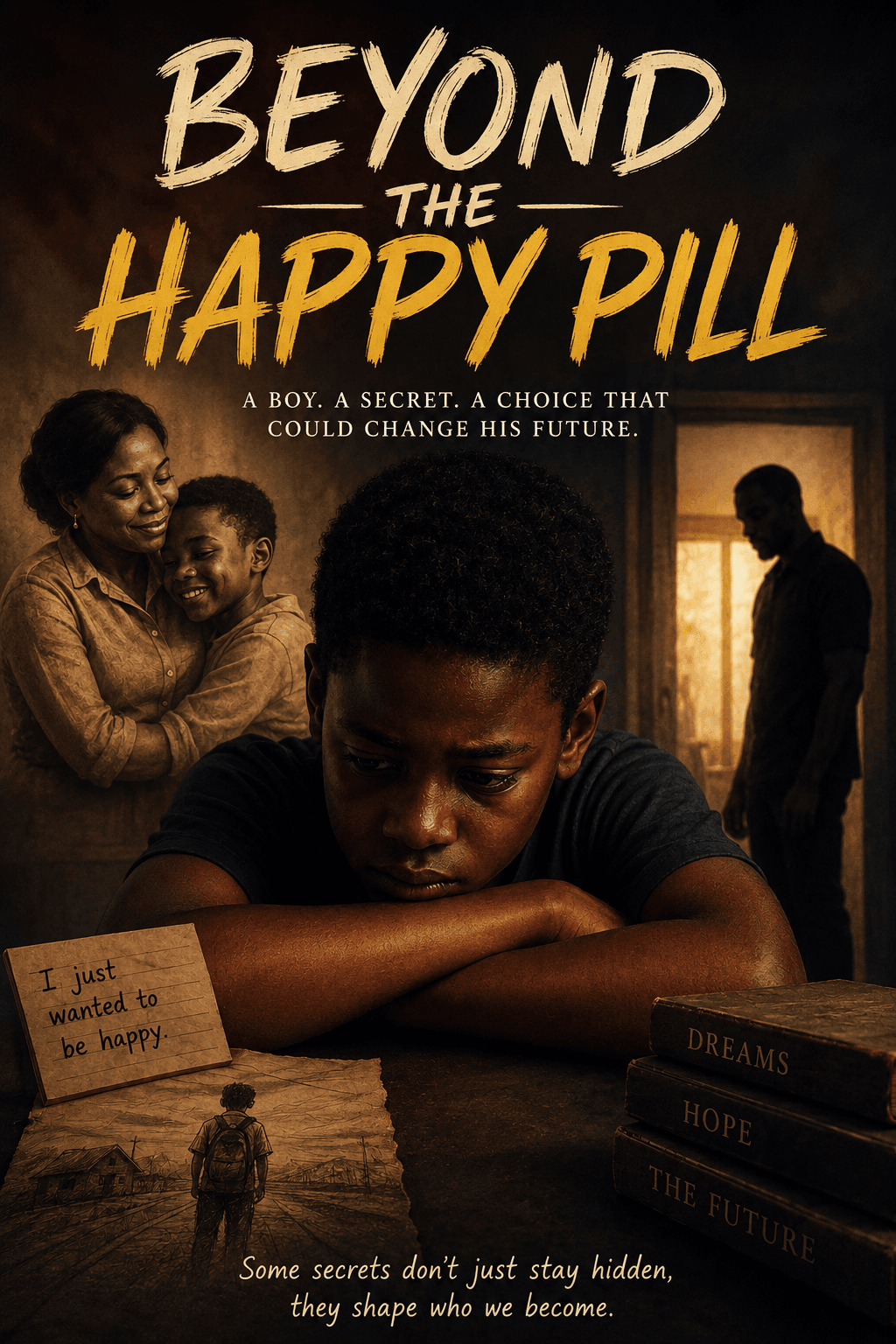
The car engine died, and silence filled the space between us. I sat there, staring at the familiar gate of our home, but nothing felt familiar anymore. Not the house. Not my mother's face, etched with lines of worry I had never noticed before. Not even myself.
Mum got out first, her movements stiff, mechanical. She walked straight to the front door without looking back, her handbag clutched tightly against her chest like a shield. I stayed behind, my legs heavy as lead, making my way to the boot of the car to retrieve my things.
The luggage felt heavier than it should have. Or maybe it was just the weight of everything I was carrying inside.
When I finally stepped through the front door, the silence hit me first. Our sitting room, usually filled with the hum of the television or the clatter of Mum's cooking, was deathly quiet. And then I saw her.
Mum was sitting on the edge of the sofa, her shoulders hunched forward, her face buried in her hands. When she looked up, tears were rolling down her cheeks—silent, steady streams that seemed to have been waiting for this moment for a very long time.
I dropped my luggage by the doorway and walked towards her, my feet making soft sounds against the tiled floor. I sat down beside her, close enough to feel the warmth radiating from her body, but far enough to maintain some distance. Some barrier.
"Simon," she finally spoke, her voice cracking. It wasn't a question. It was the beginning of something we both knew had to happen.
I couldn't cry. The tears wouldn't come, no matter how much my chest ached or how tightly my throat constricted. I had spent so many years numbing myself that even now, when I needed to feel something real, I couldn't.
"For how long, Simon?" Mum's voice had steadied now, the tears drying on her cheeks as if they had never been there. As if she had decided that crying wouldn't solve anything.
I swallowed hard, my mouth suddenly dry. "Since I was seven."
Her eyes grew wide, impossibly wide, like saucers that threatened to swallow her whole face. The shock was palpable—I could almost see the memories racing through her mind, trying to piece together a puzzle she hadn't even known existed.
"Seven?" she breathed, her voice barely above a whisper. "Since you were seven? How come I never knew?"
The answer hung in the air between us, heavy and suffocating. We both knew it. She had been working double shifts. She had been too occupied with work . She had trusted the house help.
I didn't need to say anything. The guilt was already written across her face, warring with the shock and the hurt and the confusion.
She bent her head, her chin touching her chest, and for a moment I thought she might break down again. But then she raised it, her jaw set with determination, her eyes searching mine.
"Tell me everything."
And so I did. The words tumbled out of me like a dam finally breaking—the first time I took those pills in my bedroom from tanko the way they made the world feel soft and blurry, the way I kept going back for more, the way I lied about saving money , the way I sold things I shouldn't have, the way I lied and cheated and betrayed everyone who ever trusted me.
By the time I finished, my voice was hoarse, my hands were shaking, and Mum's face was a mask of anguish.
"I'm so sorry," she whispered, reaching for my hand. "I should have been more careful. I shouldn't have left you with strangers. I should have—"
"Mum, please." I pulled my hand away, not because I didn't want comfort, but because I didn't deserve it. "It wasn't the time to be pushing blames. I needed help. I was drowning in that insatiable desire, and at just thirteen, I had lost myself."
The admission hung in the air like a dark cloud, threatening to rain down on both of us.
"Mum, please," I begged, the words tumbling out in a rush now. "I need help. I can't control it anymore. No matter how hard I try, I find myself going back there—to those people, to those places, to those things. My mind keeps searching for ways to get it, even now, even here, even sitting right in front of you. Mum, please, I need help."
She squeezed my hand, her grip surprisingly strong. "Then you will get help."
And then, just like that, the conversation was over. She stood up, her movements purposeful, her face set in an expression I hadn't seen in years—the look of a mother who had made up her mind.
"For now, go to your room."
I obeyed, my feet carrying me down the hallway to the room. My bed was still made the way I had left it before everything fell apart. Everything looked the same. But nothing was the same. I wasn't the same.
I sat on the edge of my bed and reflected on my life—the life I had once dreamed of, the person I had once been. I lost myself somewhere along the way. My salvation, my education, my ability to think clearly—all of it, gone. I couldn't even hold a thought for more than a few seconds before my mind started wandering back to the drugs, to the feeling, to the desperate need that consumed me.
Even as I sat there, in the safety of my childhood home, my brain was scheming. It was scanning the room for hidden stashes, calculating how long it would take to sneak out, considering who I could call to get what I needed.
I knew I was in trouble. The realization hit me like a physical blow—I wasn't the one controlling myself anymore. It was controlling me. The addiction had become my master, my god, my everything.
---
The next morning came too quickly. Sunlight streamed through the curtains, and for a brief moment, I forgot where I was, what I had done, who I had become. And then reality crashed back down like a wave, pulling me under.
Mum was already up, her eyes red-rimmed but her demeanor calm. She handed me a bag and told me to pack some clothes. I did as I was told, folding shirts and jeans with mechanical precision, not asking any questions.
The drive was silent. We stopped at the market along the way, and Mum bought some things—toiletries, snacks, a new toothbrush. I watched her move through the stalls, haggling with vendors, her face a mask of concentration. She was doing what she always did: taking care of me, even when I didn't deserve it.
"I called our pastor," she finally said, breaking the silence as we got back into the car. "I told him everything."
I stared out the window, watching the houses blur past. "You haven't called him in years."
"I know." She paused, her hands gripping the steering wheel so tightly that her knuckles turned white. "That's how it is, isn't it? We don't remember God until we've hit rock bottom and run out of options."
I had no response to that. She was right.
"He recommended a rehabilitation centre," she continued. "That's where we're going now."
A rehabilitation centre. The words echoed in my mind, strange and foreign. I had heard about places like that, of course—places where people went when they had lost themselves, when they had hit bottom, when they had run out of options. I never thought I would be one of them.
The drive there wasn't really interesting. We barely talked, both of us lost in our own thoughts, our own regrets, our own hopes for what this might mean. The countryside gave way to suburbs, and suburbs gave way to a quiet, secluded area surrounded by trees.
And then I saw it.
Written boldly on the gate, in large, blue letters:
MEQOMEM REHABILITATION CENTRE
Mum pulled the car to a stop, and we both sat there for a moment, staring at the sign. The gate was tall, imposing, made of wrought iron with intricate patterns that reminded me of prison bars. Beyond it, I could see a large building with white walls and dark windows, surrounded by well-maintained gardens.
"This is it," Mum said softly. "This is where you get your life back."
She looked at me, and for the first time in what felt like forever, I saw hope in her eyes. Not the desperate kind, not the forced kind—but real hope, the kind that comes when you've done everything you can and now you're trusting someone else to take over.
I turned my gaze back to the gate, my heart pounding in my chest. This was it. This was where I would either find myself or lose myself forever.
And that's where I'm telling this story from.