Writers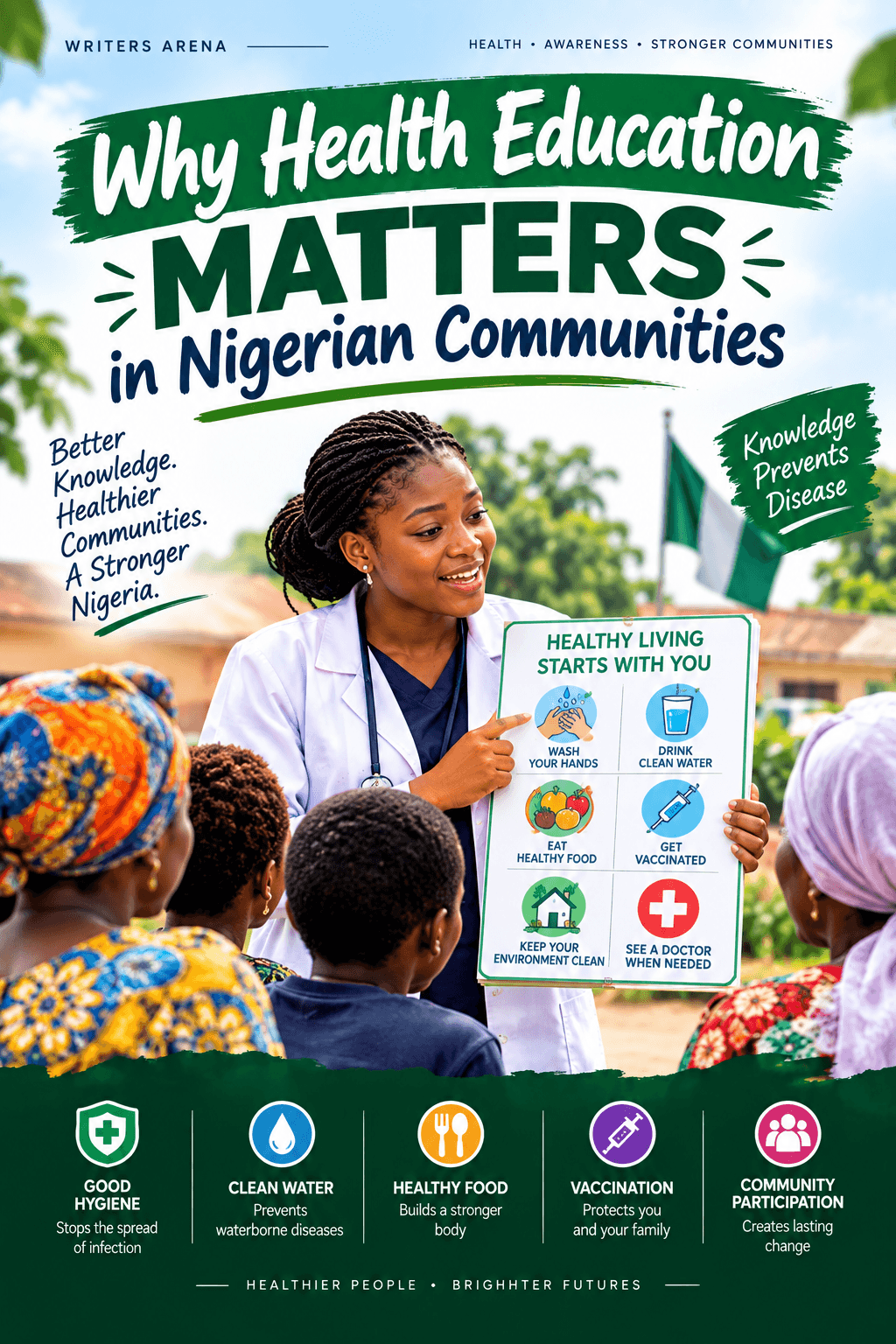
Good health is one of the most important foundations of a successful community. When people understand how to protect themselves from preventable illnesses, maintain good hygiene and seek medical attention when necessary, families and communities can become healthier and more productive. This is why health education should not be limited to hospitals and clinics. It should reach schools, homes, markets, churches, mosques and local communities.
Health education gives people the knowledge they need to make informed decisions about their wellbeing. Simple information about hand washing, safe drinking water, food hygiene, sanitation, vaccination and early medical attention can make a meaningful difference. However, information is only useful when people can understand it and apply it in their daily lives.
This issue has received renewed attention in Nigeria. In September 2026, the Lagos State Government began a community-based health and sanitation campaign designed to take health and hygiene education directly to communities. The campaign began in Oriade Local Council Development Area and is expected to extend across the state's five divisions. Officials said the programme is intended to encourage healthier habits, improve sanitation and strengthen community participation in preventive healthcare.
Punch Newspapers +1
The development demonstrates an important principle: healthcare is not only about treating people after they become sick. Prevention and education are also important parts of protecting public health.
One area where education can make a difference is personal hygiene. Regular hand washing, keeping surroundings clean and practising proper food hygiene can reduce exposure to infections. These actions may appear simple, but they become more effective when people understand why they matter and make them part of their everyday routines.
Clean water and proper sanitation are also essential. Communities without reliable access to safe water can face greater health challenges. A 2026 report on a community-owned water project in Lagos described how residents of two communities had previously depended heavily on unsafe water sources, creating risks associated with waterborne diseases.
This DayLive
Health education can also encourage people to seek professional care when they need it. Sometimes people may ignore symptoms, rely on misinformation or delay visiting a health facility. Clear and trustworthy information can help people understand when professional medical attention is necessary.
Vaccination is another area where health education is important. In 2026, the World Health Organization highlighted the importance of bringing evidence-based health information and services closer to communities in Nigeria, particularly communities affected by limited access to routine healthcare and misinformation.
WHO | Regional Office for Africa
Community health workers can play an important role in this process because they often interact directly with families. UNICEF recently highlighted the work of a community volunteer in Maiduguri who combines vaccination activities with simple hygiene education for families.
UNICEF
Schools should also be important centres for health education. Students can learn about hygiene, nutrition, physical activity, emotional wellbeing, disease prevention and other basic health topics. When young people receive accurate information, they can also share useful knowledge with their families and friends.
Health education should be communicated in ways that ordinary people can understand. Language can sometimes become a barrier, especially in communities where many residents are more comfortable communicating in local languages. Using familiar languages, examples and community leaders can make health messages easier to understand and remember.
Community participation is equally important. Government agencies and health workers cannot improve public health alone. Parents, teachers, religious leaders, youth organisations, traditional leaders and community associations can all contribute by supporting accurate health information and encouraging healthy practices.
Technology can also support health education. Radio, television, social media and educational websites can help spread important information quickly. However, people should be encouraged to verify health information with qualified healthcare professionals or trusted health organisations rather than accepting every claim they encounter online.
The goal of health education should not be to frighten people. Instead, it should give people practical knowledge, encourage responsible decisions and help communities understand how prevention works.
Nigeria has many different communities, and their health challenges are not always the same. Some communities may struggle with sanitation, others with access to healthcare, while others may face difficulties caused by misinformation or inadequate health facilities. This means health education programmes should listen to communities and respond to their specific needs.
Ultimately, a healthy community is built not only through hospitals and medicines but also through knowledge. When people understand how to protect their health, recognise reliable information and know where to seek appropriate care, they become better equipped to protect themselves and those around them.
Health education should therefore be treated as an important part of community development in Nigeria. Teaching people how to prevent illness, care for their environment and make informed health decisions can help build healthier families and stronger communities.