 Writers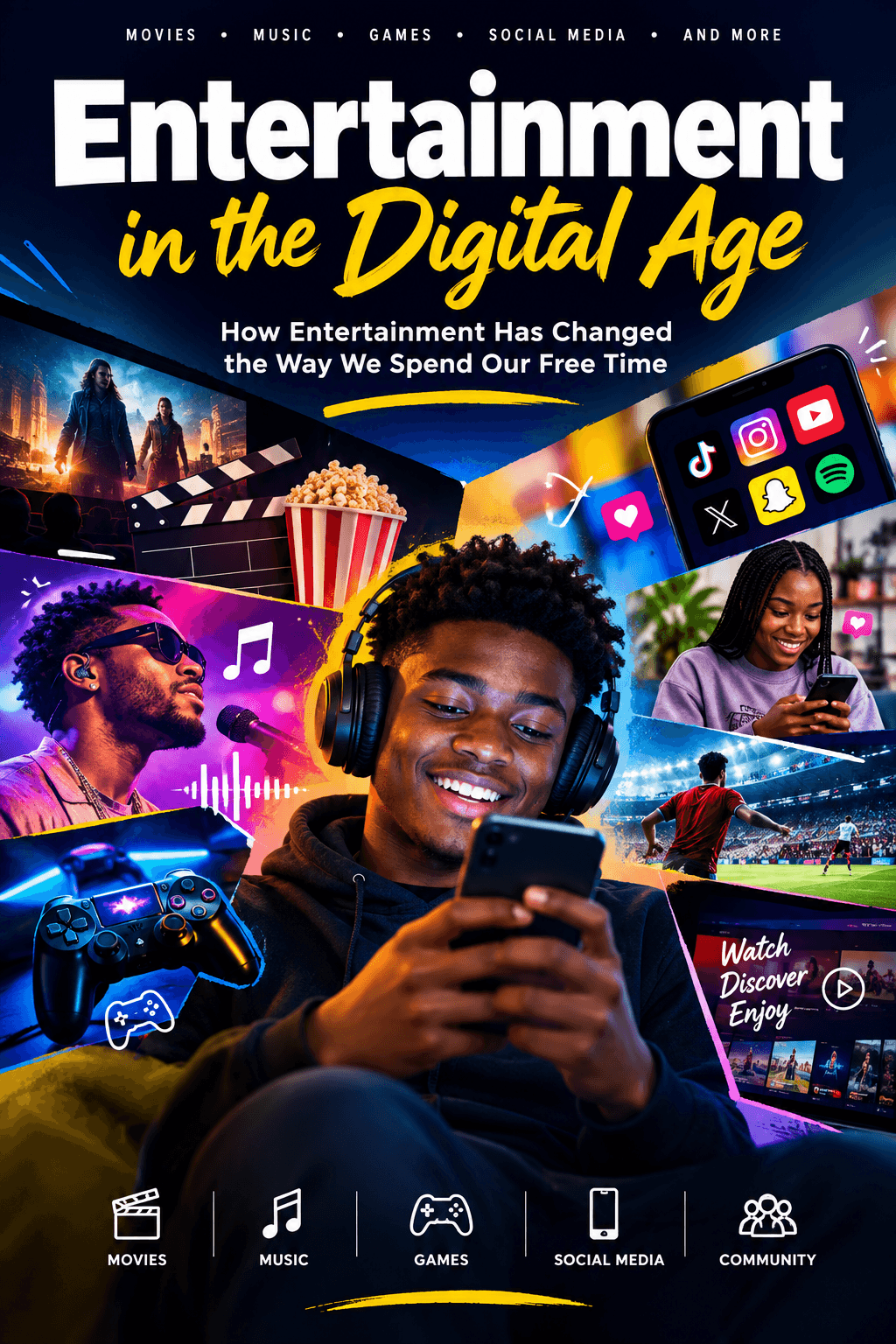
Entertainment has always been part of daily human life. Long before smartphones, streaming platforms, and social media existed, people found ways to relax, have fun, tell stories, and spend time with one another. Families gathered around radios, friends attended concerts, people watched movies at cinemas, and communities organized events that brought people together.
Today, entertainment looks very different.
A person can wake up, check social media, watch a short video, listen to music, play a game, watch a movie, and communicate with friends without leaving their room. Thousands of entertainment options can be accessed from a single smartphone.
This convenience has changed not only what we watch and listen to but also how we discover new entertainment, interact with celebrities, and spend our free time.
From Traditional Entertainment to Digital Entertainment
For much of the past, entertainment depended on physical locations and specific schedules.
If you wanted to watch a new movie, you might have needed to go to a cinema. If you wanted to hear a particular artist perform, you had to attend a concert or wait for the song to play on the radio.
Television changed some of this by bringing movies, news, sports, music, and other programs into people's homes.
The internet took the transformation even further.
Today, entertainment can be accessed almost instantly. Streaming services allow people to watch movies and television programs whenever they want. Music platforms provide access to enormous libraries of songs. Social media allows users to discover short videos, comedy, interviews, live broadcasts, and other forms of content.
The result is an entertainment environment that is much more flexible than it was in previous generations.
The Rise of Streaming
One of the biggest changes in entertainment has been the growth of streaming.
Traditional television required viewers to follow a schedule. If a program started at 8 p.m., you generally had to be available at that time if you wanted to watch it.
Streaming changed that relationship.
Viewers can choose what they want to watch and when they want to watch it.
This has also changed the way people discover movies and television shows. Instead of relying entirely on television channels or recommendations from friends, viewers can browse large collections of content.
The downside is that having too many choices can sometimes make choosing something surprisingly difficult.
Someone might spend twenty minutes scrolling through movies without actually watching anything.
This has become such a common experience that simply deciding what to watch can sometimes feel like entertainment itself.
Short Videos Have Changed Attention
Short-form video has become one of the most influential forms of modern entertainment.
Platforms built around short videos have made it possible for people to consume dozens of pieces of content within a relatively short period.
A person can watch a comedy clip, then a dance video, then a sports highlight, then a cooking video, and then something completely unrelated.
This variety is part of what makes short-form content so attractive.
There is rarely a long commitment.
If a video is boring, you can simply move to the next one.
This has also changed the way creators make content. Many creators try to capture attention immediately because viewers can easily scroll away.
As a result, entertainment has become faster and more competitive.
Social Media Is Now Part of Entertainment
Social media was originally associated heavily with communication and connecting with friends, but entertainment has become one of its biggest uses.
People follow musicians, actors, comedians, athletes, influencers, creators, and other public figures.
They also follow accounts based on personal interests such as football, fashion, gaming, cooking, technology, movies, or comedy.
This has created a situation where entertainment and social interaction are often mixed together.
You may watch a funny video, share it with a friend, comment on it, and then see your friend's response.
The entertainment experience is therefore no longer completely passive.
Audiences can participate.
Celebrities Are More Accessible Than Ever
In the past, celebrities could seem distant.
Fans might see an actor in a movie or an artist on television but have very little direct interaction with them.
Social media has changed that.
Celebrities can now post directly to their audiences.
They can share photographs, behind-the-scenes moments, announcements, opinions, and updates about their work.
Fans can comment and sometimes receive responses.
This can make celebrities feel more accessible.
However, there is still a difference between seeing someone's social-media presence and actually knowing that person.
Social media usually shows selected parts of someone's life rather than the entire picture.
Remembering that distinction can help people maintain a healthier relationship with online celebrity culture.
Music Has Become Easier to Discover
Music discovery has also changed dramatically.
Previously, discovering new music often depended on radio stations, television, friends, music stores, or record labels.
Today, a song can spread internationally through a short video or social-media trend.
An artist who was previously unknown to a large audience can suddenly attract millions of listeners.
Streaming platforms also use recommendations to introduce listeners to songs that are similar to what they already enjoy.
This has created opportunities for independent musicians.
Artists do not necessarily need to rely entirely on traditional media to reach listeners.
They can create music, distribute it digitally, promote it on social media, and build an audience directly.
African Entertainment Has Reached Larger Audiences
Digital platforms have also helped African entertainment reach audiences outside the continent.
African music, movies, television programs, comedy, fashion, and other forms of culture are increasingly visible to international audiences.
Afrobeats, for example, has developed a significant global audience, while African filmmakers and actors have gained greater international visibility.
Streaming platforms have also made it easier for people outside Africa to discover stories and performers they might never have encountered through traditional television.
This creates opportunities for creators to tell stories rooted in their own cultures while reaching audiences around the world.
Gaming Is More Than a Hobby
Gaming has become another major part of the entertainment industry.
Video games range from simple mobile games to large, complex titles played on computers and consoles.
For many people, gaming is not simply about passing time.
It can also be social.
Players can communicate with friends, compete against other people, cooperate on missions, or participate in online communities.
Competitive gaming has also developed into a major form of entertainment, with tournaments attracting audiences both online and in physical venues.
The gaming industry has therefore expanded far beyond the image of someone playing alone in a bedroom.
The Growth of Creator Culture
One of the most interesting changes in entertainment is the rise of independent creators.
A person with a smartphone, an internet connection, and an interesting idea can potentially build an audience.
Creators produce comedy sketches, educational videos, music, commentary, reviews, storytelling content, and countless other forms of entertainment.
This has lowered some of the traditional barriers to entering the entertainment industry.
You do not necessarily need a major television network to begin creating.
However, becoming successful as a creator is still difficult.
Millions of people upload content, and only a small percentage develop very large audiences.
Consistency, creativity, communication skills, and understanding an audience can all matter.
Entertainment Can Bring People Together
Despite all the technological changes, one thing about entertainment has remained relatively constant: it can bring people together.
Friends can watch a movie together.
Families can listen to music.
Fans can attend sporting events.
Communities can organize festivals.
People can share jokes and discuss their favourite shows.
Even online entertainment can create communities around common interests.
A person might live thousands of kilometres away from someone else but still communicate with them regularly because they both enjoy the same game, musician, television show, or sport.
Entertainment can therefore create connections that would otherwise never exist.
The Problem With Too Much Entertainment
Entertainment is enjoyable, but too much of anything can become a problem.
Because entertainment is now available almost constantly, it can be easy to spend hours scrolling, watching videos, gaming, or browsing social media without realizing how much time has passed.
This can interfere with other parts of life.
Someone may postpone homework, sleep later than planned, avoid physical activity, or neglect responsibilities because entertainment is always available.
The solution is not necessarily to stop using entertainment altogether.
Instead, balance is important.
Setting aside time for school, work, sleep, exercise, family, friends, and responsibilities can make entertainment more enjoyable because it becomes something you choose rather than something that controls your entire schedule.
The Influence of Algorithms
Modern entertainment platforms often use algorithms to recommend content.
If you watch several videos about a particular topic, the platform may show you more similar videos.
This can be convenient because it helps you discover things you enjoy.
However, it can also create a very narrow entertainment feed.
You might repeatedly see the same types of opinions, jokes, trends, or stories.
Being aware of this can help you make more intentional choices about what you consume.
Following different creators, exploring unfamiliar topics, and occasionally searching for content instead of relying entirely on recommendations can make your entertainment experience more varied.
Entertainment Trends Move Quickly
Entertainment trends can appear and disappear extremely quickly.
A song may become popular within days.
A particular joke may suddenly appear everywhere.
A movie can dominate conversations for a few weeks.
Then something new arrives and captures people's attention.
This speed creates a constantly changing entertainment environment.
For creators, keeping up with trends can provide opportunities, but chasing every trend can also make content feel repetitive.
Some of the most memorable entertainment survives beyond a particular trend because it has something people continue to enjoy.
The Importance of Originality
With so much content available, originality can be valuable.
Audiences have seen countless versions of the same basic ideas.
Creators who bring a different perspective, interesting storytelling, humour, or a distinctive style may stand out.
Originality does not necessarily mean inventing something that has never existed before.
It can mean taking a familiar idea and presenting it in a fresh way.
This applies to music, comedy, filmmaking, writing, gaming, and almost every other area of entertainment.
Movies Still Matter
Despite the rise of short videos and streaming, movies remain an important form of entertainment.
A well-made film can tell a story over several hours, allowing audiences to become deeply involved with characters and events.
Movies also provide opportunities for cultural exchange.
People can watch stories created in countries they have never visited and gain some understanding of different lifestyles, traditions, or perspectives.
Cinema itself also remains a social experience.
Going to a movie theatre with friends or family can feel very different from watching the same film alone on a phone.
Live Entertainment Has Its Own Appeal
Concerts, festivals, comedy shows, sporting events, and other live performances continue to attract audiences even though digital entertainment is everywhere.
There is something different about being physically present.
The atmosphere of a crowd, the energy of a performance, and the shared experience can create memories that are difficult to reproduce through a screen.
This is one reason live entertainment continues to have an important place in modern culture.
Entertainment and Personal Creativity
Entertainment does not always have to mean consuming content.
People can also create it.
Someone who enjoys music might learn an instrument.
A person who loves movies might try filmmaking.
Someone interested in comedy might write jokes or perform.
A gaming fan might create videos about games.
Writing, drawing, dancing, photography, music, and acting are all ways people can turn their interests into creative activities.
Creating something can sometimes be more satisfying than simply consuming content.
What the Future Might Look Like
Entertainment will probably continue changing as technology develops.
Artificial intelligence, virtual reality, augmented reality, faster internet connections, and new forms of interactive media could all influence how people experience entertainment.
The boundaries between watching, playing, and participating may become less obvious.
Instead of simply watching a story, audiences may eventually be able to interact with it in more detailed ways.
However, technology is unlikely to change one fundamental fact.
People will still want stories.
They will still want music.
They will still want laughter, competition, excitement, and connection.
Technology may change the way entertainment is delivered, but the reasons people enjoy entertainment are much older than smartphones or streaming platforms.
Final Thoughts
Entertainment has changed enormously over the years.
From radio and cinema to streaming platforms, social media, gaming, and creator-driven content, people now have more entertainment choices than ever before.
These changes have made entertainment more accessible and interactive. People can discover music from different countries, watch movies whenever they want, follow creators directly, participate in online communities, and even become creators themselves.
At the same time, having unlimited entertainment available can make it easier to lose track of time.
The key is balance.
Entertainment can be a wonderful way to relax, connect with people, discover new ideas, and enjoy creative work. But it should exist alongside other important parts of life, including sleep, education, relationships, physical activity, and personal responsibilities.
The future of entertainment will undoubtedly bring new technologies and new ways of experiencing content.
Whatever those changes look like, the basic appeal will remain the same: people will continue looking for stories that make them laugh, music that makes them feel something, games that challenge them, and experiences they can share with others.
That is what makes entertainment such a lasting part of human life.