 Writers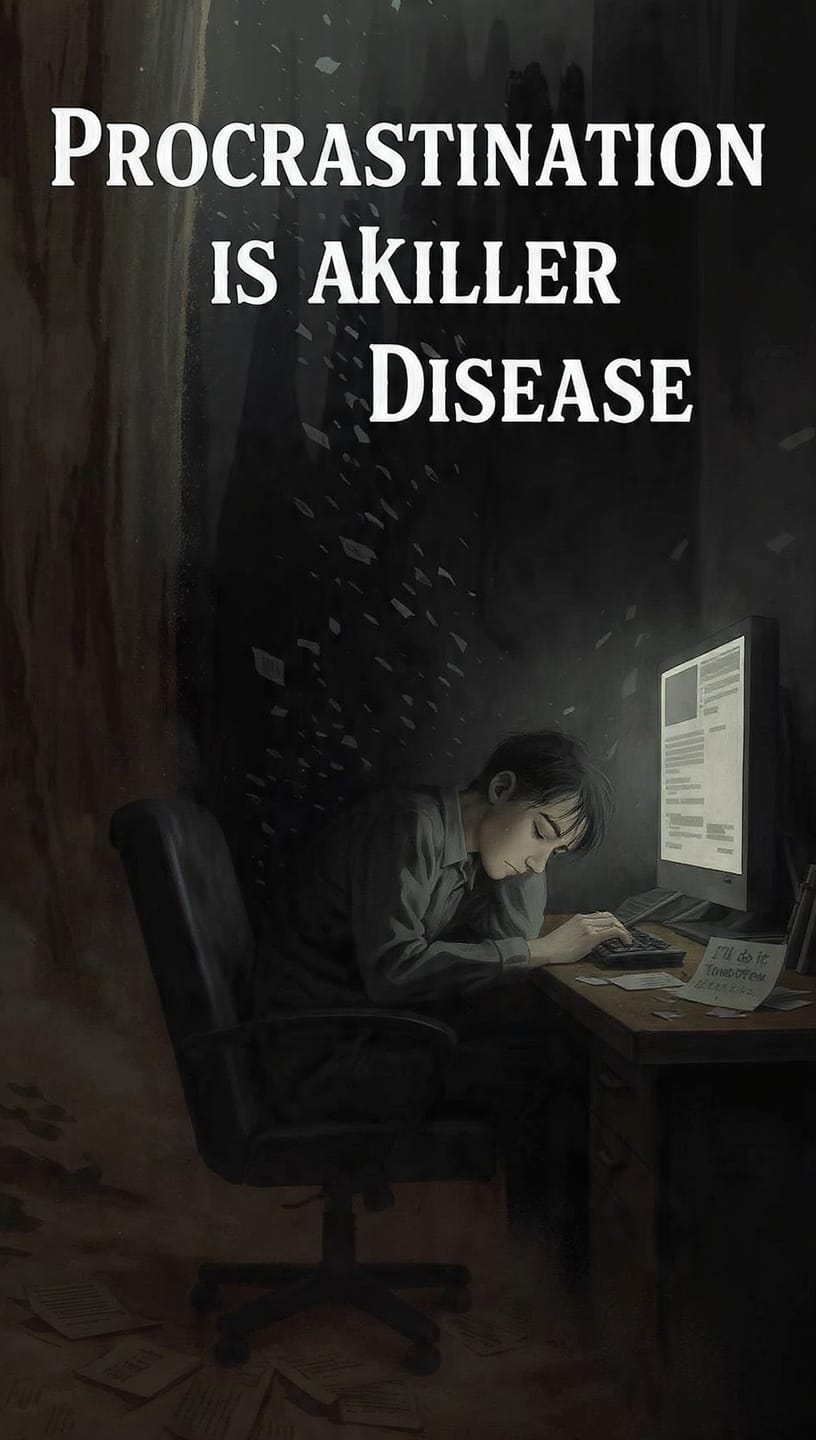
PROCRASTINATION IS A KILLER DISEASE
Introduction
Procrastination is the habit of delaying or postponing something that should be done, especially when there is enough time to do it. Instead of doing an important task immediately, a person may choose to sleep, play games, watch videos, chat with friends, or do something less important. Although procrastination is not literally a disease, it can become a harmful habit that damages a person's education, career, relationships, and future. This is why people often describe procrastination as a “killer disease.”
Causes of Procrastination
There are many reasons why people procrastinate. One major cause is laziness. Some people simply do not want to make the effort required to complete a task.
Another cause is fear of failure. A person may postpone an assignment because they are afraid that their work will not be good enough. Instead of facing the task, they avoid it.
Distractions are another major cause. Phones, social media, television, video games, and unnecessary conversations can take away valuable time.
Some people also procrastinate because they believe they have plenty of time. They keep saying, “I will do it tomorrow,” until the deadline is very close.
Effects of Procrastination
Procrastination can have serious consequences. For students, it can lead to poor academic performance. A student who repeatedly postpones studying may eventually discover that there is not enough time to prepare properly for an examination.
Procrastination can also cause stress and anxiety. When an important task is left until the last minute, the person may become worried and overwhelmed.
It can also lead to missed opportunities. Opportunities do not always remain available forever. Delaying action can cause someone to lose a chance that could have improved their life.
Another effect is that procrastination can reduce self-confidence. When someone repeatedly fails to complete tasks on time, they may begin to doubt their ability to succeed.
How to Overcome Procrastination
The first step is to recognise the problem. A person must admit that constantly postponing important tasks is preventing progress.
Next, set clear and realistic goals. Instead of saying, “I will study later,” decide exactly what you will study and when you will start.
It is also helpful to break large tasks into smaller parts. A big assignment may seem difficult, but completing it one section at a time can make it easier.
Another important method is to remove distractions. Put away unnecessary devices and concentrate on the task at hand.
Finally, develop the habit of starting immediately. Even if you can only spend ten minutes on a task, starting is better than continuing to postpone it.
Conclusion
Procrastination is a dangerous habit because it quietly steals one of our most valuable resources: time. It can affect education, work, personal development, and future opportunities. However, procrastination can be overcome through discipline, proper planning, determination, and consistent action.
We should therefore remember: Do not wait for tomorrow to do what you can do today. Every successful person learns to use time wisely. When we stop postponing important things and begin taking action, we move closer to achieving our goals.