 Writers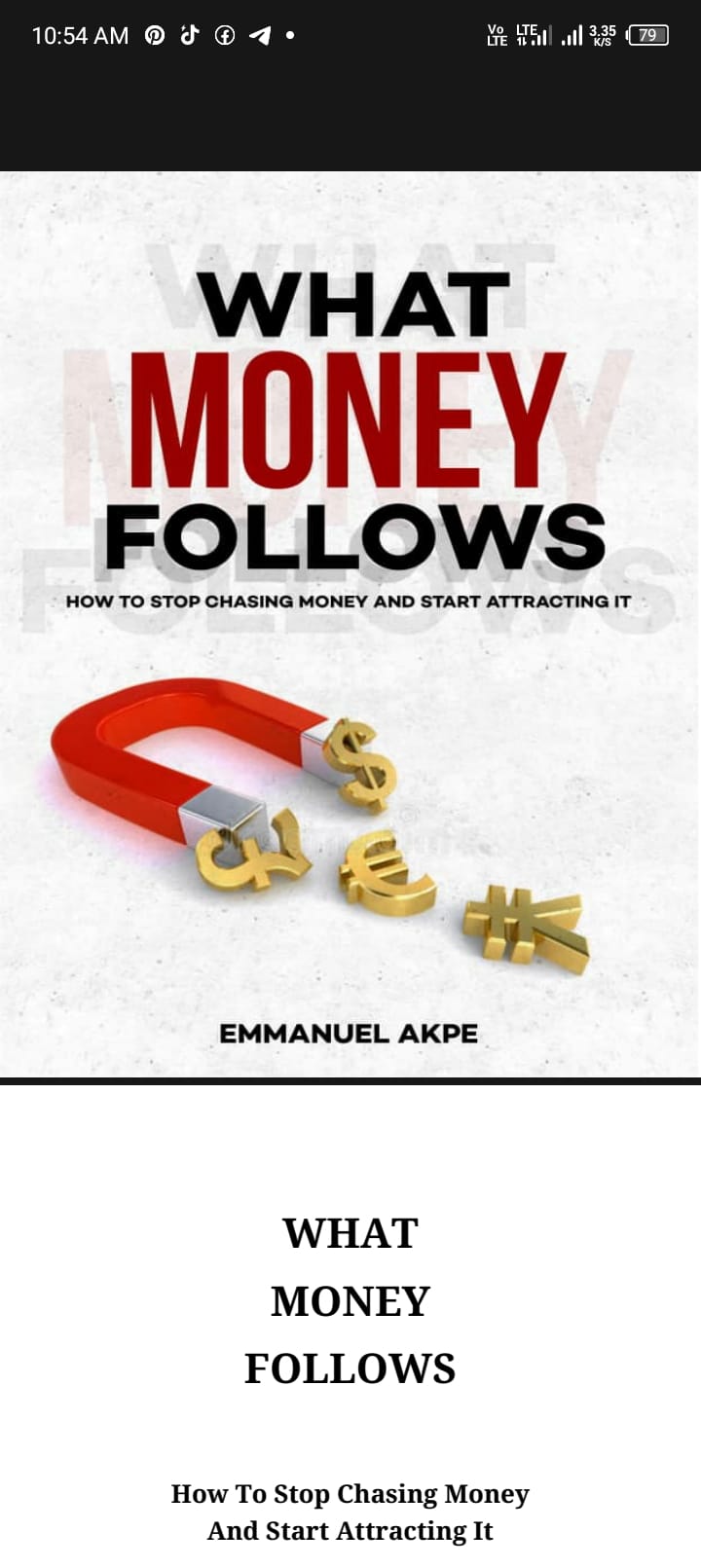
Writing
What Money Follows
Money does not simply appear because someone wants it. Behind almost every naira earned is an idea, a skill, a service, a product, a solution, or a problem someone was willing to solve. This is why the question should not always be, “Where is the money?” but rather, “What does money follow?”
Money follows value.
Before money comes, something usually happens first. Someone identifies a need, develops a skill, creates a product, offers a service, solves a problem, or provides something useful to another person. The money comes afterward as a reward for that value.
Imagine someone who decides to start selling clothes. The person does not wake up in the morning and magically find customers waiting with money. First, there is a decision. The person studies what people like, finds suppliers, chooses the right products, determines prices, takes pictures, advertises, communicates with customers and delivers orders. Only after these activities does money begin to come in.
The money follows the work.
The same thing applies to someone who wants to render a service. Perhaps you are good at graphic design, hairdressing, writing, photography, tutoring, video editing or baking. Your skill alone may not immediately put money in your hands. You have to package that skill into something people can understand and pay for. You have to tell people what you can do, demonstrate your ability, build trust and provide the service professionally.
Money follows competence.
Sometimes, however, money follows courage before it follows profit. Many people have ideas but are afraid to start because they are waiting for everything to be perfect. They want the perfect equipment, perfect location, perfect customers and perfect amount of capital. Unfortunately, perfection can become an excuse for remaining in the same place.
A person who starts small has already moved closer to opportunity than someone who only talks about starting.
Consider someone who wants to sell snacks but has very little capital. Instead of waiting until they can open a large shop, they might begin by preparing a small quantity, selling to people around them, learning from their customers and reinvesting what they make. The first profit may be small, but the experience gained can become more valuable than the initial money.
Money follows consistency.
One successful day does not automatically create a successful business. A person may sell twenty products today and sell nothing tomorrow. That does not necessarily mean the idea has failed. Building something valuable often requires patience, improvement and repeated effort.
Money also follows relationships and trust. People are more willing to spend their money with someone they trust. If you promise to deliver a product at a particular time, deliver it. If you provide a service, do it well. If something goes wrong, communicate honestly. A customer who receives good treatment may return and recommend you to someone else.
In this way, one customer can become five customers, and five can become fifty.
But there is another important truth: money follows solutions. People spend money because they need something. They may need food, clothing, education, transportation, entertainment, convenience, information or professional assistance. Therefore, instead of asking only, “How can I make money?” ask, “What problem can I solve?”
That question can completely change your mindset.
If you can identify a genuine problem and provide a useful solution, you have created an opportunity for money to follow.
This does not mean every effort will immediately become profitable. There will be mistakes, disappointments and slow periods. Some ideas will fail. Some customers will say no. But every attempt can teach you something when you are willing to learn.
Therefore, before chasing money, chase value. Build your knowledge. Develop your skills. Understand people's needs. Start where you are. Serve people honestly. Improve what you offer. Be consistent.
Because money rarely comes first.
Value comes first.
Effort comes first.
Service comes first. Solutions come first.
Trust comes first.
And when these things are built properly, money has a reason to follow.