Writers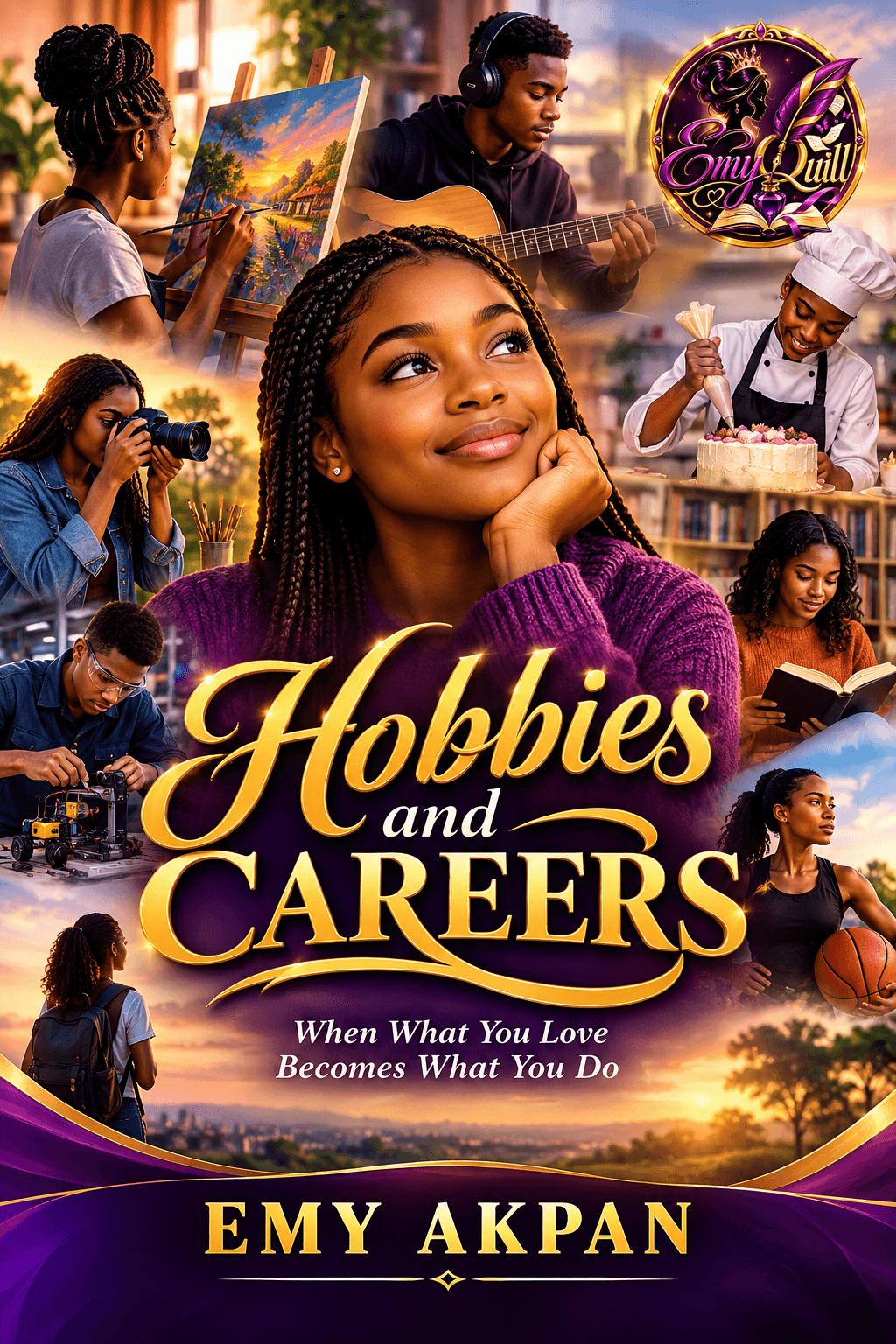
When What You Love Becomes What You Do
When Daniel was eight years old, his mother had already started worrying about him.
While other children in the neighbourhood were busy playing football, riding bicycles or running around the compound, Daniel could spend hours with a pencil and a piece of paper. He drew people, houses, cars, trees and sometimes imaginary characters that existed only in his head. If someone gave him an old newspaper, he would turn it over and draw on the blank spaces. If there was a discarded cardboard box, it became a canvas.
One afternoon, his mother looked at another drawing and asked, almost impatiently, “Daniel, what will you do with all this drawing?”
He shrugged.
“Nothing. I just like drawing.”
That answer sounded innocent, but it carried a question that many children eventually face: Can something you simply enjoy become something you build your life around?
Today, people make careers out of photography, cooking, writing, gaming, fashion, music, dancing, painting, public speaking, gardening, sports and even creating videos online. Many of these careers began as something much simpler: a hobby.
But before we connect hobbies to careers, we must understand what they actually mean.
What Is a Hobby?
A hobby is an activity a person enjoys doing during their free time, usually because it brings pleasure, relaxation, satisfaction or a sense of fulfilment. It does not necessarily have to make money.
Someone may enjoy reading novels without intending to become a writer. Another person may love baking cakes for family members without wanting to open a bakery. A teenager may enjoy taking photographs with a phone simply because they love beautiful images. Someone else may spend weekends planting flowers, playing football, sewing clothes or learning musical instruments.
A hobby is often where curiosity is allowed to breathe.
It gives people the freedom to explore something without immediately asking, “How much will I earn from this?”
That freedom is important because some of the things we eventually become good at begin with nothing more than genuine interest.
Then, What Is a Career?
A career is the professional path a person follows through work, occupations or business over a period of their life. Unlike a hobby, a career usually comes with responsibilities, expectations, training and financial considerations.
A person may love cooking as a hobby, but becoming a professional chef requires more than enjoying the smell of food in the kitchen. It may require training, discipline, knowledge of food safety, business skills and the ability to prepare meals consistently for other people.
This is where the difference becomes clear.
A hobby is primarily driven by enjoyment; a career is driven by purpose, responsibility and professional commitment.
However, the two are not enemies. In fact, they can become powerful partners.
When a Hobby and a Career Become One
Consider the story of Walt Disney. His interest in drawing began early, and his artistic abilities eventually became part of the foundation of the entertainment empire associated with his name. What began with a love for drawing and storytelling grew into a professional career that transformed animation and popular entertainment.
The lesson is not that every child who loves drawing will become the next Disney. The lesson is that an interest can become a skill, and a skill can eventually become a profession when it is deliberately developed.
The same thing can happen in ordinary lives.
A young girl who loves making clothes for her dolls may eventually learn sewing, study fashion design and start a clothing business. A boy who constantly repairs broken toys may discover an interest in engineering. A child who is always telling stories may grow into a writer, journalist, teacher, actor or filmmaker. Someone who enjoys taking pictures at family events may eventually learn professional photography.
The hobby is the seed. It is what happens after the seed is planted that determines whether it grows.
Can a Hobby Really Become a Career?
Yes, but loving something is only the beginning.
One of the biggest mistakes people make is assuming that passion alone is enough to build a career. It is not.
Imagine someone who loves singing but refuses to practise. Another person loves photography but never learns how lighting, composition or editing work. Someone may love writing but never reads, studies language or learns how to improve their work.
Enjoyment creates interest, but practice creates competence.
If you want to turn a hobby into a career, begin by taking it seriously. Learn the skills surrounding it. Read books, watch educational materials, attend classes where appropriate, practise consistently and study people who are already successful in that field.
Then begin small.
A person interested in baking does not necessarily need to open a large bakery immediately. They can start by making cakes for family celebrations, learning from mistakes and gradually taking small orders. Someone interested in photography can begin by practising composition and editing before eventually offering professional services.
Over time, the hobby becomes a skill. The skill becomes valuable. The value can become an income.
That is how many careers are built.
How Careers Can Also Influence Hobbies
The relationship works in the opposite direction too.
Sometimes, a person's career introduces them to a hobby they never considered before.
A teacher who begins gardening to relax after work may discover a genuine love for plants. An accountant who joins a photography club may eventually develop a serious interest in photography. A doctor who starts painting as a way to unwind may discover that art becomes an important part of their life.
This is why people should not believe that they must have everything figured out at a young age.
Human beings grow, and interests grow with them.
A hobby can open a door to a career, but a career can also open the door to a new hobby.
Are Hobbies Something We Are Born With?
This is another interesting question.
Some people seem naturally drawn to particular activities. A child may instinctively enjoy music, while another is fascinated by machines. One may love speaking in front of people, while another prefers working quietly with their hands.
Natural ability can certainly influence our interests, but hobbies are not always something we are simply born with.
Hobbies can be discovered, learned and developed.
A person may never have considered painting until a friend introduced them to it. Someone may dislike cooking because they have never learned how to cook properly, only to discover that they enjoy it after taking a class.
Sometimes we do not know what we love because we have never had the opportunity to try it.
This is particularly important for children.
What Parents Can Do
Parents have an enormous role to play in helping children discover and nurture their interests.
The first step is observation.
Watch what the child naturally gravitates towards. What do they spend time doing without being forced? What activities make them curious? What subjects make them ask endless questions?
A child who is always dismantling objects may not simply be “disturbing things.” They may be curious about how things work. A child who constantly draws may be developing artistic ability. A child who enjoys organising games may have leadership tendencies. A child who is always writing little stories may have a developing literary imagination.
Parents should encourage these interests without putting unnecessary pressure on the child.
There is a difference between nurturing a talent and turning it into a burden.
If a child loves music, provide opportunities to learn an instrument if possible. If they enjoy reading, provide books. If they like cooking, allow them to participate in age-appropriate kitchen activities. If they enjoy sports, encourage healthy participation and discipline.
Most importantly, parents should avoid deciding that every hobby must immediately become a career.
A child should be allowed to enjoy something simply because they enjoy it.
How Do We Make a Hobby Flourish?
A hobby grows when we give it attention.
It needs practice, patience, learning and experimentation. You cannot water a plant once and complain that it has not become a tree.
The same principle applies to our interests.
Read about your hobby. Practise it regularly. Learn from people who are better than you. Accept correction. Try new approaches. Keep records of your progress. Join communities where people share the same interest. Look for opportunities to display or use your skills.
Most importantly, do not abandon something simply because you are not immediately excellent at it.
The first cake may not be beautiful. The first story may not be brilliant. The first painting may look nothing like what you imagined. The first photograph may be poorly framed.
That is normal.
Every expert was once a beginner who produced work that needed improvement.
The Danger of Turning Every Hobby Into Money
There is, however, a warning worth remembering.
Not every hobby has to become a business.
Sometimes society puts so much pressure on people to “monetise” everything that we forget the value of doing something simply for joy.
A person can be a lawyer and still love gardening. A teacher can enjoy photography. A doctor can write poetry. A business owner can play football every Saturday.
A hobby can protect a person's sense of balance. It can provide relaxation, creativity and an escape from the pressure of everyday responsibilities.
Therefore, the goal should not always be to ask, “How can I make money from this?”
Sometimes the better question is, “How can I become better at something I genuinely love?”
Money may eventually follow. It may not. The value of the hobby remains.
Perhaps the Real Question Is Not “What Will You Become?”
Think again about Daniel, the little boy with the pencil.
His mother eventually stopped asking him what he would do with his drawings. Instead, she began buying him drawing materials and encouraging him to practise.
Years later, his drawings were no longer confined to scraps of paper.
They had become designs.
The designs became opportunities.
And the opportunity became part of his career.
His story illustrates something many people discover much later in life: sometimes, the answer to “What should I become?” has been quietly sitting inside us for years.
Perhaps it was the child who loved taking things apart.
Perhaps it was the teenager who could spend hours writing stories.
Perhaps it was the young girl who designed clothes from old fabrics.
Perhaps it was the person who always had a camera in hand, loved cooking for everyone, enjoyed teaching younger children or could not stop singing.
A hobby may remain a hobby. It may become a side business. It may develop into a profession. Or it may simply remain a beautiful part of life.
What matters is that we give ourselves and our children the opportunity to discover it.
Because careers can pay the bills, but hobbies can reveal parts of ourselves that we did not know existed.
And sometimes, when curiosity meets discipline, the thing we once did for fun becomes the thing we become known for.