 Writers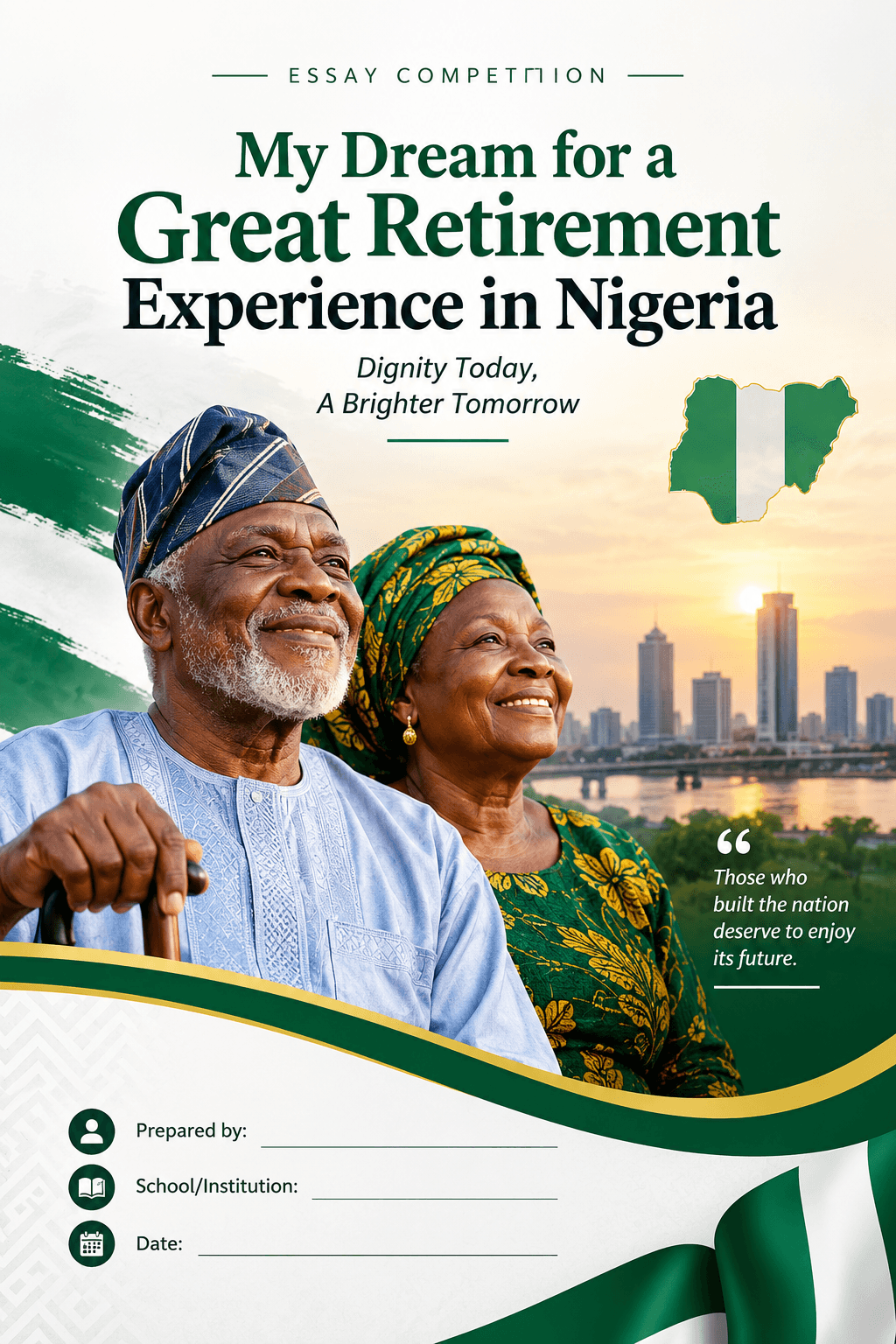
Imagine spending thirty-five years teaching children to build their future, only to reach old age wondering how to pay for your medicine. Imagine serving your country faithfully, yet worrying about tomorrow’s meal after retirement. What is the reward for a lifetime of sacrifice if old age becomes a struggle for survival? My dream is a Nigeria where retirement brings peace, dignity, and the freedom to enjoy the fruits of one’s labour.
Unfortunately, this dream remains uncertain for many Nigerians. Rising living costs, medical expenses, inadequate savings, and pension difficulties can turn retirement into a source of anxiety. An elderly farmer whose strength is fading, a retired teacher struggling with hospital bills, and a former civil servant awaiting benefits all deserve more than sympathy. They deserve a system that recognises their contributions.
The statistics reveal the scale of the challenge. The National Bureau of Statistics reported that 92.7% of employment in Nigeria was informal in the first quarter of 2024. Meanwhile, the National Pension Commission reported approximately 10.8 million Retirement Savings Account members and ₦24.63 trillion in pension assets in June 2025. These figures highlight an important gap: a substantial pension system exists, but retirement protection must also reach workers whose livelihoods depend on trading, farming, and other informal activities. [1][2]
My first dream is a dependable and transparent pension system. Benefits should be paid promptly, contributions carefully managed, and complaints resolved fairly. A pension is not a favour; it is an entitlement earned through years of service. As the familiar proverb says, “A stitch in time saves nine.” Addressing pension problems early can prevent unnecessary hardship later.
My second dream is affordable healthcare. No elderly Nigerian should have to choose between buying food and obtaining essential medicine. Accessible health insurance, better-equipped public hospitals, and regular medical check-ups could help retirees live healthier lives. Growing old should bring rest, not fear of an unaffordable hospital bill.
Beyond financial security, I dream of a society that values its elders. Retired teachers could mentor young educators, experienced farmers could guide new farmers, and skilled professionals could pass their knowledge to younger generations. As an African proverb reminds us, “What an old man sees sitting down, a young man may not see standing up.” Our elders possess wisdom that deserves recognition, not neglect.
To make this vision practical, I propose a Community Retirement Support Network connecting older citizens with healthcare information, financial guidance, companionship, and mentorship opportunities. Government, employers, families, and community organisations must cooperate to make these services accessible and accountable. Affordable pension schemes should also help informal workers prepare for retirement.
I recognise that these changes require resources, careful planning, and responsible leadership. Nevertheless, the difficulty of reform must never become an excuse for abandoning those who served.
Today’s workers are tomorrow’s retirees. The choices Nigeria makes now will shape the future every generation eventually faces. My dream is a nation where no elderly citizen feels forgotten, where a lifetime of contribution is met with gratitude, and where retirement becomes a peaceful sunset rather than a frightening descent into uncertainty. That is the Nigeria I hope to see: a country where those who helped build our future can finally enjoy their own.