Writers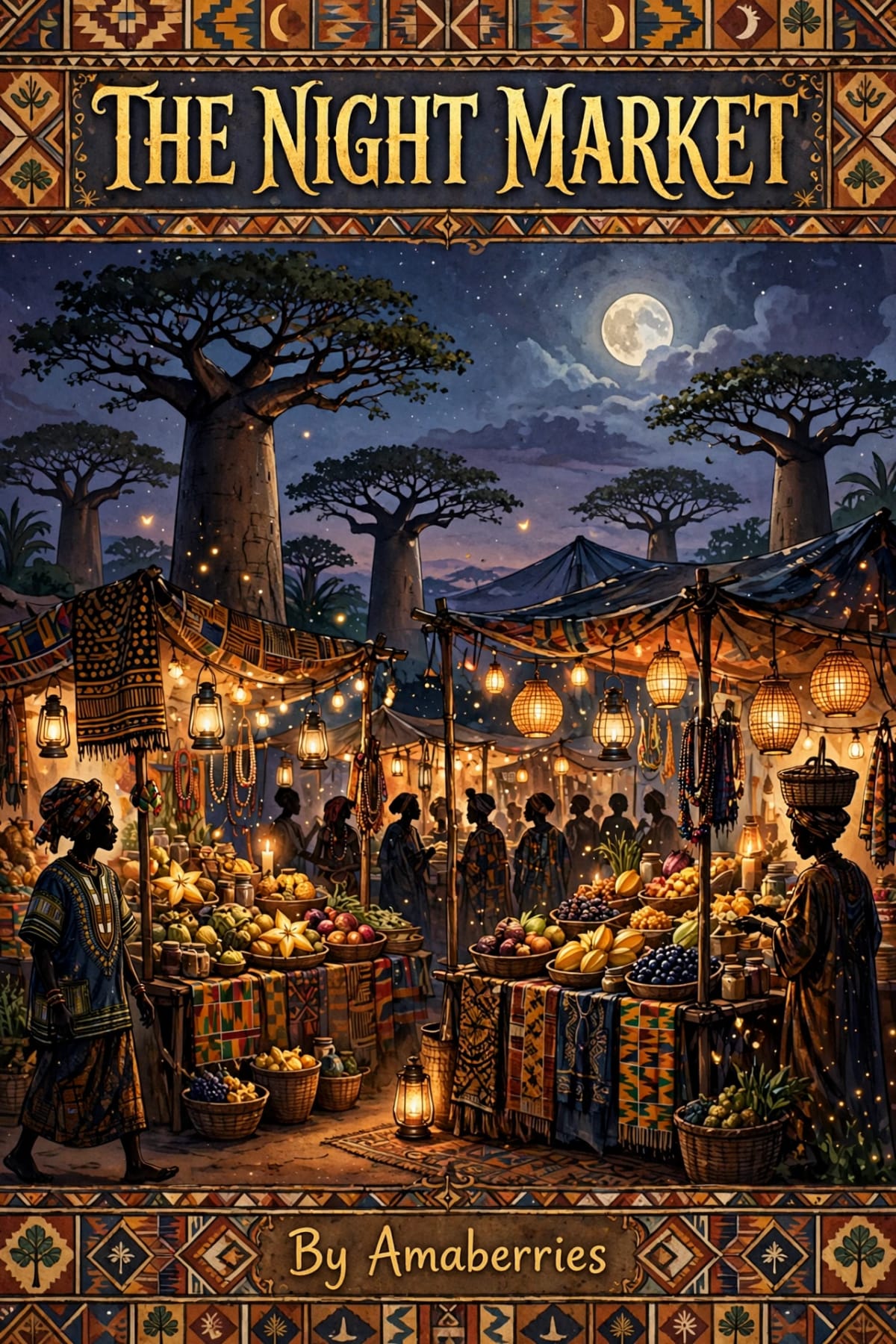
Chapter One — The Warning
In the village of Obodo-Uku, there was a market that did not exist during the day.
Nobody knew who built it.
Nobody knew where it came from.
But every old person in the village knew one rule:
Never follow the sound of a market bell after midnight.
Grandmother Nneka had warned her grandchildren about it since they were little.
“The Night Market is not for the living,” she would say.
Whenever they laughed, she would point toward the forest.
“Those who go there to buy something always leave something behind.”
“What do they leave?” little Chima once asked.
Grandmother Nneka stared into the fire.
“Sometimes their shadow.”
“Sometimes their name.”
“And sometimes…”
She would lower her voice.
“…they leave themselves.”
Everyone thought it was an old woman’s way of frightening children.
Until Amara went there.
Chapter Two — The Bell
Amara was seventeen when hunger came to her family.
Her father had died.
Her mother was sick.
There was barely enough food in the house.
One evening, Amara heard a bell ringing from the forest.
Dong.
She stopped washing clothes.
Dong.
The sound came again.
Then she heard voices.
Hundreds of them.
People bargaining.
Laughing.
Calling out prices.
“Fresh fish!”
“Beautiful cloth!”
“Palm oil!”
“Come and buy!”
Amara looked toward the forest.
The village market was closed.
Yet the sound was unmistakable.
A market was operating somewhere beyond the trees.
She remembered Grandmother Nneka’s warning.
But then she thought about her hungry mother.
She took her basket.
And entered the forest.
Chapter Three — The Road That Wasn’t There
Amara walked for almost an hour.
The moon disappeared behind thick clouds.
Then she saw lanterns.
One.
Then ten.
Then hundreds.
She pushed through the bushes.
And stopped.
A huge market stretched before her.
Stalls covered the clearing.
Lanterns hung from trees.
People walked everywhere.
Women sold baskets.
Men sold meat.
Children carried trays of fruit.
Musicians played drums.
It looked like an ordinary African market.
Except for one thing.
Nobody had a shadow.
Amara almost ran.
Then a woman grabbed her wrist.
“Don’t be afraid.”
Amara looked at her.
The woman’s eyes were completely white.
“First time here?”
Amara nodded.
The woman smiled.
“Then remember this.”
She pointed toward the market entrance.
“When you buy something, you must pay the exact price.”
“What if I don’t have enough money?”
The woman’s smile disappeared.
“Then the market will choose your payment.”
Chapter Four — The Red Necklace
Amara walked deeper into the market.
She saw beautiful things she had never seen before.
Gold bracelets.
Silk wrappers.
Fresh fruits that glowed under the lanterns.
Then she saw a necklace.
It was red.
Beautiful.
Almost alive.
The old woman selling it smiled.
“For your mother.”
“How much?”
“Three hundred naira.”
Amara searched her pocket.
She had exactly three hundred.
She paid.
The old woman placed the necklace in her hand.
Then whispered:
“Whatever happens, don’t wear it before sunrise.”
Amara nodded.
She turned to leave.
The market bell rang.
DONG.
Everyone stopped moving.
The musicians stopped playing.
The sellers stopped talking.
Every face turned toward Amara.
Then the old woman shouted:
“RUN!”
To be continue…