Writers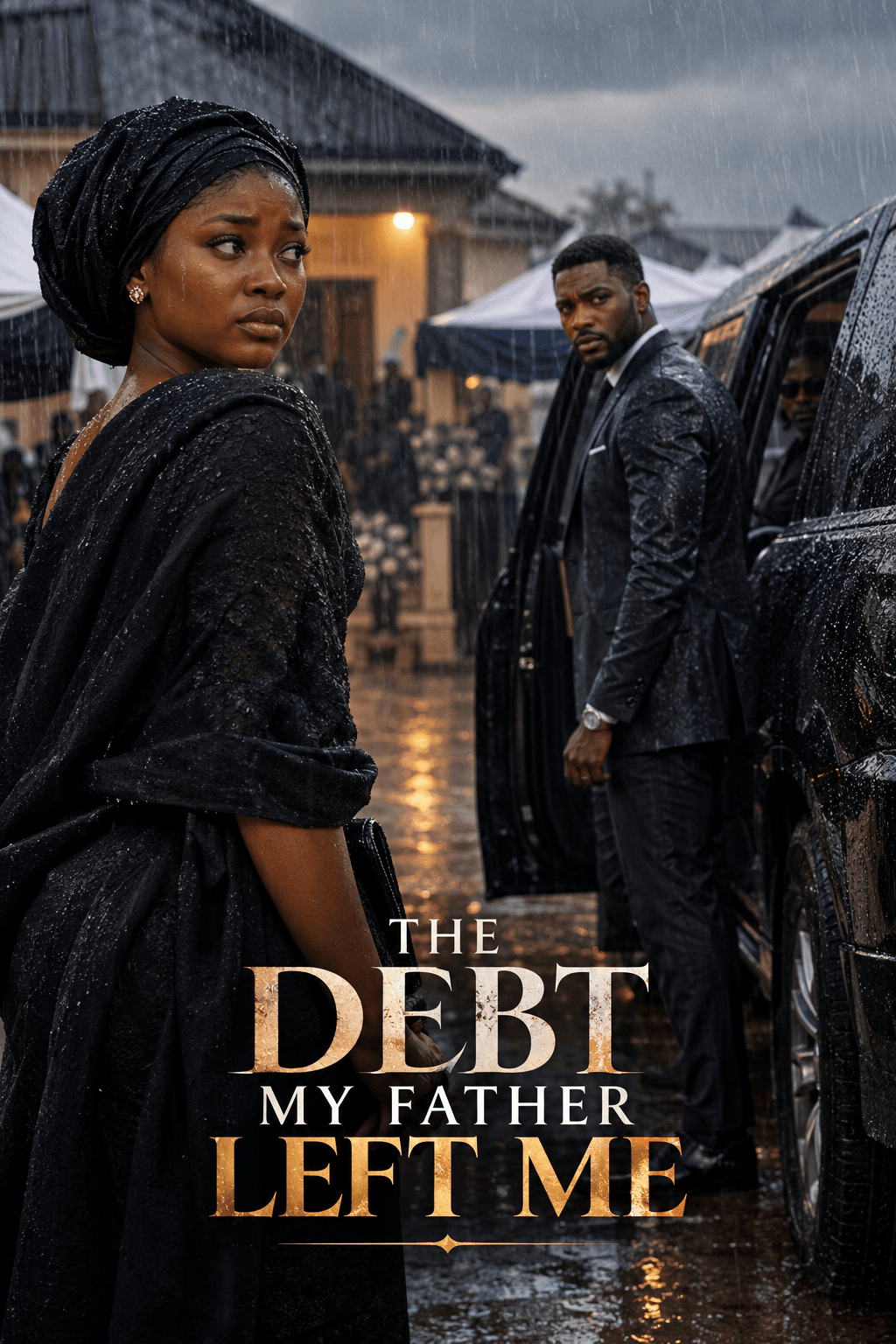
Chapter One: The Funeral Guest.
The rain had not stopped since they lowered my father's coffin into the ground, and I was almost grateful for it. It gave me a reason for the water on my face that wasn't tears.
I was wrong about one thing, though. I thought the worst part of that day was already behind me.
I was wrong.
He arrived when the crowd had thinned to family and the few neighbors too polite to leave before the food was served. A black SUV, the kind that didn't belong on our narrow street, eased to a stop outside the compound gate. I recognized the driver first — stiff-backed, sunglasses despite the rain — before I recognized the man he opened the door for.
Kelechi Obi.
I had seen his face in newspapers my father kept in a drawer he thought I didn't know about. I had never seen it in person. In photographs, he looked powerful. In person, he looked like a verdict.
"Amara Chukwu." He said my name like he already owned it. "I need five minutes."
"This is my father's funeral." My voice came out steadier than I felt.
"I'm aware." He didn't blink. "That's exactly why I'm here."
My aunt Ngozi appeared at my elbow, her hand closing around my wrist the way it used to when I was seven and about to wander into traffic. "Amara, come inside."
"It's alright, Aunty." It wasn't. But something in the way Kelechi Obi stood — patient, unbothered by the rain soaking through his tailored jacket — told me he would still be standing there at midnight if I made him wait that long.
He didn't take me inside. He walked me to the edge of the compound, away from the canopy tents and the smell of jollof rice and grief, and he handed me a folder that had clearly never once touched the rain.
"Your father borrowed four hundred and thirty million naira from my late father twenty-two years ago," he said. "There's no record of repayment. Interest, at the rate specified in that contract, has done what interest does."
I opened the folder with fingers that didn't feel like mine. My father's signature. Twenty-two years old, but unmistakably his — the same looping A he taught me to write my own name with.
"This is impossible." I looked up. "My father was a driver. He drove your father's cars. He didn't borrow — he didn't have four hundred million naira to owe anyone."
"No," Kelechi agreed. "He didn't have it. He took it. And then he vanished for two years, and when he came back, my father never spoke of it again. I didn't understand why until three weeks ago, when I found this contract myself, going through papers I should have gone through fifteen years ago." Something moved behind his eyes then — not sympathy. Something colder and more private than that. "So you'll understand why I'm not interested in waiting another twenty-two years to collect."
"I don't have that kind of money. Nobody in this family does. You can see that." I gestured at the modest bungalow behind us, at the borrowed plastic chairs, at Aunty Ngozi's church shoes with the sole coming loose at the toe. "You're wasting your time."
"I'm not here for the money."
The rain kept falling. Somewhere behind me, someone had started singing a hymn, off-key and sincere.
"Then what do you want?"
Kelechi Obi looked at me the way a man looks at a debt he's finally decided how to collect.
"Marry me," he said, "and the contract disappears. Your mother keeps this house. Your brother finishes his degree. Refuse, and I take everything your father left behind, down to the plastic chairs your aunt borrowed for today, and I do it legally, and I do it slowly, so that everyone in this compound understands exactly whose name is on that signature."
I should have said no. I should have laughed in his face and told him to take his contract to court, to try his luck against a dead man and a grieving family with nothing left to seize.
But I had read the name at the bottom of that contract. I knew my father's handwriting better than I knew my own reflection. And underneath my fear, something colder and quieter was already asking the question I wasn't ready to answer.
What did my father actually do to your family, twenty-two years ago — and why does marrying you feel less like a punishment, and more like the only way I'll ever find out?
"I need time to think," I said instead.
Kelechi Obi almost smiled. It didn't reach his eyes.
"You have until the funeral rice is finished," he said, and walked back to his car, leaving me standing in the rain with a dead man's debt in my hands and a stranger's ring finger already, impossibly, on my mind.
---
FOLLOW UP FOR CHAPTER TWO