Writers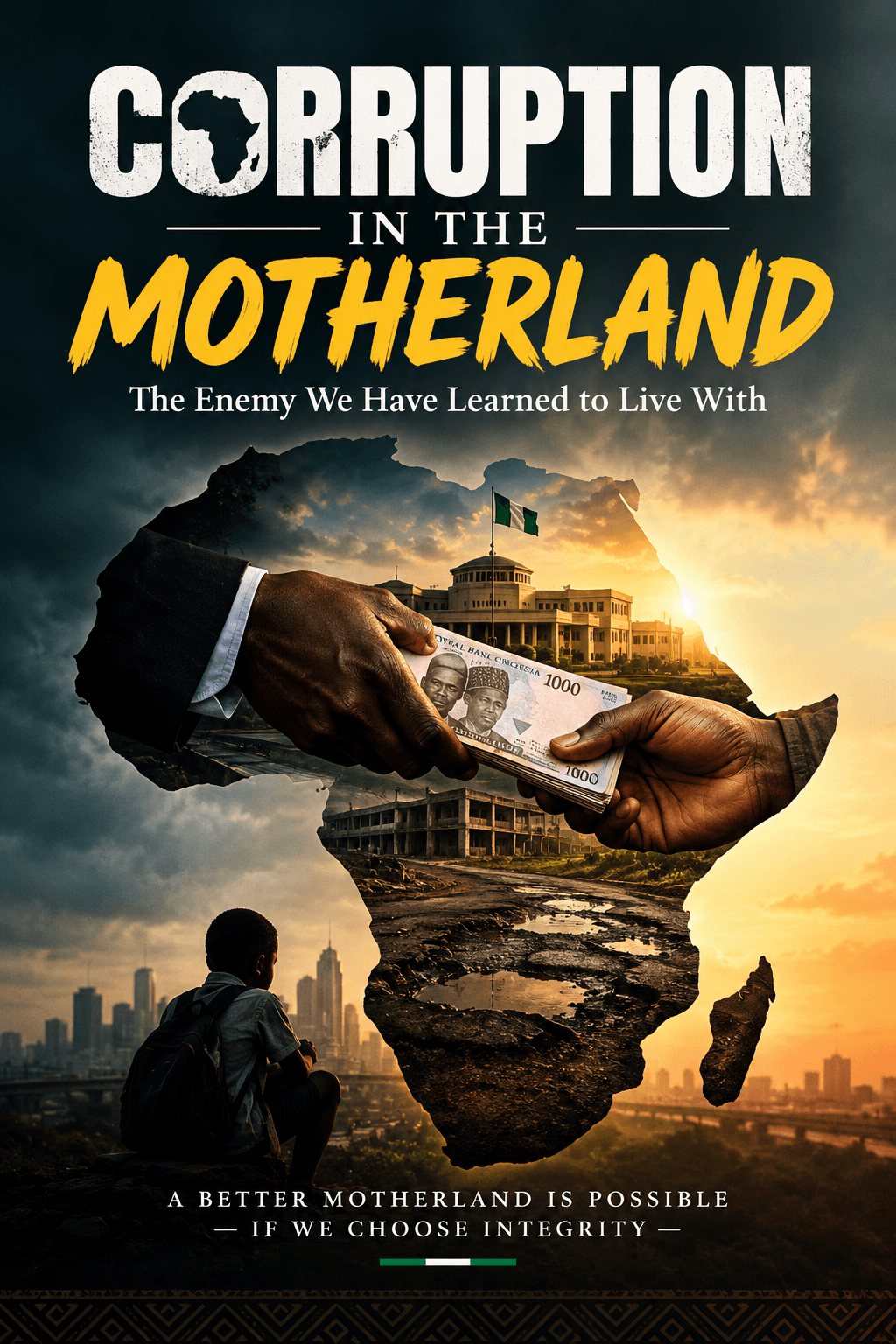
CORRUPTION IN THE MOTHERLAND
Corruption has become one of the greatest wounds of our motherland. We complain about bad leadership, poor roads, failing institutions, unemployment, poverty and inadequate healthcare, yet behind many of these problems lies the same enemy: corruption.
But corruption is not only about politicians stealing public money.
It exists when someone demands money before doing the job they are already paid to do. It exists when opportunities are given to friends and relatives instead of qualified people. It exists when examination malpractice is celebrated as intelligence, when connections matter more than competence, and when people use public positions for personal enrichment.
The painful truth is that corruption survives because it has gradually become normal.
We condemn a politician for stealing millions, but sometimes celebrate a person who cheats the system because “everybody does it.” We criticize leaders for putting their families first, while doing the same thing on a smaller scale whenever we have the opportunity.
This is how corruption becomes a culture.
Our motherland has enough talented people. We have enough natural resources. We have enough young people with ideas, strength and ambition. What we lack is not potential; what we desperately need is integrity, accountability and institutions strong enough to protect the common good.
Corruption also weakens trust. When citizens believe that justice can be bought, they stop respecting the law. When businesses must pay bribes to operate, honest entrepreneurs are punished and economic growth suffers. When public funds disappear, schools remain unfinished, hospitals lack equipment and communities lose hope. Every act of corruption, whether large or small, takes something away from someone else.
Corruption deepens inequality because it allows a few people to enjoy privileges while the majority struggles to survive. A poor family may be unable to afford medicine because money meant for a public hospital has been diverted. A qualified graduate may remain unemployed because a position was sold to someone less capable. A community may wait for years for electricity, clean water or a good road because funds intended for development have been misused. In this way, corruption is not a victimless crime; it directly affects the lives, dignity and future of ordinary citizens.
It also discourages young people from believing in honest work. When they see dishonest individuals becoming wealthy and respected, they may begin to think that integrity is a weakness. Some may choose to leave the country, while others may join the very system they once criticized. This creates a dangerous cycle in which corruption reproduces itself from one generation to another.
The fight against corruption cannot be left entirely to governments. It begins with individuals, families, schools, workplaces and communities. Parents must teach children that honesty is more valuable than quick success. Teachers must reward effort rather than cheating. Employers must promote merit, and citizens must demand transparency from those who represent them.
Governments must make public spending open and understandable. Citizens should be able to know how much money is allocated for roads, schools, hospitals and other projects, as well as how that money is used. Strong auditing systems, independent courts and responsible media can help expose wrongdoing. Technology can also reduce opportunities for corruption by making payments, applications and government services more transparent.
We must also support institutions that investigate wrongdoing and protect people who expose it. Whistleblowers should not be treated as enemies, and public officials should understand that power is a responsibility, not a private opportunity. Laws must be applied fairly, regardless of wealth, status or political connections.
Religious leaders, traditional rulers, civil society organizations and the media also have important roles to play. They must speak against corruption consistently, not only when it affects their opponents. Communities should reject the practice of praising wealthy people without asking how their wealth was acquired. True success should be measured not only by possessions, but also by character and the positive impact a person makes.
If we want a better motherland, we must be willing to become the kind of citizens who deserve one. We cannot wait for perfect leaders before choosing integrity ourselves. Change may begin with refusing a bribe, reporting misconduct, rejecting favoritism or simply doing our work honestly when nobody is watching.
Africa does not need another generation that simply complains about corruption.
We need a generation courageous enough to reject it.
The motherland belongs to all of us. What we do with it today will determine what our children inherit tomorrow.