 Writers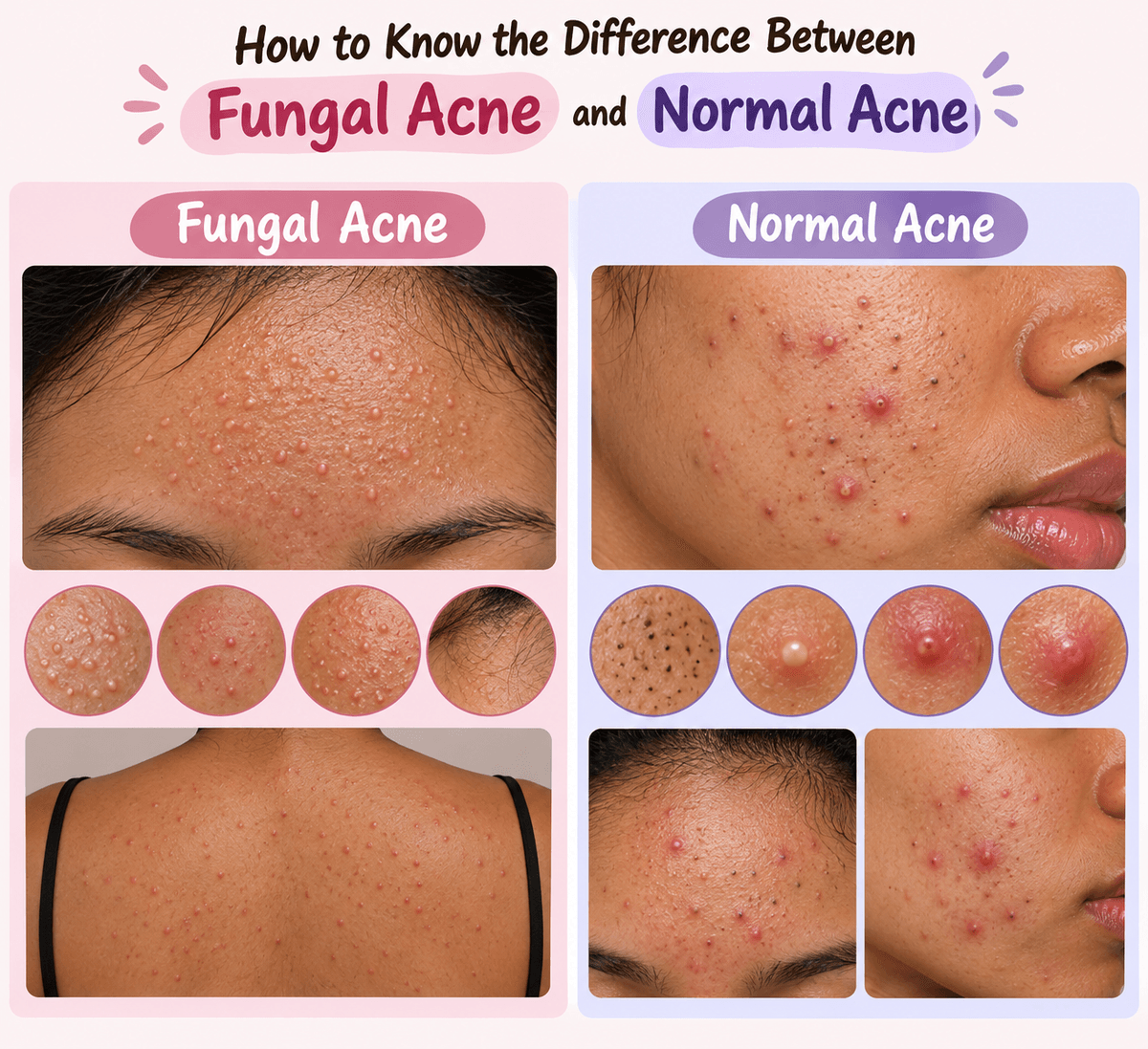
Have you ever noticed small bumps appearing on your face and wondered why they refuse to go away, even after trying different skincare products? Before buying another acne treatment, it is important to understand that not all acne-like bumps are the same. What many people call fungal acne may actually be a different skin condition from ordinary acne. Knowing the difference can help you make better skincare decisions and avoid products that may worsen your skin.
What Is Normal Acne?
Normal acne, also known as acne vulgaris, develops when hair follicles become clogged with oil, dead skin cells, and other substances. Bacteria and inflammation can also contribute to its development.
Normal acne can appear as blackheads, whiteheads, red bumps, or pimples filled with pus. In more severe cases, it may cause deeper, painful lumps beneath the skin.
It commonly affects the face, chest, shoulders, and back. Hormonal changes, genetics, certain medications, and some skincare products can contribute to breakouts.
What Is Fungal Acne?
Fungal acne is the popular name for a condition called Malassezia folliculitis. Unlike normal acne, it occurs when yeast that naturally lives on the skin multiplies inside hair follicles and causes inflammation.
It often appears as numerous small, similar-looking bumps. These bumps may be itchy, particularly when the skin becomes hot or sweaty. It commonly affects the forehead, hairline, chest, shoulders, and upper back.
Although it resembles acne, fungal acne is not the same condition, meaning ordinary acne treatments may not help it.
5 Ways to Tell the Difference
1. Look at the appearance of the bumps.
Normal acne usually consists of different types of spots, including blackheads, whiteheads, and pimples of varying sizes. Fungal acne often produces many small bumps that look almost identical.
2. Pay attention to itching.
Itching is more commonly associated with fungal acne, especially after sweating or spending time in hot, humid conditions. Normal acne may feel tender or painful, but intense itching is less typical. However, itching alone cannot confirm the condition.
3. Check where the bumps appear.
Normal acne frequently affects the face, particularly the forehead, cheeks, chin, and jawline. Fungal acne often appears along the hairline and may also affect the chest, shoulders, and back. Both conditions can occur in overlapping areas.
4. Notice what happens after sweating.
Fungal folliculitis can worsen in warm, humid conditions, especially when sweat and friction contribute to the problem. Normal acne can also worsen with sweat, so this sign is not enough to tell them apart.
5. Consider how your skin responds to treatment.
Some ordinary acne treatments may not improve fungal folliculitis and can sometimes irritate the skin. However, a poor response to acne products does not automatically mean you have fungal acne. A dermatologist can examine your skin and, when necessary, perform a test to confirm the diagnosis.
What Should You Do If You Are Unsure?
Avoid immediately applying antifungal creams, strong acne treatments, or multiple new products to your face. These treatments are not interchangeable, and using the wrong one may worsen irritation.
Choose gentle skincare, avoid picking at bumps, and seek professional advice if the problem persists, spreads, becomes painful, or leaves marks. If your skin is already sensitive, introduce products carefully and avoid harsh scrubs.
Remember that other conditions, including bacterial folliculitis and irritation from skincare products, can resemble both types of acne.
Final Thoughts
Understanding the difference between fungal acne and normal acne is an important step towards healthier skin. Pay attention to the appearance, location, itching, and behaviour of your bumps, but do not rely on these signs alone to diagnose yourself.
Your skin deserves the right treatment, not just another trending product. Learn to understand your skin, seek professional advice when needed, and remember that achieving healthier skin begins with making informed choices.