Writers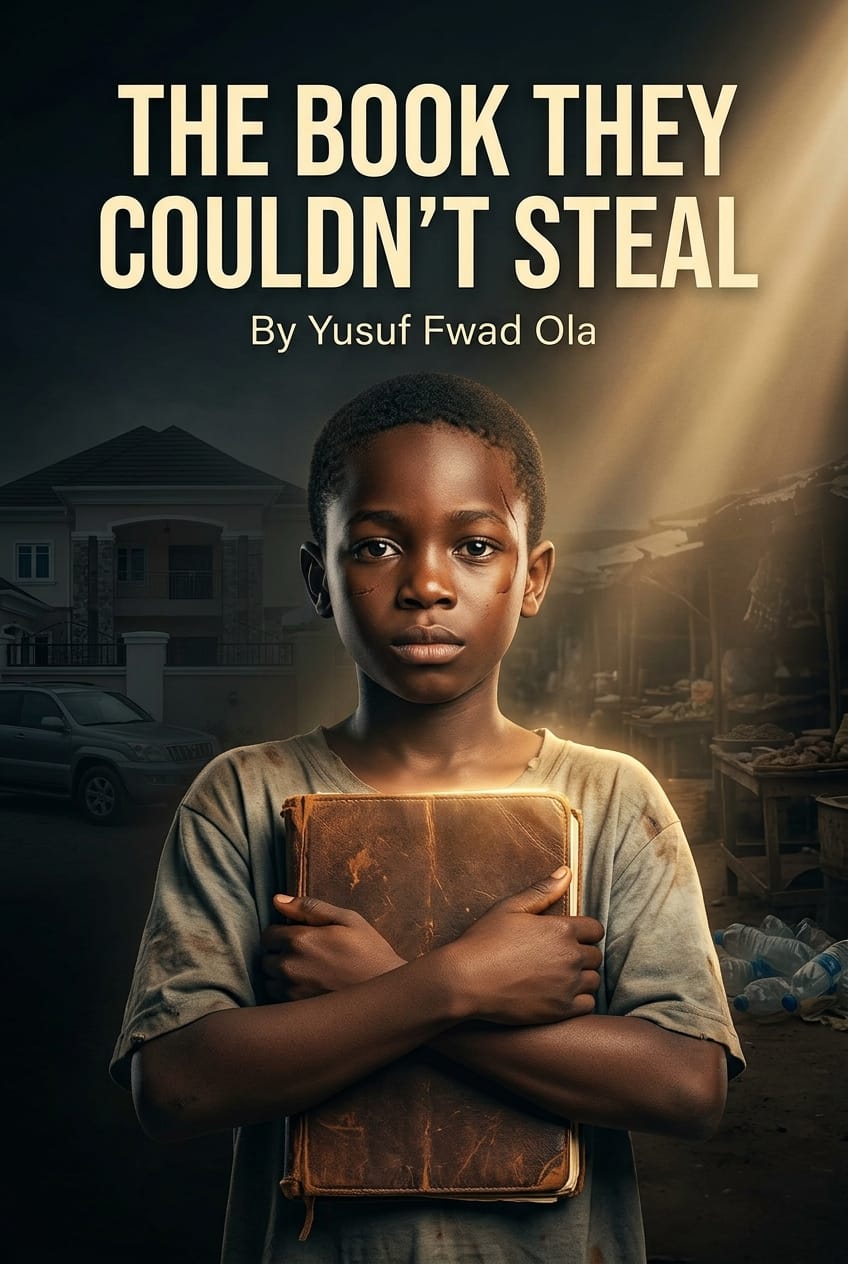
Writing the essay took Suleiman almost three weeks.
Not because the words were hard to find — once he began, they poured out of him faster than he could organize them — but because facing the full truth of his own story, laid out plainly on paper with no vague language to hide behind, forced him to relive every painful stage of it in a way he had never allowed himself to do before.
He wrote about his father, about the sound of buses rolling into the compound every evening, about the leather notebook and the nightly ritual of watching his father write in it without understanding why. He wrote about the Thursday afternoon that changed everything, about his mother's broken voice, about hundreds of mourners in white who later revealed themselves as vultures circling long before the burial soil had even settled.
He wrote about Alhaji Musa and the buses that disappeared, about cousins who claimed rooms with fabricated promises, about signatures obtained from a grieving woman too exhausted to fight back. He wrote about the single room with one window, about his mother's hands turning rough from washing other people's clothes, about hunger that arrived not occasionally but as an unwelcome permanent resident in their small home.
He wrote, with a level of honesty that frightened him even as he typed it, about digging through rubbish behind Tanke market, about the shame of being seen by people who once knew him as "the transport man's son," now reduced to searching through refuse for a few coins.
And he wrote about Wasiu. About the bottle. About waking up in the clinic with his father's notebook safely tucked beside him because a stranger named Baba Yakubu had chosen kindness in a moment when cruelty would have been easier to walk past.
Finally, he wrote about opening the notebook for the first time, about discovering his father's letters, about the hidden account that had allowed him to return to school, and about the sentence that had become, without his fully realizing it until he wrote it down, the guiding principle of his entire life since that night.
A man is not what he owns. A man is what he builds after he has lost everything.
He ended the essay with the scar itself — no longer hidden beneath careful hair-combing, no longer a source of shame he flinched away from when people looked too closely.
I used to hate this scar, he wrote in his final paragraph. I grew my hair long to hide it. I turned my head at odd angles in photographs so nobody would notice it. I believed, for a long time, that it marked me as someone the world had permission to discard — proof that I had fallen from whatever I used to be into something lesser. But I no longer believe that. My father wrote that a man is what he builds after losing everything, and I am beginning to understand that a scar works the same way. It does not mark what was taken from you. It marks that you were still standing afterward. I am still standing. And I intend to build something with what remains.
When he finally handed the completed essay to Mrs. Adeyemi, his hands trembled slightly, though not from the cold.
She read it in silence while he sat across from her, unable to look directly at her face, terrified of what her expression might reveal. When she finally looked up, her eyes were wet, though she quickly composed herself, clearing her throat in the brisk, businesslike manner she used whenever emotion threatened to overwhelm her professional exterior.
"Suleiman," she said quietly, "this is exactly what I hoped you would write. Perhaps even more than I hoped."
She submitted it to the foundation that same week, along with a personal letter of recommendation detailing his academic improvement since returning to school despite everything working against him.
The waiting period that followed was, in some ways, harder than everything that had come before it. Suleiman had learned, through years of repeated loss, not to allow himself too much hope — hope felt dangerous, felt like something the universe seemed determined to punish him for whenever he indulged in it too openly. He tried to continue his ordinary routine — school, occasional scavenging on weekends to help with household expenses, evenings spent rereading portions of his father's notebook — while trying not to think too much about an application that might amount to nothing at all.
Six weeks later, a letter arrived at the school addressed to him directly.
Mrs. Adeyemi called him to her office to open it, perhaps sensing that whatever the outcome, he might need someone steady beside him when he read it. His hands shook as he tore open the envelope, unfolding the single page inside, his eyes scanning quickly past the formal greeting toward the words that actually mattered.
We are pleased to inform you that your application for the Full Circle Foundation Scholarship has been approved...
Suleiman read the sentence three times before it fully registered, before the meaning behind those formal words actually settled into his understanding. Full school fees, covered through university, along with a monthly stipend to help with basic needs. Not because of who his father had once been. Not because of buses or buildings that no longer belonged to his family. But because of what he had written, in his own words, about surviving the loss of all of it.
He looked up at Mrs. Adeyemi, unable to speak, and she simply nodded, her own eyes bright with tears she made no further effort to hide.
"Your father would be proud," she said softly. "Not of what he left you. Of what you built with it."
Suleiman would carry that scholarship letter with him for years afterward, tucked inside the same leather notebook where it all began, a physical reminder that the essay he'd been most terrified to write honestly had become the exact thing that changed everything.
But even as he celebrated that evening with his mother, who wept and laughed in equal measure upon hearing the news, Suleiman had no idea that the scholarship was only the beginning — that the essay itself, forwarded quietly by someone at the foundation to a contact in local media, was about to reach far more eyes than either he or Mrs. Adeyemi had ever intended, setting into motion attention that would eventually bring him face to face with the very relatives who had stolen his inheritance in the first place.