Writers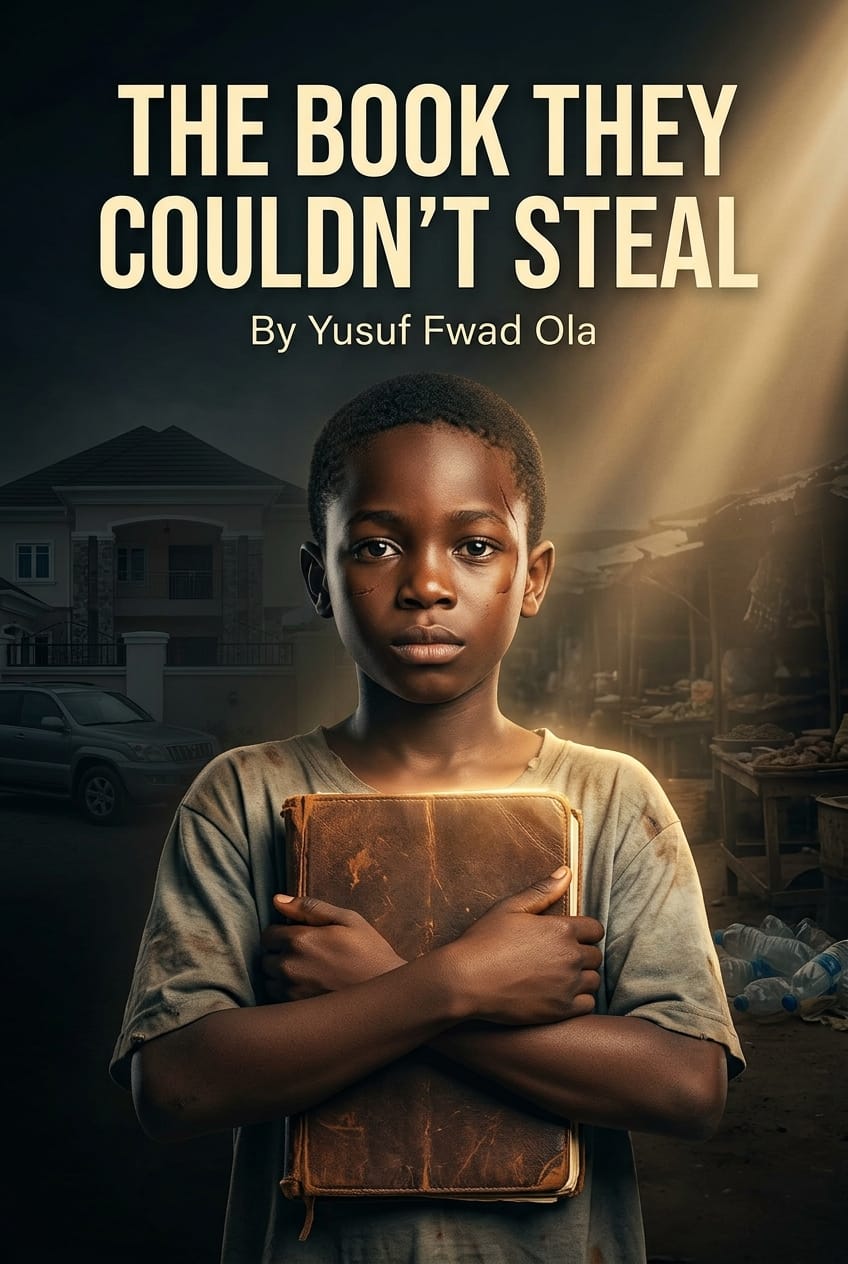
Returning to school after nearly two years away was not the triumphant moment Suleiman had quietly hoped it might be.
He was placed with students two years younger than him, since his education had stalled while theirs continued. At fourteen, sitting among eight-year-olds, he felt every inch of the gap between them, not just in age, but in experience. They worried about exam scores and playground disputes. He had buried a father, lost an inheritance, scavenged through rubbish for survival, and taken a glass bottle to the skull. Their worlds no longer matched, even though they now shared the same classroom.
The scar didn't help. It sat visibly above his left ear, a curved, pale line that no amount of careful hair-combing could fully hide. Within the first week, someone noticed it and asked what happened. Suleiman, embarrassed, mumbled something vague about an accident.
By the second week, the truth — or some exaggerated version of it — had spread through the school anyway, the way truth always seems to travel faster among children than any adult intends.
"Curve Head," one boy called him during break time, pointing at the pale, curved shape of the scar, and the nickname stuck with the particular cruelty that only children can inflict, repeating it until it became simply how people referred to him, forgetting he had ever had another name at all.
Suleiman endured it the way he had learned to endure everything else, silently, without complaint, focusing instead on the work in front of him. If anything, the mockery pushed him deeper into his studies, because schoolwork was the one place where nobody could steal what he earned. Grades couldn't be forged away by a dishonest uncle. Knowledge couldn't be sold off to settle someone else's greed.
He excelled, not because school came naturally easy to him, but because he approached it with the same desperate focus he'd once brought to searching rubbish heaps for bottles — thorough, relentless, unwilling to leave anything unclaimed.
It was in that classroom, during his second term back, that he first encountered Mrs. Adeyemi, his English Language teacher, a woman in her fourties with sharp eyes that seemed to notice everything, including the things her other students tried hardest to hide.
She noticed, early on, that Suleiman rarely spoke unless called upon, that he flinched slightly whenever anyone got too close to the left side of his head, that he wrote essays with a depth and heaviness unusual for a boy his age. Most teachers might have overlooked these small signals, buried under the daily chaos of managing a full classroom. Mrs. Adeyemi did not.
One afternoon, after class had emptied out, she asked Suleiman to stay behind.
He assumed he was in trouble, though he couldn't think of anything he'd done wrong. Instead, she simply placed his most recent essay on the desk in front of him — an assignment about "A Difficult Experience," which he had written, cautiously, about losing something valuable without naming exactly what, or why, or how.
"This is good writing, Suleiman," she said, tapping the paper. "Better than good. But I notice you're holding something back. There's a real story underneath this one, isn't there?"
Suleiman said nothing, staring down at the desk.
"You don't have to tell me," Mrs. Adeyemi continued gently. "But Whatever happened to you — and something clearly did happen — you have a way of putting pain into words that most adults never manage to develop in their entire lives. That's not nothing. That's a gift most people search for and never find."
Nobody had ever called anything about Suleiman's situation a "gift" before. Every other adult who learned pieces of his story treated him with pity, or occasionally suspicion, as though poverty itself were something contagious to be handled carefully from a distance. Mrs. Adeyemi was the first person who looked at what he carried and saw something worth developing, rather than something to feel sorry about.
Over the following weeks, she began giving him additional writing assignments, beyond what the rest of the class received — not as punishment, but as encouragement, pushing him to explore subjects with more honesty, more depth. Slowly, cautiously, Suleiman began writing about pieces of his real story. Not the whole truth at first — that felt too dangerous, too exposing — but fragments. A boy who lost his father. A family torn apart by greed. A notebook that held more value than money.
Mrs. Adeyemi read each piece carefully, offering corrections, but more importantly, offering the one thing Suleiman hadn't received from an adult since his father's death: consistent, genuine attention.
It was during one of these after-class conversations, several months into their unusual mentorship, that Suleiman finally worked up the courage to ask her the question that had been building inside him for weeks.
"Ma," he said carefully, "do you think... do you think someone like me could actually become something? A real writer, I mean. Not just for school assignments."
Mrs. Adeyemi set down her pen and looked at him with an expression so serious it startled him.
"Suleiman," she said, "I have taught for over ten years. I have seen thousands of students pass through my classroom. Very few of them write with the honesty you write with. Fewer still have lived through enough to have something real to say. You have both. The only question is whether you'll have the opportunity to develop it — and unfortunately, in this country, talent alone rarely determines whether that opportunity arrives."
She paused, studying him carefully, as though weighing something significant in her mind.
"There is a foundation," she said slowly, "that offers scholarships to students with difficult backgrounds and genuine promise. The application requires an essay. A real one. Not a school assignment — your actual story, told honestly, in your own words."
Suleiman felt something tighten in his chest — hope, terrifying and unfamiliar after years of learning not to expect good things.
"Would you be willing to write that?" Mrs. Adeyemi asked. "Not the polite, safe version you've been giving me in class. The real one. Your father. The notebook. Everything."
Suleiman sat in silence for a long moment, his hand instinctively moving to the scar above his ear, the mark he had spent months trying to hide, trying to explain away, trying to forget.
He thought about his father's words in the notebook — a man is not what he owns, a man is what he builds after he has lost everything — and slowly, for the first time since Wasiu's bottle had struck him down in that market, he began to understand that the scar wasn't something to hide at all.
It was proof that he had survived something most people never had to face.
"Yes," Suleiman said quietly, meeting his teacher's eyes directly for the first time in their entire conversation. "I'll write it. The real one.
He had no idea, as he said those words, that the essay he was about to write — raw, unfiltered, and completely honest — would not only determine the next stage of his education, but would eventually be read by people far beyond the small foundation Mrs. Adeyemi had in mind, setting into motion a chain of events that would carry his father's name, and his own, further than either of them ever could have imagined.