 Writers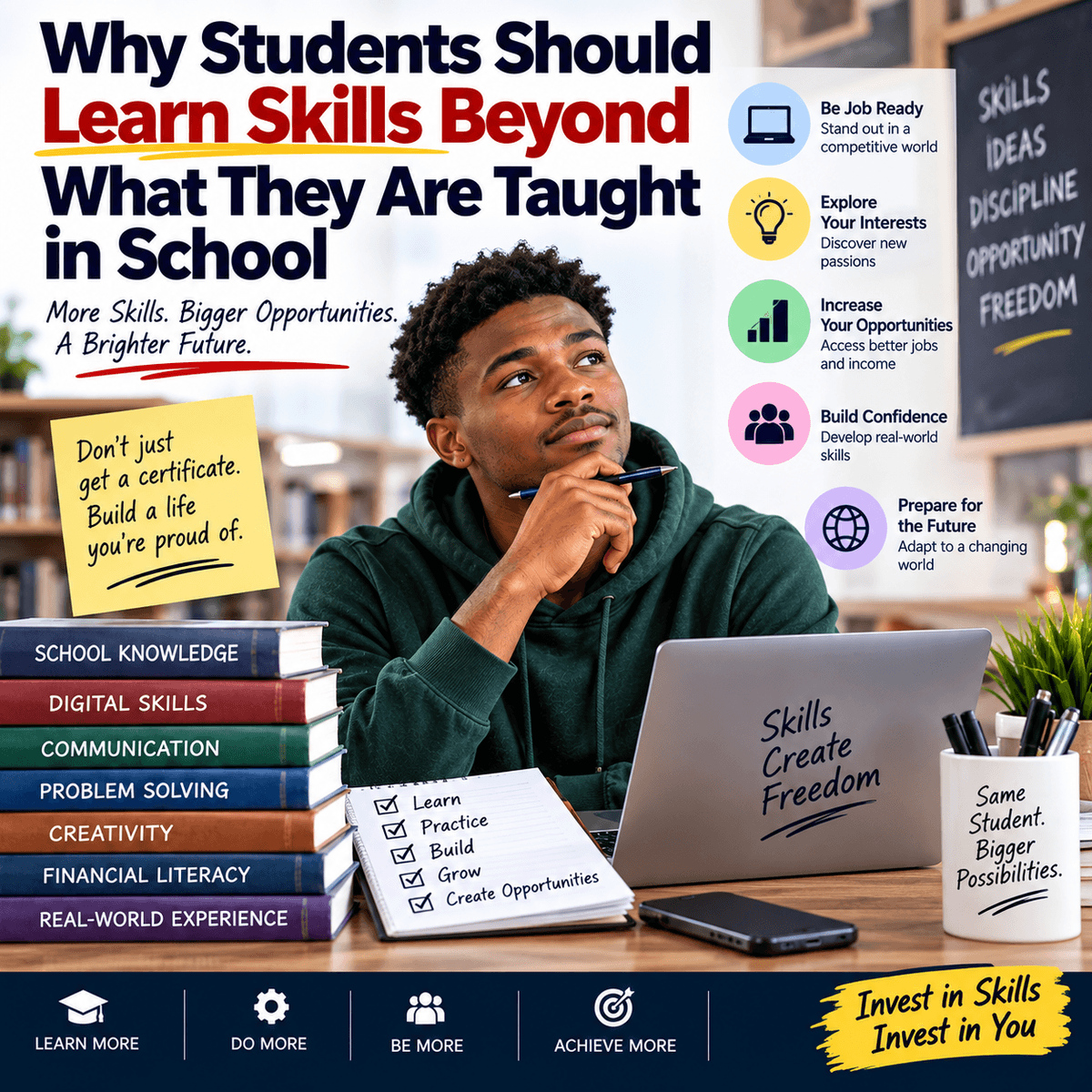
Education plays an important role in preparing people for work and life, but students should not depend only on what they learn in the classroom. Schools and universities provide organised learning, teachers, course materials, tests and opportunities to understand important ideas in a chosen field. These are valuable, but the world outside school often requires skills that may not receive much attention in a formal course. A student can earn good grades and still struggle with writing a professional email, speaking confidently during an interview, preparing a clear presentation, using common workplace software or managing personal finances. This does not mean formal education has failed. Schools have limited time and must cover the subjects set out in their courses. Students therefore need to take some responsibility for learning useful skills outside their main subjects. A university student studying engineering, for example, needs strong knowledge of engineering, but the student may also gain from learning how to analyse data, communicate ideas and work with others. A business student may understand theories about management yet still need practical experience with spreadsheets, research, sales or digital tools. The same applies to students in the arts, sciences and other fields. Learning outside the classroom does not require abandoning your studies or trying to become an expert in everything. Your main course should still receive proper attention. The aim is to add useful abilities that support what you already study and prepare you for situations you may face after graduation. Students who understand this early can use their years in school not only to work towards a certificate but also to discover what they can do well, practise useful skills and become better prepared for the next stage of their lives.
One important area students should develop is communication because almost every career requires people to share information with others. A student may understand a subject very well but struggle to explain an idea clearly. This can become a problem during job interviews, meetings, presentations or work with clients. Students can improve their communication while they are still in school. Class presentations provide a chance to practise speaking in front of people. Group assignments can teach students how to listen, discuss ideas and handle disagreements. Essays and reports can help improve writing when students take them seriously instead of completing them only to earn marks. Students can also learn how to write professional emails, prepare a simple report and present information in a clear way. Digital skills are also worth developing. This does not mean that every student must learn computer programming. The right digital skills depend on the person's field and goals. For some students, advanced spreadsheet skills may be useful. Others may benefit from data analysis, design, research tools, online marketing, computer-aided design or other software used in their chosen profession. The best way to choose is to look at the type of work you hope to do after school. Read job descriptions and note the skills employers often request. Speak with graduates who already work in the field and ask which tools they use regularly. This helps you avoid spending months learning something simply because it is popular online. A useful skill should have a clear link to your studies, career plans, business interests or personal development.
Students should also learn how to apply knowledge instead of focusing only on passing examinations. Examinations have an important purpose, but remembering information long enough to answer questions is different from knowing how to use that information to solve a problem. Practical learning helps close this gap. If you are studying accounting, practise working with financial records rather than limiting yourself to definitions and formulas. If you study computer science, build small programs or take part in projects. If you study estate management, practise analysing property information, writing reports and working with market data. If you study marketing, try creating a simple marketing plan for a real or imagined business and measure the results where possible. Students can also gain practical experience through internships, volunteer work, school clubs, competitions, research projects and small personal projects. Not every opportunity needs to come with a certificate. What matters is whether it gives you a chance to practise. When you complete a useful project, keep a record of what you did, the problem you tried to solve, the tools you used and what you learned. Over time, these projects can help you build a body of work that shows your abilities. Practical experience can also reveal whether you truly enjoy a field. A career may sound attractive when you read about it, but doing some of the actual work can give you a much clearer view. Discovering this while you are still a student gives you time to adjust your plans, learn another skill or explore a different part of your field.
Learning how to manage money and time can also help students long after graduation. Many young people finish school having studied difficult subjects but with little experience of preparing a budget, separating needs from wants, saving regularly or understanding the true cost of borrowing. These are everyday skills that can affect future choices. Students do not need a large income before learning how to manage money. If you receive an allowance, earn from a small business or make money from part-time work, you can practise planning how to use it. Keep track of what comes in and what goes out. Set aside a small amount when possible and learn to avoid spending simply because other people are spending. Time management is equally important. A student may have lectures, assignments, examinations, family duties, social activities and personal learning competing for attention. Trying to learn five new skills at once can lead to poor results in all of them. Choose one skill that matters to you and set aside a realistic amount of time for it each week. Even a few focused hours can produce results when you remain consistent. Students should also learn to judge information carefully. The internet provides access to courses, videos, articles and advice on almost every subject, but not everything online is correct. Check who created the information, look for reliable sources and be careful with people who promise quick success. Learning independently is not just about finding information. It also requires deciding which information deserves your trust and knowing when you need guidance from someone with more knowledge or experience.
A certificate can help you qualify for opportunities, but it should not be the only thing you take away from your years in school. Use your education as a base and build useful skills around it. Learn to communicate clearly, use tools that matter in your field, work with other people, manage your time, handle money responsibly and turn what you study into practical work. You do not have to learn everything before graduation, and you should not compare yourself constantly with students who appear to be doing more. Start with your own goals. Ask yourself what type of work you may want to do, what skills that work requires and which of those skills you can begin developing now. Then take small steps. Complete a course when it has a clear purpose, practise what you learn and look for chances to use it. Ask for feedback and improve when you make mistakes. Your career may change after graduation, and some skills that seem important today may become less useful with time. The ability to keep learning, however, will remain valuable. School can give you knowledge, structure and qualifications, but your own effort can add the practical abilities that help you use that education well. Do not wait until you have graduated and started applying for jobs before thinking about what you can actually do. Begin while you are still a student. The combination of formal education, practical skills and a willingness to keep learning can give you more ways to respond to the opportunities and challenges you meet after school.
