 Writers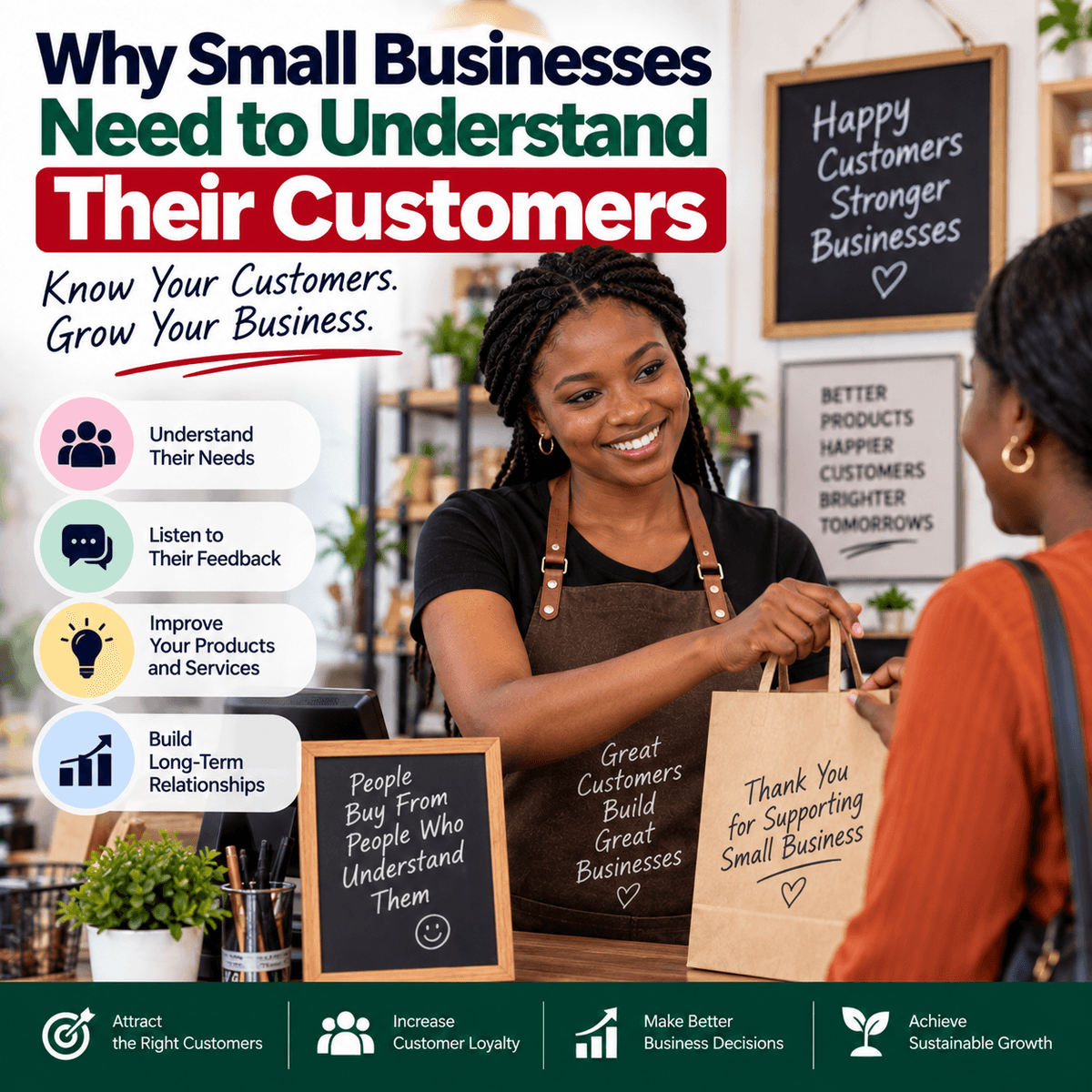
Starting a business involves more than having a good product or service. You also need people who are willing to pay for what you offer, and this is why understanding your customers should be a major part of running a small business. Some business owners start with an idea they personally like and assume other people will automatically want it. They invest money in stock, rent a shop, create social media pages and spend on advertising before finding out whether enough customers actually need what they are selling. A product can be well made and still struggle if it does not solve a problem that matters to the people it targets. Understanding customers means knowing who is most likely to buy from you, what they need, what problems they face, what they can afford, what affects their buying decisions and what they expect after making a purchase. Consider a person who wants to start a food delivery business. It is not enough to say that everyone eats food and therefore everyone is a possible customer. Office workers may want quick lunch delivery during working hours, students may focus more on low prices, families may prefer larger portions, while people with certain food needs may care more about ingredients. Each group may expect something different. A small business usually has limited money, time and staff, so trying to serve everyone can waste resources. It is often more useful to identify a clear group of customers and understand them well. This does not mean refusing to sell to people outside that group. It simply gives the business a clearer idea of whose needs should guide its main products, prices, messages and services. Before spending heavily on a new idea, speak with potential customers, observe what they already buy and find out what problems they still have. The information you gather may help you change the idea before you lose money.
Listening to customers can also help a business improve what it already sells. Business owners sometimes assume that they know exactly what customers want because they created the product or have worked in the industry for years. Customers, however, experience the business from a different point of view. They may notice problems that the owner does not see. Perhaps ordering takes too long, payment options are limited, delivery is unreliable, product information is unclear or staff members do not respond quickly to questions. These issues can affect whether a customer returns even when the product itself is good. Small businesses can gather useful information in simple ways. Ask customers why they chose a product, what they liked and what they think could improve. Pay attention to questions people ask repeatedly. If ten customers keep asking whether you offer a certain size, payment method or delivery option, that may be worth investigating. Reviews and complaints can also provide useful information. A complaint should not automatically be treated as an attack on the business. Some complaints may be unfair, and a business does not have to accept every demand, but repeated complaints about the same issue deserve attention. You can also keep basic records of which products sell, when sales are highest, which items customers buy together and which products remain unsold for long periods. These records can reveal patterns that memory may miss. For example, you may believe one product is your most important item because customers talk about it often, while your sales records show that another product generates more repeat purchases. Customer understanding should therefore come from both what people say and what their actions show. The goal is not to obey every customer request. It is to collect enough useful information to make better business decisions.
Understanding customers also affects pricing. Setting a price involves more than looking at what competitors charge or adding a random amount to your costs. You need to know your costs, the value customers place on the product, the alternatives available to them and the type of customer you want to serve. A business that targets customers who place a high value on speed, convenience or specialised service may make different pricing choices from a business competing mainly on low cost. Problems arise when a business chooses a price without understanding how its customers make decisions. Setting prices too low can reduce the money available to cover costs and may make the business hard to sustain. Setting them too high without giving customers enough value can reduce demand. Customer knowledge can also guide promotions. Instead of reducing prices simply because sales are slow, find out why people are not buying. Price may not be the problem. Customers may not understand the product, they may not trust the business yet, the location may be inconvenient or they may prefer another option. The same principle applies to marketing. A business can spend heavily on adverts and still achieve poor results if those adverts reach the wrong people or focus on information customers do not care about. If customers mainly want reliable delivery, your marketing should make your delivery process clear. If they care about durability, explain the quality of the product and support your claims. If they need an affordable option, show them what they receive for the price. Good marketing starts with knowing the question a potential customer is asking and providing a clear answer. Small businesses should therefore avoid copying another company's marketing simply because it looks successful. The other business may serve a different type of customer. Your own customers should guide how you explain your offer.
Customer understanding becomes even more important when a business wants repeat sales. Finding a new customer can take time and money, so giving existing customers a good reason to return can help a small business grow. Repeat business usually depends on more than the product alone. Customers remember how you treated them, whether you kept your promises, how you handled mistakes and whether buying from you was easy. If you promise delivery on Tuesday and realise there will be a delay, tell the customer rather than waiting for the customer to start calling. If you make an error, acknowledge it and explain what you can reasonably do to correct it. If a customer asks a question, provide a clear answer instead of making the person feel like a burden. These small actions can affect trust. Keeping simple customer records can also help where it is suitable and lawful. For example, a business may track past orders so that it can provide better support when a customer returns. However, customer information should be handled with care. Collect only information you have a clear reason to use, protect it properly and avoid sending unwanted messages simply because someone once bought from you. Understanding customers does not mean invading their privacy. It means using information responsibly to improve the service you provide. A business should also pay attention when regular customers stop buying. You may not always know why, but when possible, a polite request for feedback can reveal a problem. Perhaps prices changed, service became slower or a competitor now offers something customers prefer. Losing some customers is normal, but a clear pattern may show that the business needs to change something.
A small business does not need expensive research before it can understand its customers better. Start with the information already available to you. Look at who buys, what they buy, how often they return, what questions they ask and what problems they report. Speak with customers and listen without trying to defend every decision. Keep basic sales records and review them. When you want to introduce a new product, test the idea on a smaller scale where possible before committing a large amount of money. If customers respond well, you can expand. If they do not, find out why and decide whether to change the offer or stop it. Customer needs can also change, so research should not happen only when the business starts. Changes in income, technology, competition, location and lifestyle can affect what people buy and how they buy it. A business that understood its customers five years ago may need to learn about them again today. The aim is not to predict every decision customers will make. No business can do that. The aim is to reduce guesswork. When you understand the people you serve, you can make better choices about your products, prices, marketing and customer service. You can spend limited business funds with a clearer purpose and identify problems before they become more costly. A good business idea matters, but customers decide whether that idea produces sales. Learn who they are, listen to what they tell you, study what they actually do and keep improving the way your business meets their needs. The more clearly you understand your customers, the better prepared you are to build a business that people have a reason to choose and return to.
