 Writers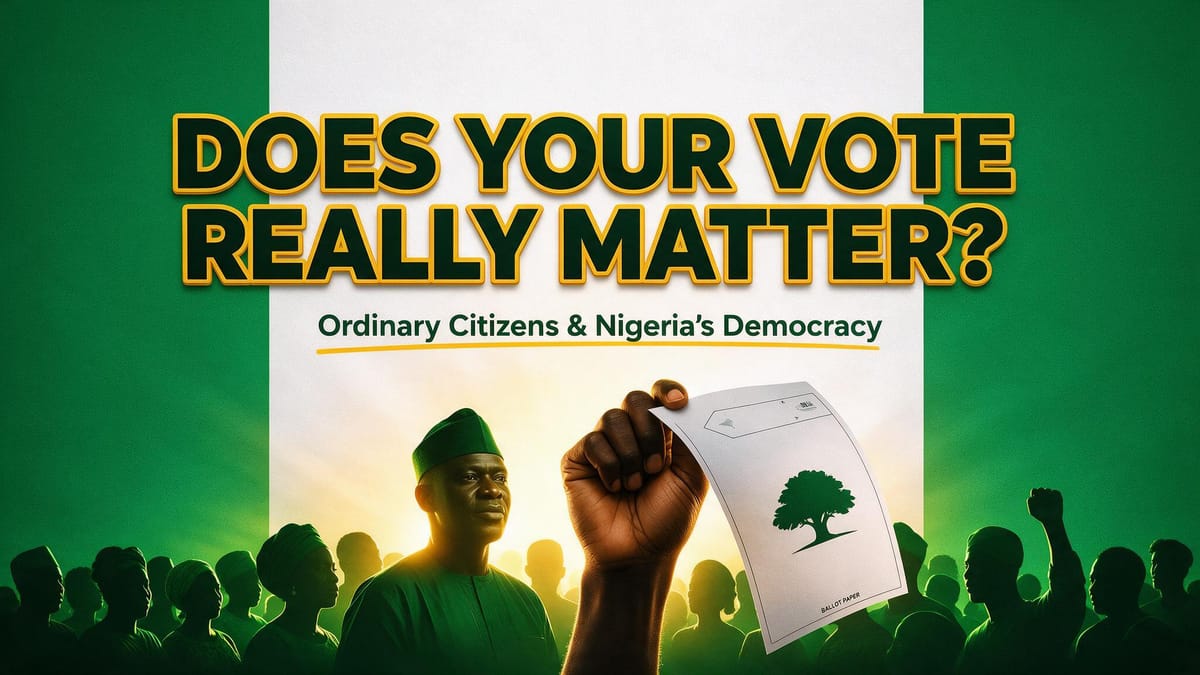
In a democracy, voting is one of the most direct ways citizens participate in choosing the people who will represent them. Yet, many people still ask an important question: Does my individual vote really matter?
In Nigeria, voter turnout has declined over the years. This has raised concerns about citizens' participation in the electoral process. Some people believe their vote cannot change anything, while others argue that meaningful democratic change begins with individual participation.
Why Some People Don't Vote
There are several reasons why people may decide not to vote. Some are disappointed by previous governments and believe elections do not bring meaningful change. Others may feel that none of the candidates represents their interests.
There are also practical challenges, including lack of information, difficulties during voter registration, insecurity, transportation problems and long queues at polling units.
However, staying away from elections also means giving up the opportunity to participate directly in choosing political leaders.
Does One Vote Really Make a Difference?
It is easy to think that one vote is insignificant, especially when millions of people are expected to vote. But elections are made up of individual votes. Every candidate who wins an election ultimately does so because citizens cast their votes.
More importantly, voting gives citizens an opportunity to express their preferences. Instead of allowing others to decide who represents them, voters can participate in determining the direction of their communities, states and country.
Political Participation Goes Beyond Voting
Democracy does not end when election day is over. Citizens also have a role to play after elections.
People can pay attention to the activities of elected officials, ask questions, demand accountability, participate in community discussions and contribute to public debates. Young people, in particular, can participate in democratic processes not only by voting but also through civic engagement and constructive dialogue.
Citizens should also make efforts to understand candidates beyond campaign promises. Their policies, previous records, experience and plans can provide useful information for making informed choices.
The Responsibility of Citizens
A strong democracy requires participation from both leaders and citizens. While elected officials have responsibilities to the people, citizens also have a responsibility to stay informed and participate peacefully in democratic processes.
Voting should not simply be about supporting a popular candidate or following what friends and family are doing. It should involve thinking carefully about the issues that affect society and making an informed decision.
The Importance of Being an Informed Voter
Voting is more meaningful when citizens understand what they are voting for. Before making a decision, voters can examine the candidates' policies, experience, public records and promises rather than relying solely on political slogans, social media posts or the opinions of others. An informed voter is better positioned to understand the issues affecting their community and to make a decision based on information rather than pressure or emotion. This is particularly important among young people, who make up a significant part of Nigeria's population and can play an active role in shaping the country's democratic future.
Conclusion
Your individual vote may seem small, but democracy is built from the collective decisions of individual citizens. Whether voting alone can solve Nigeria's political challenges is another question, but citizens' participation remains an important part of the democratic process.
Be honest: Do you believe your individual vote can make a meaningful difference in Nigeria’s democracy, or do you think one person’s vote is too small to change anything? Tell us what you think and why.
