Writers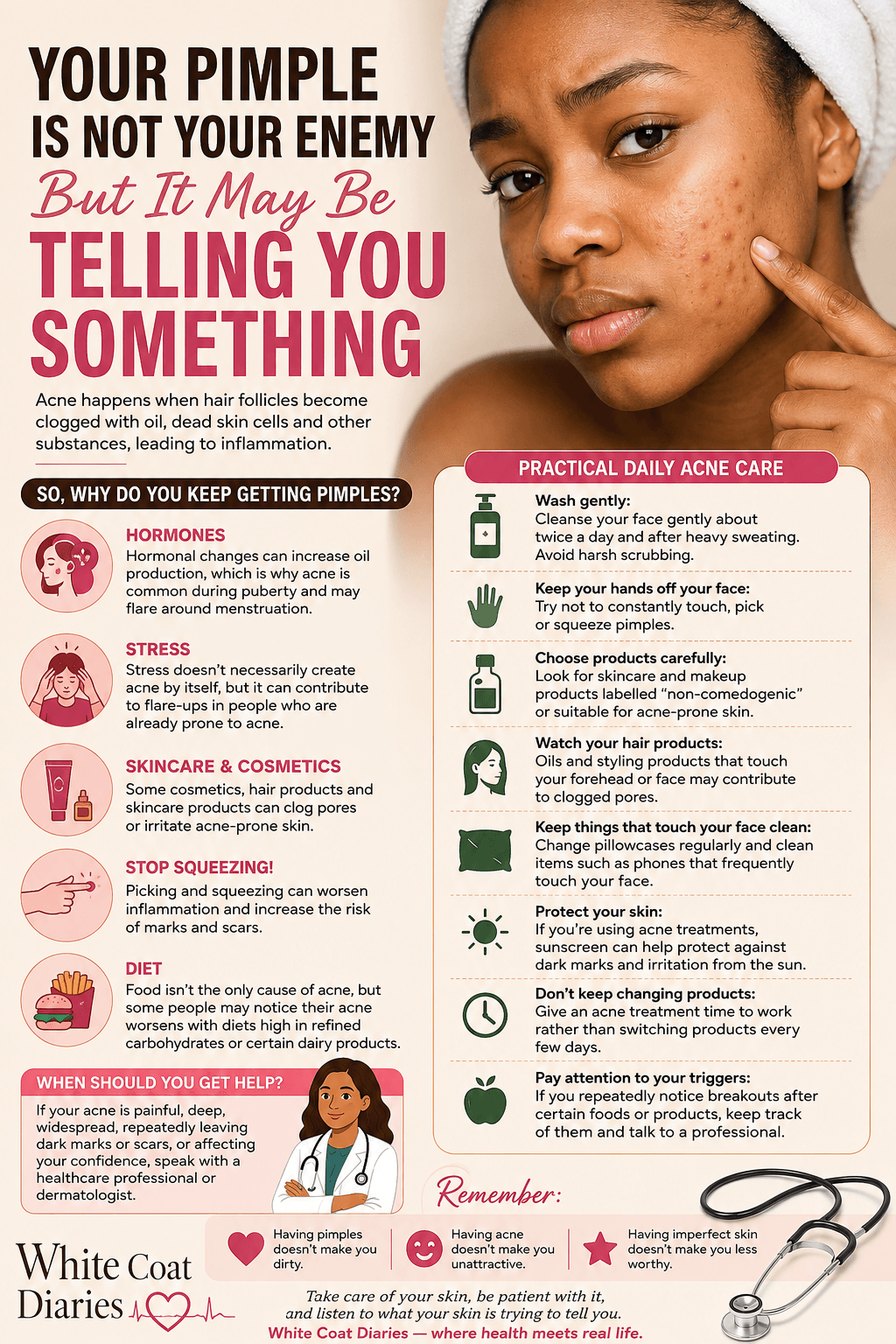
You woke up, looked in the mirror… and there it was.
One big, angry pimple sitting proudly on your face like it paid rent. 😭😂
You touch it.
You squeeze it.
You check the mirror again five minutes later.
And somehow, it looks even worse!
But before you declare war on your skin, here's something you should know:
A pimple doesn't mean your face is dirty.
Acne develops when hair follicles become clogged with oil, dead skin cells and other substances, which can lead to inflammation.
SO, WHY DO YOU KEEP GETTING PIMPLES?
HORMONES MAY BE INVOLVED.
Hormonal changes can increase oil production, which is why acne is common during puberty and may flare around menstruation.
STRESS CAN MAKE THINGS WORSE.
Stress doesn't necessarily create acne by itself, but it can contribute to flare-ups in people who are already prone to acne.
YOUR SKINCARE ROUTINE COULD ALSO BE THE PROBLEM.
Sometimes we see a product online and immediately want to try it.
Then we combine different soaps, scrubs, oils, creams and serums.
Your skin may be wondering, “What exactly are you doing to me?” 😂
Some cosmetics and hair products can clog pores or irritate acne-prone skin.
AND PLEASE STOP SQUEEZING EVERYTHING!
That pimple may look like it is begging you to pop it.
But picking and squeezing can worsen inflammation and increase the risk of marks and scars.
WHAT ABOUT FOOD?
Food isn't the only cause of acne, but some people may notice their acne worsens with diets high in refined carbohydrates or certain dairy products.
Don't start blaming every food you eat, though.
Acne is complicated.
PRACTICAL DAILY ACNE CARE
You don't need a complicated 15-step routine. Start with simple, consistent habits:
🧼 Wash gently: Cleanse your face gently about twice a day and after heavy sweating. Avoid harsh scrubbing.
🙌🏽 Keep your hands off your face: Try not to constantly touch, pick or squeeze pimples.
🧴 Choose products carefully: Look for skincare and makeup products labelled “non-comedogenic” or suitable for acne-prone skin.
💇🏽♀️ Watch your hair products: Oils and styling products that touch your forehead or face may contribute to clogged pores in some people.
🛏️ Keep things that touch your face clean: Change pillowcases regularly and clean items such as phones that frequently touch your face.
🌞 Protect your skin: If you're using acne treatments, sunscreen can help protect against dark marks and irritation from the sun.
💧 Don't keep changing products: Give an acne treatment time to work rather than switching products every few days.
🥗 Pay attention to your triggers: If you repeatedly notice breakouts after certain foods or products, keep track of them and discuss persistent problems with a healthcare professional.
WHEN SHOULD YOU GET HELP?
If your acne is painful, deep, widespread, repeatedly leaving dark marks or scars, or affecting your confidence, speak with a healthcare professional or dermatologist.
You don't have to suffer in silence or keep buying random products.
And remember:
Having pimples doesn't make you dirty.
Having acne doesn't make you unattractive.
And having imperfect skin doesn't make you less worthy.
Take care of your skin, be patient with it, and stop treating every pimple like a personal enemy.
Because sometimes, your skin isn't trying to embarrass you.
It's simply telling you that something needs attention.
🤍 White Coat Diaries — where health meets real life.