 Writers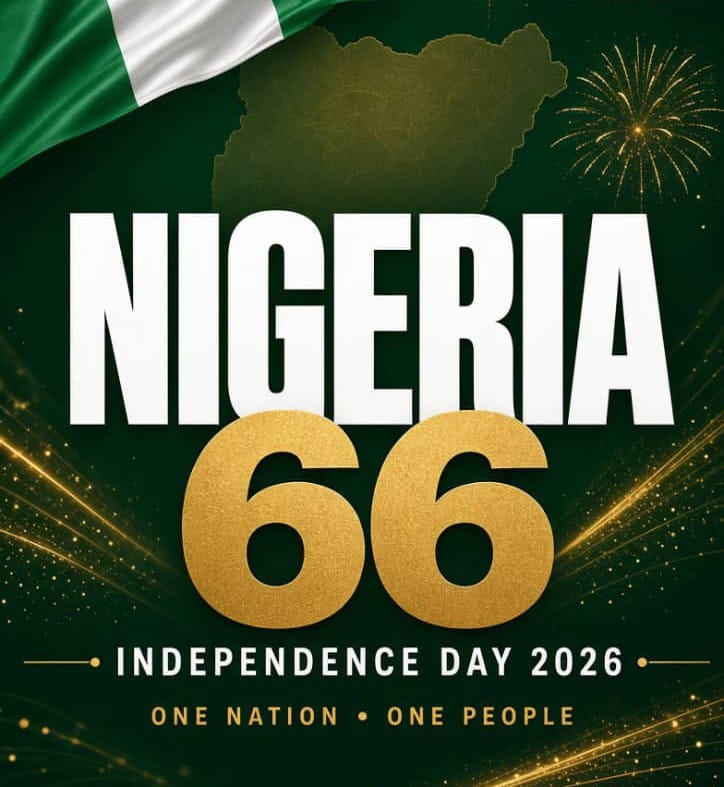
Nigeria on October 1, 1960, entered into independence with great hopes and expectations. A new nation was born with the dreams of millions of people who believed that freedom would bring prosperity, unity, development and better days. Now 66 years later, in 2026, the question must be asked, “Are we going forward or backwards as a nation?”
The answer isn't as easy as you think.
Since independence, Nigeria has made tremendous strides. The country has become overcrowded, has built up its educational system, its big cities, and its accomplished professionals who have left their mark on the world. The nation has continued to prove that it has huge human potential, with Nigerian doctors, engineers, scientists, entrepreneurs, entertainers, athletes and technology professionals still to show it.
The impact of technology on everyday life has also been enormous. In 1960, opportunities were unimaginable to many Nigerians today who can now access them from banking, communication to transportation, education and business. The growth of digital businesses and the creative industry has shown Nigerians can adapt and be innovative.
But there have been some serious challenges as well.
There are still many Nigerians who face unemployment, inflation, insecurity, poor public services and lack of infrastructure. Electricity is still a major concern in homes and businesses and many communities still have problems with good roads, clean water and affordable health services.
The vast natural resources of the country have also posed an important question in the country, that is, why has resource wealth not resulted in the improvement of the standard of living of all?
Another problem is dream of independence from realities of ordinary people. Nigerians should have had more control of their destiny with independence. But a litany of political unrest, allegations of corruption, economic challenges and social tensions have tested the nation's progress several times over the years.
Nonetheless, Nigeria should not be looked at just at its problems.
Millions of people across the country get up each day to go to work, go to school, go to the store, start a business, and work to provide for their families. Young Nigerians are creating tech startups, making music, movies and developing new ideas and participating in global competitions. All these are evidence that Nigeria's story is still being written.
The question that many people really need to ask is not whether Nigeria has gone forward or backward, but rather: what is its relationship to the rest of the world? It's a comparison between what's done and the country's huge capacity.
Nigeria is in the middle between her past and her future at 66. The nation has seen unprecedented success, failures and countless missed opportunities. But things don't always have to be the same as they were before.
Oil, gas or mineral may not be Nigeria's greatest resource. It could be its people.
With sustained attention towards leadership, accountability, education, infrastructure and security and economic opportunity, the dreams of independence can become more tangible in the life of the ordinary Nigerian.
The trip has been bumpy since 1960 and it is likely to be even rougher in the coming years up to 2026. There are areas of progress and areas of difficulty in Nigeria. The outcomes of what happens next will depend on the decisions taken by citizens, institutions and leaders.
Now, the question is not just where Nigeria has come from. The bigger question is: how do we want Nigeria to develop from here?