Writers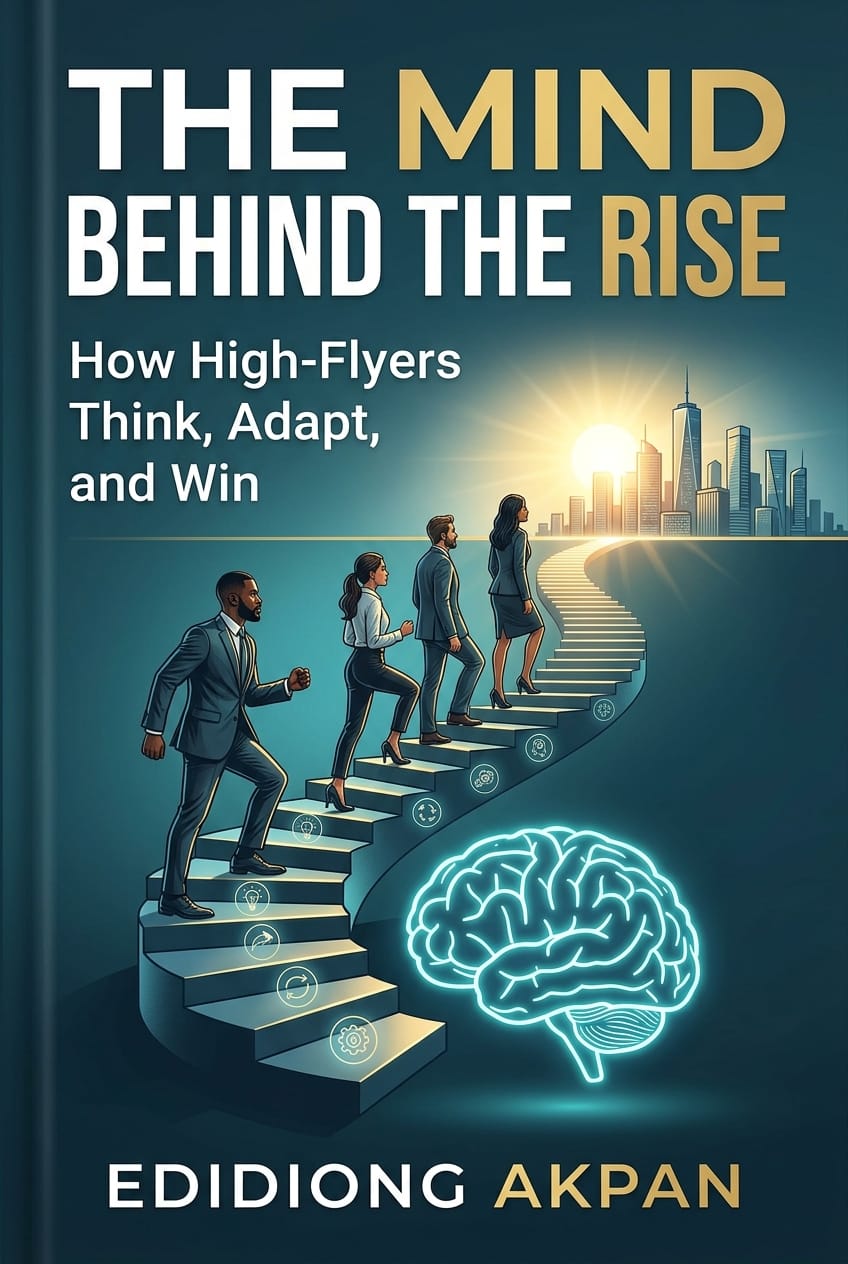
Many of the obstacles people face in their careers are not behavioural failures; they are fundamental flaws in how they process their work.
If you want to build genuine influence in the workplace, you must understand that high-level impact is not a random occurrence. It is an evolving story of how you process ideas, moving through six interconnected stages of thinking.
It all begins with Consciousness. You cannot become a cornerstone of an organisation or a true Key Performance Indicator, if you are navigating your workday on autopilot. Professional growth should never be left to chance. Yes, luck happens, but luck must always be subordinate to intentionality.
Now, think of your mind as a radio tuner. When tuned to the correct frequency, a crisis that causes others to panic becomes a clear opportunity for your leadership. Why? That because consciousness is the womb where game-changing concepts are born, creating the essential foundation for everything that follows.
Once consciousness opens your eyes to opportunity, you must unleash Quantity.
Having high awareness is useless if you censor your thoughts before they can breathe. To play at the highest level, you must generate a staggering volume of ideas, even the raw or seemingly foolish ones, because raw volume naturally increases your statistical probability of success. Give yourself permission to explore deeply, knowing that while only a few ideas will ultimately survive, you need a vast ocean of thoughts to discover those rare gems.
As that ocean of ideas fills, you naturally arrive at Quality.
A common mistake is trying to craft a masterpiece on the very first attempt without doing the heavy lifting of volume first (quantity).
Think of quantity as your private pitch rehearsal and quality as the refined performance you actually bring to market. You cannot polish what does not exist, which means quality is simply the natural evolution of volume (quantity) pushed through continuous refinement.
However, even the highest quality idea remains dead on arrival unless you back it up with High Agency.
High agency is the moment you step up and take radical ownership of the concepts you have refined.
High-agency individuals do not wait around for permission or expect others to clear the path; they take total responsibility for the thinking culture around every project placed in their care.
When an obstacle appears, they refuse to wait for things to go wrong before acting. They take the wheel and drive the solution forward.
Yet, taking ownership of a solution is only effective if you can deliver it with Thinking Velocity.
Modern workplaces move at a breakneck pace, and high agency paired with slow execution creates a bottleneck.
Velocity is how rapidly you process complex information and make a decisive move on the go. If an organisation constantly has to slow its momentum to wait for you to catch up, your influence vanishes, making swift processing the vital engine behind your ownership.
Finally, as you move at high speed, you must balance your momentum with Fluidity.
Moving fast is dangerous if you are driving in the wrong direction, which is why fluidity gives you the agility to pivot when fresh data or changing environments demand a course correction.
True leaders operate with anticipation, refusing to cling to an original idea just because they came up with it. It is not enough to launch with a brilliant concept; you must remain flexible enough to navigate the unexpected bends in the road.
When these six stages flow into one another, from consciousness to quantity, quality, agency, velocity, and fluidity, you unlock real professional power.
Miss a single link in this chain, and your growth stalls.
You might possess deep consciousness, yet struggle to generate ideas at scale. You might generate endless ideas, but lack the judgment to refine them into quality. You might craft brilliant concepts, yet lack the high agency needed to take total accountability. You might take ownership, but operate too slowly for a fast-moving market. Or you might move quickly, yet remain too rigid to adapt when conditions change around you.
Mastering this narrative requires an ongoing commitment to self-auditing.
Leaders on a mission constantly interrogate their own thinking, track their personal trajectory, and tell themselves the unvarnished truth. You can easily fool external observers about your growth in the workplace, but you can never lie to yourself.
Now here's a question, which of these six thinking capacities is holding back your narrative right now?
It doesn't have to mean that you have to a working class to answer this question. Because even at schools, there are high flyers. And you might be lacking one of these, to push you into that high flyer category.