Writers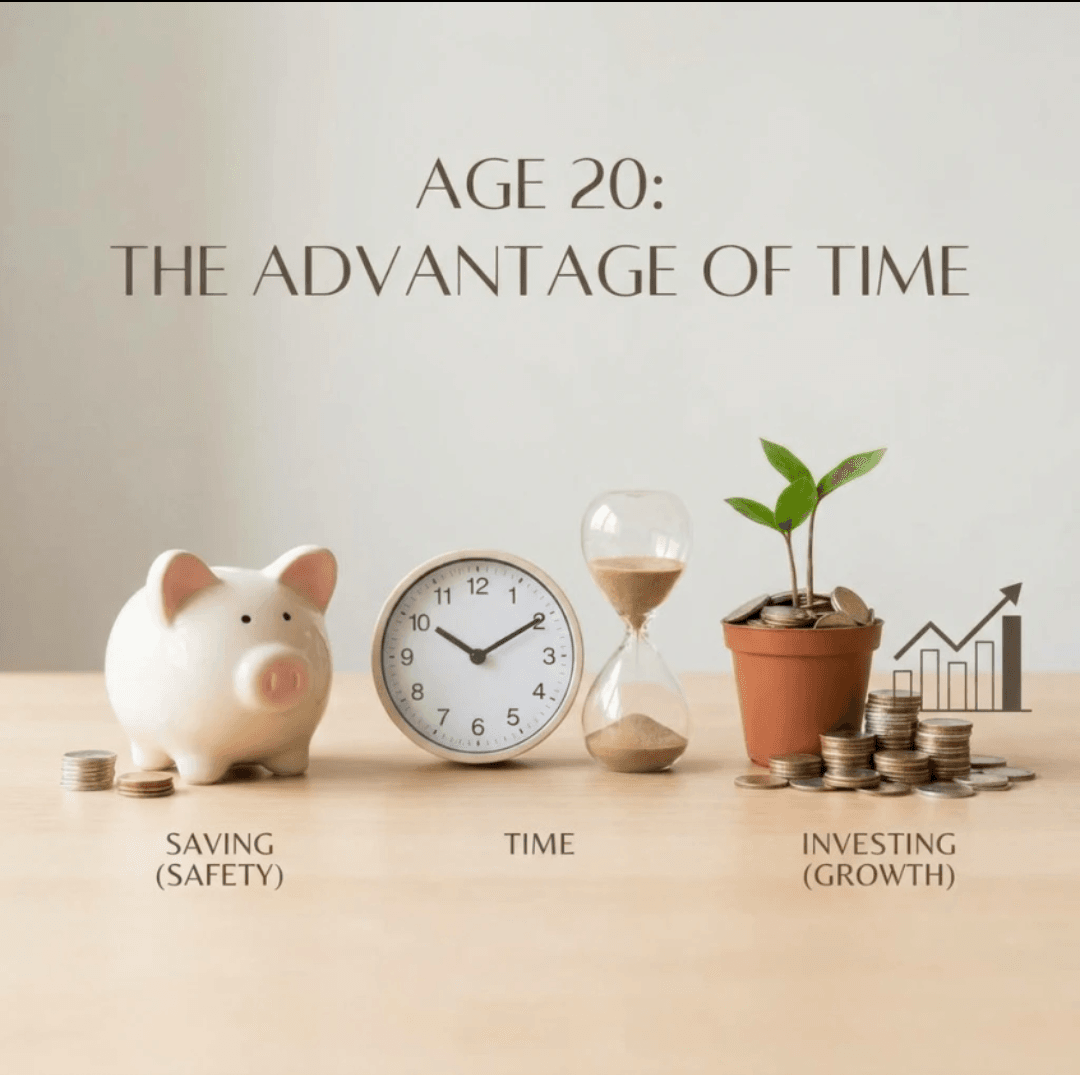
If someone told you the secret to financial success is "save your money," you've been given half the truth. Saving protects what you have. It doesn't grow it.
Here's the problem: a typical savings account pays interest well below inflation. That means money sitting in savings quietly loses purchasing power every year, even while the balance stays the same. You're not losing dollars, you're losing what those dollars can buy.
Building wealth requires a different mindset. It means putting your money to work instead of just storing it. The good news? At 20, you have the single biggest advantage in personal finance: time.
The Real Difference Between Saving and Investing
Saving is about safety and short-term access. It's where you keep money for emergencies, rent, or a trip next year. Investing is about growth over time — buying assets like stocks, index funds, or retirement accounts that have historically increased in value over long periods, even though they can lose value in the short term.
Both matter. But most people never move past saving, either because investing sounds intimidating or because no one taught them how to start.
Why Starting at 20 Changes Everything
The core force behind long-term investing is compound growth, that is to your money earns returns, and then those returns earn returns of their own. The longer your money stays invested, the more time compounding has to work.
Consider two people:
Person A starts investing $200 a month at age 20.
Person B starts investing the same $200 a month at age 30.
Even though Person B invests for fewer years, Person A's decade head start gives their money significantly more time to compound. This is the core argument for starting early — not investing perfectly, just investing soon.
You don't need a large amount to begin. You need consistency and time.
Step 1: Build a Small Safety Net First
Before investing, set aside a modest emergency fund — enough to cover a few months of essential expenses. This isn't about earning returns; it's about protection. Without it, an unexpected car repair or medical bill could force you to sell investments at the worst possible time.
Keep this money in a basic, accessible savings account. It's your financial airbag, not your wealth-building engine.
Step 2: Understand the Tools Available to You
You don't need to be a stock-picking expert to invest. Most people build wealth through a few straightforward tools:
Retirement accounts (like a 401(k) or IRA in the U.S.) offer tax advantages that let your investments grow more efficiently over time. If your employer offers a 401(k) match, contributing enough to get the full match is essentially free money added to your retirement savings.
Index funds pool your money with other investors to buy a broad slice of the market — such as hundreds of companies at once — rather than betting on a single stock. This spreads out risk and removes the pressure of picking "winners."
Brokerage accounts let you invest outside of retirement accounts, useful for goals that are still years away but not tied to retirement.
You don't need all of these on day one. Start with one, learn how it works, and expand from there.
Step 3: Automate Before You Can Talk Yourself Out of It
Willpower is unreliable. Automation isn't.
Set up automatic transfers from your checking account into your investment account each time you get paid even if it's a small amount. Treat it like a non-negotiable bill you're paying to your future self.
This approach removes the temptation to "invest what's left over," which for most people is nothing. Pay yourself first, then live on the rest.
Step 4: Increase Contributions as Your Income Grows
You don't need to invest a large percentage of your income right away. Start with what's realistic, even if it's small.
As your salary increases — through raises, promotions, or a new job — increase your contribution percentage before your lifestyle catches up to your new income. This single habit, often called "paying yourself first as you grow," is one of the most effective ways to build wealth without feeling deprived.
Step 5: Avoid the Two Biggest Traps
Trap 1: Waiting for the "right time."
There is no perfect moment to start investing. Markets rise and fall, and trying to time them perfectly is nearly impossible, even for professionals. Time in the market generally matters more than timing the market.
Trap 2: Chasing quick wins.
Get-rich-quick strategies — meme stocks, speculative trends, or "guaranteed" returns — are designed to grab attention, not build long-term wealth. Sustainable wealth is built through patience and consistency, not luck.
What This Looks Like in Real Life
Imagine you're 20, working part-time or just starting your first job. You don't have thousands of dollars to invest. That's fine.
You could:
Save a small emergency cushion.
Open a retirement account or beginner-friendly brokerage account.
Set up an automatic monthly investment — even a modest amount.
Increase that amount slightly every time your income grows.
Leave it alone and let time do the heavy lifting.
Five years from now, you won't just have savings. You'll have momentum, a financial system running quietly in the background, working for you even when you're not thinking about it.
Saving money is a good habit. But it's a starting point, not a destination. Wealth isn't built by hoarding cash; it's built by putting your money into assets that grow over time, and giving them enough time to actually do that.
At 20, you have something no amount of money can buy back later: time. The best move you can make today isn't finding the perfect investment; it's simply starting.
Open the account. Set up the transfer. Let compounding begin. Your future self will thank you for starting now instead of waiting for "someday."