Writers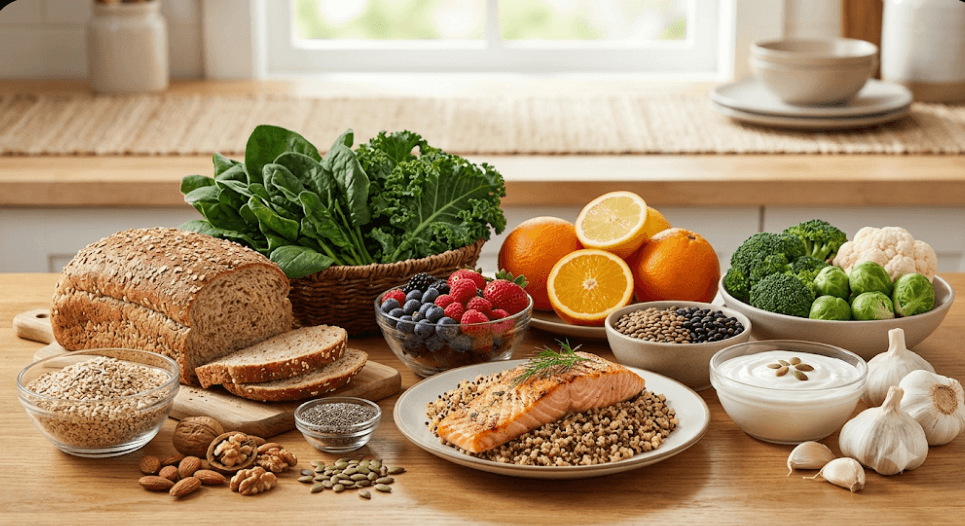
Walk down any grocery aisle and you'll find countless products promising better health. But building a strong, resilient body doesn't require expensive supplements or complicated diets — it starts with a handful of nutrient-dense foods that have stood the test of time. Below are ten foods backed by their well-documented nutritional profiles, along with simple ways to add them to your daily routine.
1. Leafy Greens (Spinach, Kale, Swiss Chard)
Leafy greens are among the most nutrient-dense foods available. They're rich in vitamins A, C, and K, along with folate and dietary fiber. Their high antioxidant content helps protect cells from everyday oxidative stress.
Practical tip: Add a handful of spinach to your morning smoothie or sauté kale with garlic as a quick side dish.
2. Berries (Blueberries, Strawberries, Raspberries)
Berries are packed with antioxidants, particularly anthocyanins, which give them their vibrant color. They're also a good source of fiber and vitamin C, making them a smart choice for those managing blood sugar levels.
Practical tip: Top oatmeal or yogurt with a mix of berries for a naturally sweet, fiber-rich breakfast.
3. Fatty Fish (Salmon, Mackerel, Sardines)
Fatty fish are excellent sources of omega-3 fatty acids, which support heart and brain health. They also provide high-quality protein and essential nutrients like vitamin D and selenium.
Practical tip: Aim for two servings of fatty fish per week — grilled salmon or canned sardines on toast are both quick options.
4. Nuts and Seeds (Almonds, Walnuts, Chia Seeds)
Nuts and seeds offer a satisfying combination of healthy fats, plant-based protein, and fiber. Walnuts in particular contain alpha-linolenic acid, a plant-based omega-3, while chia seeds are notable for their fiber and mineral content.
Practical tip: Keep a small container of mixed nuts at your desk for a convenient, energy-sustaining snack.
5. Whole Grains (Oats, Quinoa, Brown Rice)
Unlike refined grains, whole grains retain their bran and germ, preserving fiber, B vitamins, and minerals like magnesium and iron. This makes them more filling and supportive of steady energy levels throughout the day.
Practical tip: Swap white rice for quinoa or brown rice in your next meal to boost fiber intake without changing your routine dramatically.
6. Legumes (Lentils, Chickpeas, Black Beans)
Legumes are a plant-based protein powerhouse, offering fiber, iron, and folate at a fraction of the cost of animal protein. They're also incredibly versatile, fitting into soups, salads, and grain bowls alike.
Practical tip: Add a can of rinsed chickpeas to a salad for an easy protein and fiber boost.
7. Cruciferous Vegetables (Broccoli, Cauliflower, Brussels Sprouts)
This vegetable family is known for its glucosinolate compounds, which are currently being studied for their potential role in supporting the body's natural defense systems. They're also excellent sources of vitamin C and fiber.
Practical tip: Roasting cruciferous vegetables with olive oil and a pinch of salt brings out their natural sweetness, making them easier to enjoy regularly.
8. Citrus Fruits (Oranges, Grapefruit, Lemons)
Citrus fruits are a reliable source of vitamin C, which plays a role in immune function and collagen production. Their natural acidity also makes them a flavorful addition to a variety of dishes.
Practical tip: Start your day with a glass of water and fresh lemon juice, or add orange segments to a salad for brightness.
9. Greek Yogurt
Greek yogurt stands out for its high protein content and probiotic cultures, which support gut health. It's also a good source of calcium, important for maintaining bone density over time.
Practical tip: Choose plain, unsweetened varieties and add your own fruit or a drizzle of honey to control sugar content.
10. Garlic
Garlic has been used in traditional cooking and wellness practices for centuries. It contains allicin, a compound formed when garlic is chopped or crushed, which has been the subject of ongoing nutritional research.
Practical tip: Add freshly chopped garlic to dishes near the end of cooking to preserve more of its flavor and beneficial compounds.
Building a Sustainable Approach to Healthy Eating
No single food is a magic solution, and no one meal will transform your health overnight. What matters most is consistency — incorporating a variety of these nutrient-dense foods into your regular routine rather than treating them as occasional additions.
Start small. Pick two or three foods from this list that you don't currently eat often, and find simple ways to work them into meals you already enjoy. Over time, these small, sustainable changes add up to meaningful support for your overall well-being.
A balanced plate, built from real, whole foods, remains one of the most reliable foundations for a healthy body. The foods above are a practical starting point — accessible, versatile, and easy to fit into everyday life.