 Writers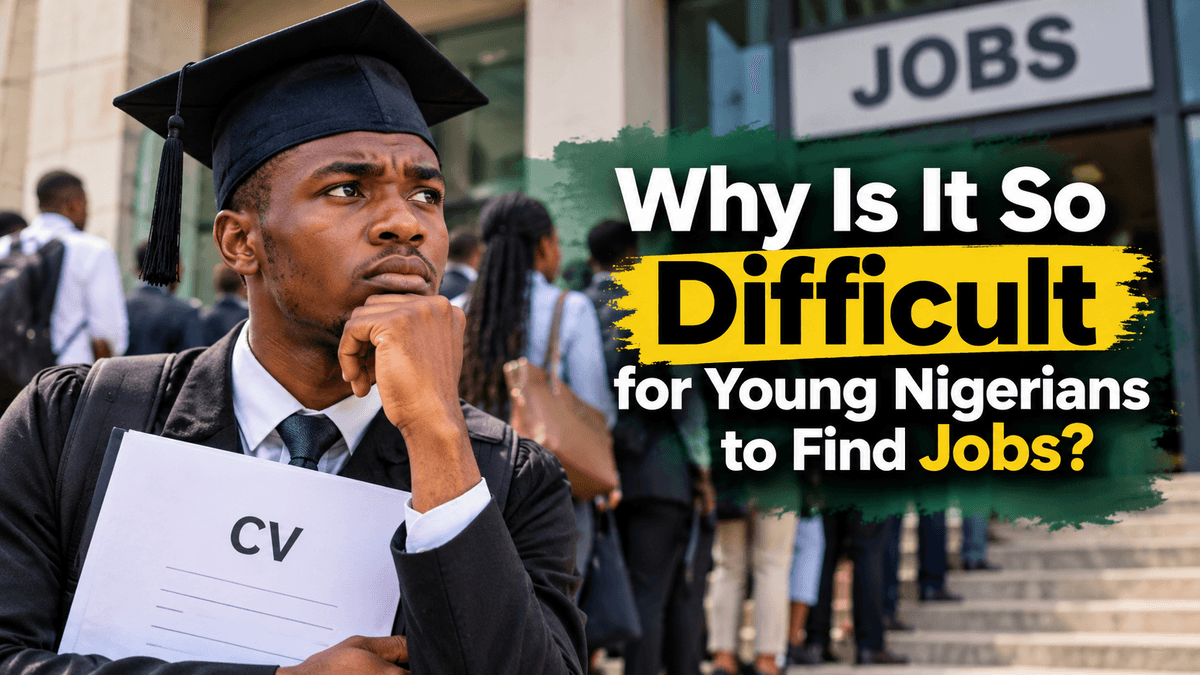
You spend years in school, obtain your degree, complete NYSC, and begin applying for jobs. Months pass, then years, but the breakthrough you hoped for remains out of reach. What exactly is going wrong?
For many young Nigerians, this is not just a story. It is their everyday reality.
From university graduates to holders of technical and professional qualifications, many young people face a difficult transition from education to employment. They have spent years acquiring knowledge, sacrificing their time and investing in their future, yet finding a decent job can feel like another full-time responsibility.
But why is the journey so difficult?
1. Too Many Applicants, Too Few Opportunities
One major challenge is the gap between the number of people seeking employment and the opportunities available to them.
When an organisation advertises a vacancy, hundreds or even thousands of applicants may submit their applications. Some have excellent academic records, relevant experience and professional certifications, yet only a few can be selected.
This intense competition means that having a degree does not automatically guarantee employment.
For young graduates, the situation can be particularly frustrating because they may have the qualifications but lack access to enough suitable opportunities.
2. The Experience Trap: How Can You Work Without Experience?
Imagine seeing a job advertisement that requires two or three years of experience.
You have just graduated and are ready to work, but you cannot apply because you have never held a similar position.
You then search for another vacancy, only to encounter the same requirement.
This is the experience trap facing many young Nigerians.
Employers often want candidates who can contribute immediately, which makes experience an understandable consideration. However, when entry-level positions also demand substantial experience, inexperienced graduates may struggle to get their first opportunity.
Internships, graduate trainee programmes, apprenticeships and structured workplace training can help bridge this gap.
Employers can also consider candidates with relevant projects, volunteering experience, transferable skills and a willingness to learn.
Young people cannot gain professional experience if they are never given the opportunity to begin.
3. The Rising Cost of Job Hunting
Searching for employment can be expensive, particularly for applicants who are unemployed.
Consider someone who lives in Ondo State but receives an invitation to attend an aptitude test in Benin City.
The person may need to pay for transportation, accommodation, feeding and document preparation before even entering the examination hall.
After spending that money, there is still no guarantee of employment.
This is a challenge I understand personally. I recently travelled from Ondo State to Benin City for the University of Benin recruitment aptitude test. The journey required planning, money and considerable effort.
For someone already struggling financially, such expenses can be significant.
Now imagine receiving invitations for several recruitment exercises in different states.
Some applicants may have to borrow money or depend on family members to attend. Others may miss opportunities simply because they cannot afford the journey.
This raises an important question: Should the cost of pursuing employment become another barrier for qualified applicants?
Where practical, employers could reduce unnecessary travel through initial online screening, clear communication and well-coordinated recruitment schedules.
4. Academic Qualifications Versus Practical Skills
Another challenge is the relationship between formal education and workplace requirements.
A university degree can provide valuable knowledge, but some employers also expect practical skills, digital competence, communication abilities and problem-solving experience.
For example, a graduate applying for an administrative position may benefit from proficiency in Microsoft Word, Excel, email communication, record management and office procedures.
Similarly, a graduate interested in research may need skills in data collection, analysis, report writing and research software.
This does not mean that university education is useless. Rather, it highlights the importance of connecting academic knowledge with practical application.
Students can improve their readiness for employment by undertaking relevant projects, volunteering, completing short professional courses and developing skills related to their intended careers.
However, practical skills should complement fair employment opportunities, not become an excuse to demand endless qualifications from applicants for entry-level positions.
5. The Financial Pressure of Unemployment
Unemployment affects more than a person's income.
It can place pressure on family relationships, delay personal plans and make it difficult to achieve independence.
A graduate may want to pursue further education, start a business, rent an apartment or support their family but lack the financial resources to do so.
Some young people also face repeated questions about why they are still unemployed.
People may assume they are not trying hard enough, without understanding the applications they have submitted, the interviews they have attended or the money they have spent searching for work.
Although individual effort matters, unemployment cannot always be explained by a lack of determination.
The availability of suitable jobs, economic conditions, location, skills requirements and recruitment practices can all influence a person's employment prospects.
6. What Can Be Done to Improve the Situation?
Addressing youth unemployment requires cooperation between government, employers, educational institutions and young people themselves.
Government: Policies that support productive businesses, entrepreneurship, investment and job creation can help expand employment opportunities. Public recruitment should also be transparent and accessible to qualified applicants.
Employers: Organisations can consider more entry-level opportunities, paid internships, graduate trainee programmes and practical assessments that allow candidates to demonstrate their abilities.
Educational institutions: Schools and universities can strengthen career guidance, practical learning, industry partnerships and opportunities for students to gain workplace experience before graduation.
Young people: Graduates can improve their employability by identifying relevant skills, preparing strong CVs, building professional networks, undertaking suitable training and exploring different career pathways.
Nevertheless, young people should not be expected to solve a structural employment problem entirely on their own. Personal development is important, but it cannot replace the need for sufficient decent employment opportunities.
Conclusion: Education Should Open Doors
Education remains valuable because it develops knowledge, broadens understanding and prepares people for different responsibilities.
However, when young people invest years in education and still struggle to find employment, it is worth examining how effectively the transition from school to work is functioning.
The solution is not to tell every graduate to acquire another certificate or learn another skill without considering the wider situation.
We must also ask whether enough suitable jobs exist, whether recruitment processes are fair, whether employers provide opportunities for inexperienced candidates and whether applicants can realistically afford the cost of pursuing employment.
A society benefits when young people can use their knowledge and abilities productively.
The goal should not simply be to produce more graduates. It should be to create an environment where education, practical skills and genuine opportunities can work together.
Let's Discuss!
I want to hear from you.
Why do you think it is so difficult for young Nigerians to find jobs despite spending years in school?
Is the biggest problem a shortage of jobs, employers demanding years of experience, a mismatch between education and workplace skills, the cost of job hunting, recruitment practices, or a combination of these factors?
If you have ever spent money you could barely afford to attend an interview or aptitude test, feel free to share your experience.
Let's have an honest and respectful conversation. Your experience might help another job seeker understand that they are not alone.
