 Writers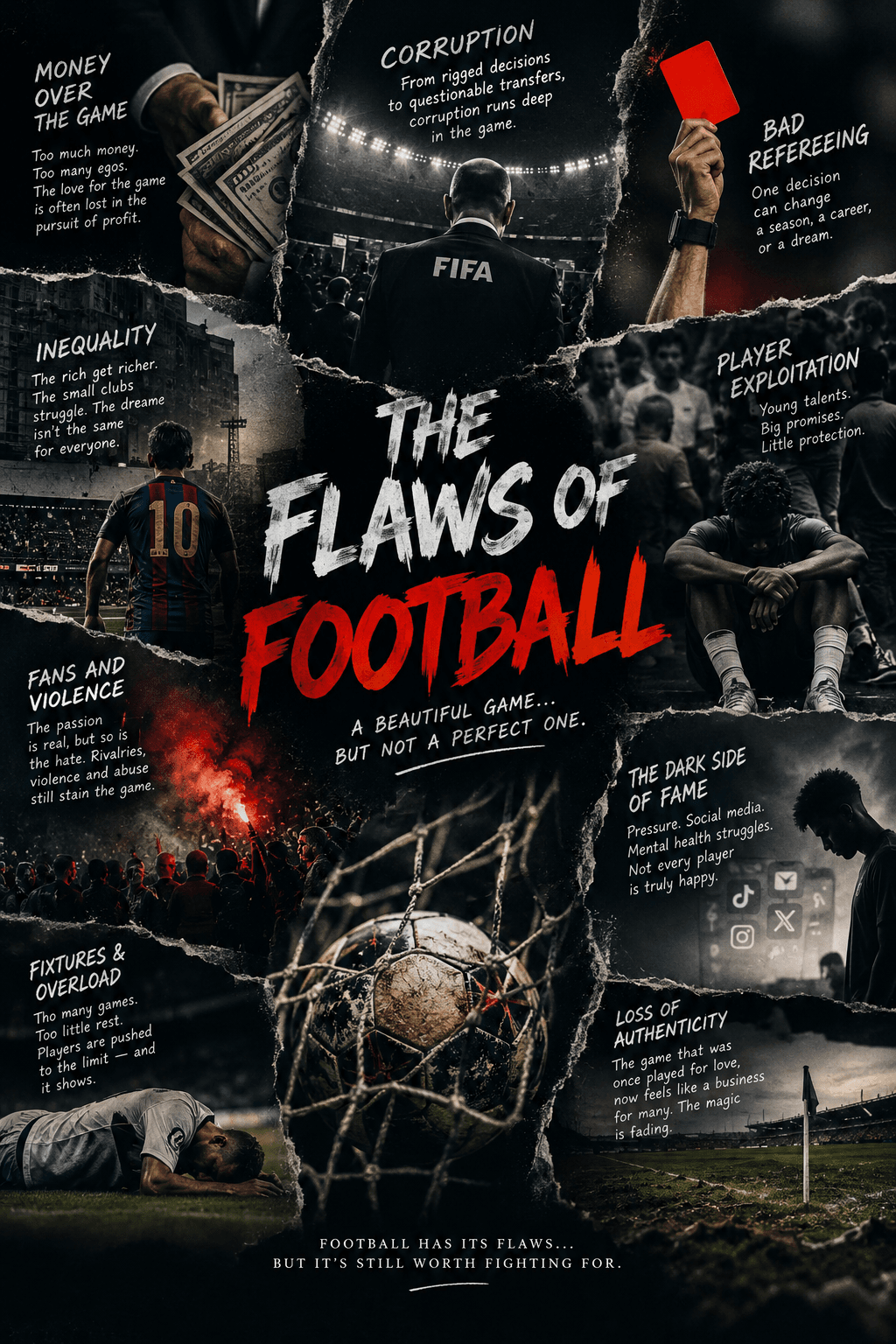
The Flaws of Football: The Problems Behind the Beautiful Game ⚽
Football is one of the most loved sports in the world. It brings people together, creates unforgettable moments, and gives millions of young players something to dream about. From the streets of Lagos to the biggest stadiums in Europe, football means more than just kicking a ball.
However, behind the excitement and fame, the sport has several problems. These flaws affect players, fans, clubs, and the future of the game.
1. Corruption and Match-Fixing
Corruption is one of football’s biggest problems. Some officials may misuse their positions, abuse funds, or make decisions for personal gain. Match-fixing is another serious issue, where matches or specific events are deliberately manipulated, often for betting purposes.
These actions destroy trust. Fans want to believe that football is fair and that results are decided by the efforts of players, not dishonest individuals.
2. Poor Refereeing and VAR Controversies
Referees have a difficult job, but mistakes can change the outcome of important matches. Wrong penalties, missed fouls, and disallowed goals often lead to frustration.
VAR was introduced to help reduce errors, but it has also created new problems. Long reviews, confusing decisions, and tiny offside margins sometimes take away the excitement of celebrating a goal.
Technology should make football fairer without removing the emotion that makes it special.
3. Too Much Money in the Game
Football has become a massive business. Clubs earn money from sponsorships, television rights, transfers, and merchandise. While investment can improve the sport, excessive commercialization has made some fans feel forgotten.
Expensive tickets, costly jerseys, and matches scheduled mainly for television can make football less accessible to ordinary supporters.
The game should never become only about profit.
4. The Gap Between Rich and Poor Clubs
Wealthy clubs can afford expensive players, advanced facilities, and large squads. Smaller clubs often struggle to compete because they have fewer financial resources.
Although money does not guarantee success, it can create a major advantage. This can make some competitions feel predictable and reduce opportunities for less wealthy teams.
Football should reward talent, teamwork, and good management—not just spending power.
5. Player Exploitation and Pressure
Many footballers, especially young players, face enormous pressure to succeed. Some are promised opportunities by dishonest agents, while others struggle with poor facilities, unfair contracts, or limited career options.
Even professional players face demanding schedules, injuries, criticism, and pressure to perform every week.
Football should protect players and allow them to develop in a safe and supportive environment.
6. Racism, Discrimination, and Abuse
Racism and discrimination remain serious problems in football. Players may be targeted because of their skin colour, nationality, or background.
Some supporters also abuse players, referees, and coaches online or in stadiums. Passion is part of football, but hatred and threats should never be accepted.
Everyone involved in the game deserves respect.
7. Poor Grassroots Development
Many talented young players do not have access to quality pitches, proper coaching, equipment, or scouting opportunities. In some communities, players have the talent but lack the resources to develop.
This is a major problem because football dreams should not depend entirely on where someone lives or how much money their family has.
Investing in grassroots football is essential for the future of the sport.
8. Too Much Tactics, Less Creativity
Modern football has become highly tactical. Coaches focus on formations, statistics, pressing systems, and carefully planned movements.
These tactics have improved the game in many ways, but some fans believe they have reduced individual freedom. Players may take fewer risks, dribble less, and focus more on following instructions.
Football needs tactics, but it also needs creativity, imagination, and players who can surprise the crowd.
9. Overcrowded Schedules and Injuries
Footballers often play league matches, cup games, international fixtures, and continental competitions throughout the year.
This can lead to fatigue, injuries, and poor recovery. Players may be expected to continue playing even when their bodies need rest.
The health of footballers should come before the demands of entertainment and profit.
10. The Obsession with Winning
Winning is important, but football has become so focused on results that other values are sometimes forgotten.
Coaches can lose their jobs after a few poor matches, while players may be judged harshly for one mistake. Young footballers can also feel that failure means their dreams are over.
Football should encourage discipline, teamwork, enjoyment, and growth—not just trophies.
11. Financial Mismanagement and Poor Leadership
Some clubs spend beyond their means, accumulate debt, or make decisions without a long-term plan. Poor leadership can lead to unpaid wages, financial crises, and disappointment for supporters.
Football clubs need responsible management, transparency, and clear development plans.
12. Inequality in Women’s Football
Women’s football has grown tremendously, but many female players and teams still receive fewer resources, lower salaries, and less media attention than their male counterparts.
More investment and equal opportunities are needed to make football truly inclusive.
13. Toxic Rivalries and Social Media
Rivalries make football exciting, but they can become unhealthy when supporters turn competition into hatred.
Social media has made it easier for fans to insult players and attack one another. A missed chance or poor performance can lead to unnecessary abuse.
Football should bring people together, even when they support different clubs.
The Way Forward
Football can improve if everyone involved takes responsibility. Authorities must fight corruption, clubs must manage money properly, and players must receive better protection. More investment should go into grassroots football, women’s football, and safe facilities.
Fans also have a role to play by supporting their teams passionately while respecting players, referees, and rival supporters.
Conclusion
Football is beautiful, but it is far from perfect. Corruption, inequality, commercialization, discrimination, poor leadership, and excessive pressure continue to affect the sport.
Still, football has the power to change. If the people running the game focus on fairness, respect, creativity, and the welfare of players, the sport can become even better.
Football does not need to be perfect to be beautiful, but it must confront its flaws to protect what makes it special. ⚽🔥