Writers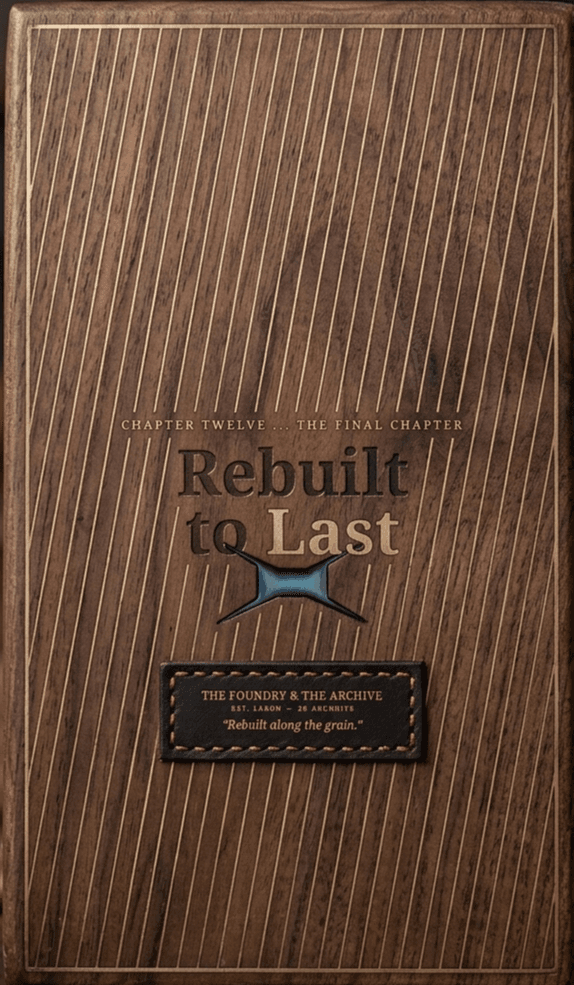
It's late April, and after all that rain, Leeds finally has some proper spring sunshine. Maya's workshop smells good again — beeswax, oats, freshly cut wood. Sitting right in the middle of the room is the big project she's been working on: a twelve-foot boardroom table, polished and beautiful, made from the Scottish oak she traded for back at the Edinburgh estate.
What makes this table stand out is how she handled the wood's natural imperfections. Instead of hiding the knots and cracks that come with real, aged timber, she repaired them out in the open — using little bowtie-shaped pieces of dark walnut to hold the weak spots together. Rather than pretending the wood was flawless, she let its history show. The repairs are part of the design, not something she tried to disguise.
Julian shows up looking calm and lighter than he's been in weeks, carrying a small wrapped gift. He tells her some good news — the council finally agreed on a solution for the archive situation. The old 19th-century paper records are staying safe, on physical display in the library, and he's the one writing the official notes for that exhibit. Maya's excited and tells him he won. He gently pushes back on that, saying it's not really about winning — what matters to him is that the actual historical records were kept safe, not that he came out on top of an argument.
He walks over to check out her finished table, running his hand along the smooth surface, genuinely surprised at how the piece feels like it's already been around for decades. Maya tells him that's the point — the walnut joints she used actually get more secure over time, since the wood naturally shifts with the seasons and that motion tightens the joint rather than loosening it. Julian says it sounds like a good repair job, and she agrees.
Then he hands her the small package he brought. Inside is the antique brass-and-oak balance scale — the very same object that first brought him to her shop months ago, back when it was broken. Except now it's fully fixed. The brass pin she made fits perfectly, and the whole thing balances flawlessly.
There's something new on it too — a tiny engraved plaque on the base that reads something like: "The Foundry & The Archive, Established Leeds, 22 Kirkgate — Rebuilt along the grain." It's a small, permanent way of honoring both of their work and everything they've built together, using the same kind of woodworking language they've used with each other from the start.
Seeing it makes Maya emotional. She sets the scale down on her new table and tells him quietly that it should probably stay at his desk in the archive. But Julian says something that means more — that it belongs wherever the two of them are, together. He tells her his desk might be at the archive during working hours, but his actual home is with her, at the shop.
Maya hugs him tightly, breathing in the smell she's come to associate with him — paper, ink, a bit of rain. He wraps his arms around her, and they just stand there together in the sunlit workshop, surrounded by her tools and everything she's built with her own hands.