Writers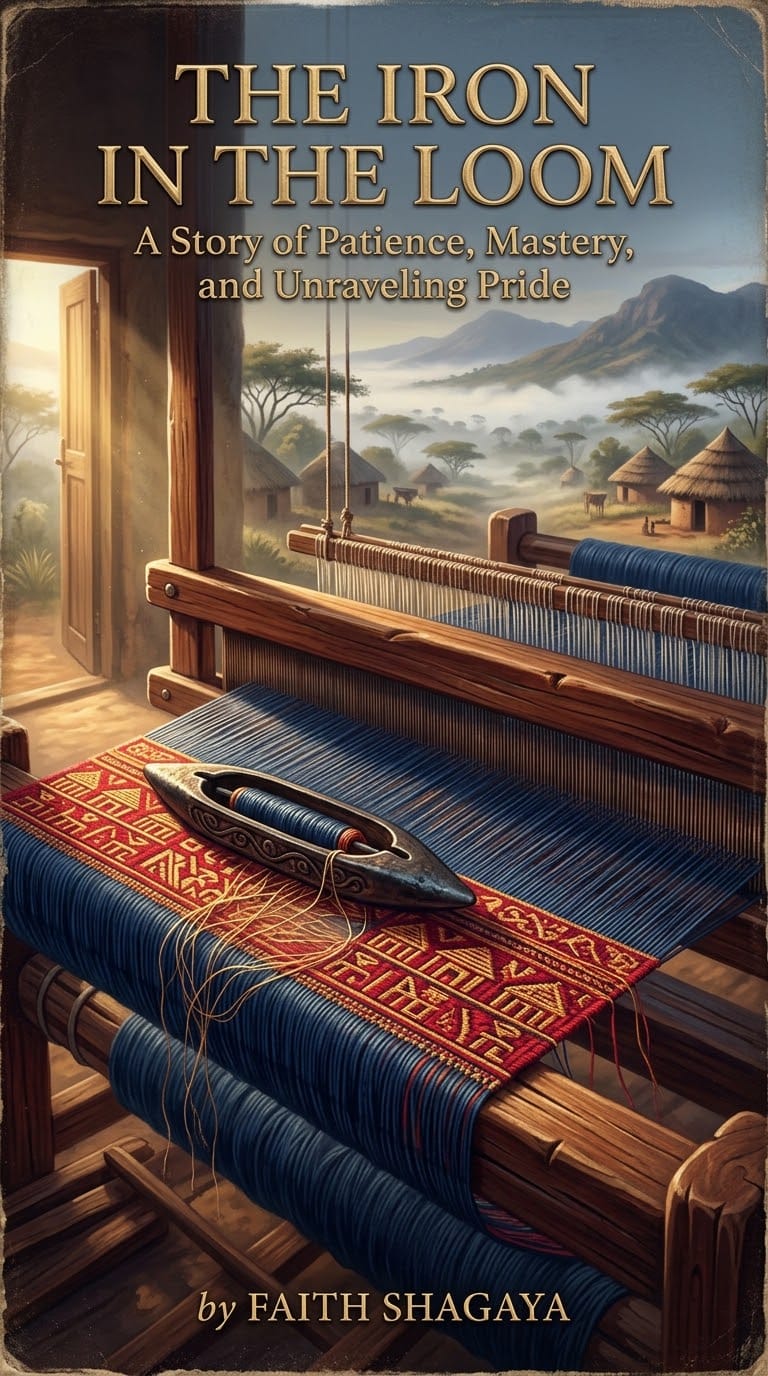
In the mountain village of Kuta, known for its beautiful hand-woven tapestries, a young woman named Nafisa had real talent. Unlike other weavers who followed traditional patterns, she wanted to create art that felt alive — capturing mist, firelight, and movement.
Her grandfather, Malam Yakubu, was the village's most respected weaver. He worked slowly and carefully on his old wooden loom, always reminding Nafisa that good weaving isn't about speed — it's about care, patience, and creating something that lasts.
But Nafisa was impatient, always dreaming of the market and quick success.
One day, a merchant named Alhaji Sani arrived with modern iron looms and bright synthetic dyes. He promised that weavers could now make cloth three times faster than the traditional method, and that buyers cared more about bold colors than old-fashioned durability. Many young weavers, excited by the promise of fast money, left their traditional looms behind — including Nafisa, despite her grandfather's gentle warnings that cheap dyes fade and rushed weaving falls apart.
For two months, Nafisa thrived. She produced colorful tapestries quickly, earned good money, and enjoyed her new success — while quietly looking down on the slower, old-fashioned weavers back home.
Then came a major opportunity: a prestigious trade fair where international buyers would evaluate the finest textiles. Alhaji Sani chose Nafisa's brightest, fastest-made tapestry, called *The Rising Sun*, as his top entry. Meanwhile, her grandfather entered his own work — a quiet, deeply detailed indigo piece called *The Silent River*, which had taken him three months to make.
At the fair, buyers were immediately drawn to Nafisa's vibrant piece. But when an expert appraiser tested it — using a simple damp cloth to check the dye and pulling gently on the threads — the cheap dye smeared instantly, and part of the weave came apart completely. The piece looked stunning under bright lights but couldn't survive basic handling.
Then the appraiser examined her grandfather's quiet, unglamorous indigo piece. The dye didn't budge. The threads held strong under pressure. The appraiser was amazed by its quality and craftsmanship, noting that it would only get better with age.
Malam Yakubu's tapestry won first prize. Nafisa's fell apart in front of everyone, and the merchant left in embarrassment.
That night, while others celebrated, Nafisa sat alone, ashamed of what had happened. Her grandfather came to sit with her — not to criticize her, but to comfort her.
He explained gently that bright colors catch attention, but real strength comes from patience and care. He told her she wasn't lacking talent — she had simply let speed replace patience. Then he gave her his old wooden shuttle, the one he used as a young weaver, and reminded her that whether she used modern tools or traditional ones, the real rule of the craft never changes: if you don't respect the material while you're working, it won't hold together when it matters.
The next morning, Nafisa sat down at her loom again — but this time, she didn't rush. She measured every thread carefully, checked the tension repeatedly, and wove with patience instead of speed.
She finally understood the true lesson of her craft: real beauty isn't about how quickly you can finish something — it's about how much care and honesty you put into every thread, even the ones no one else will ever see.