Writers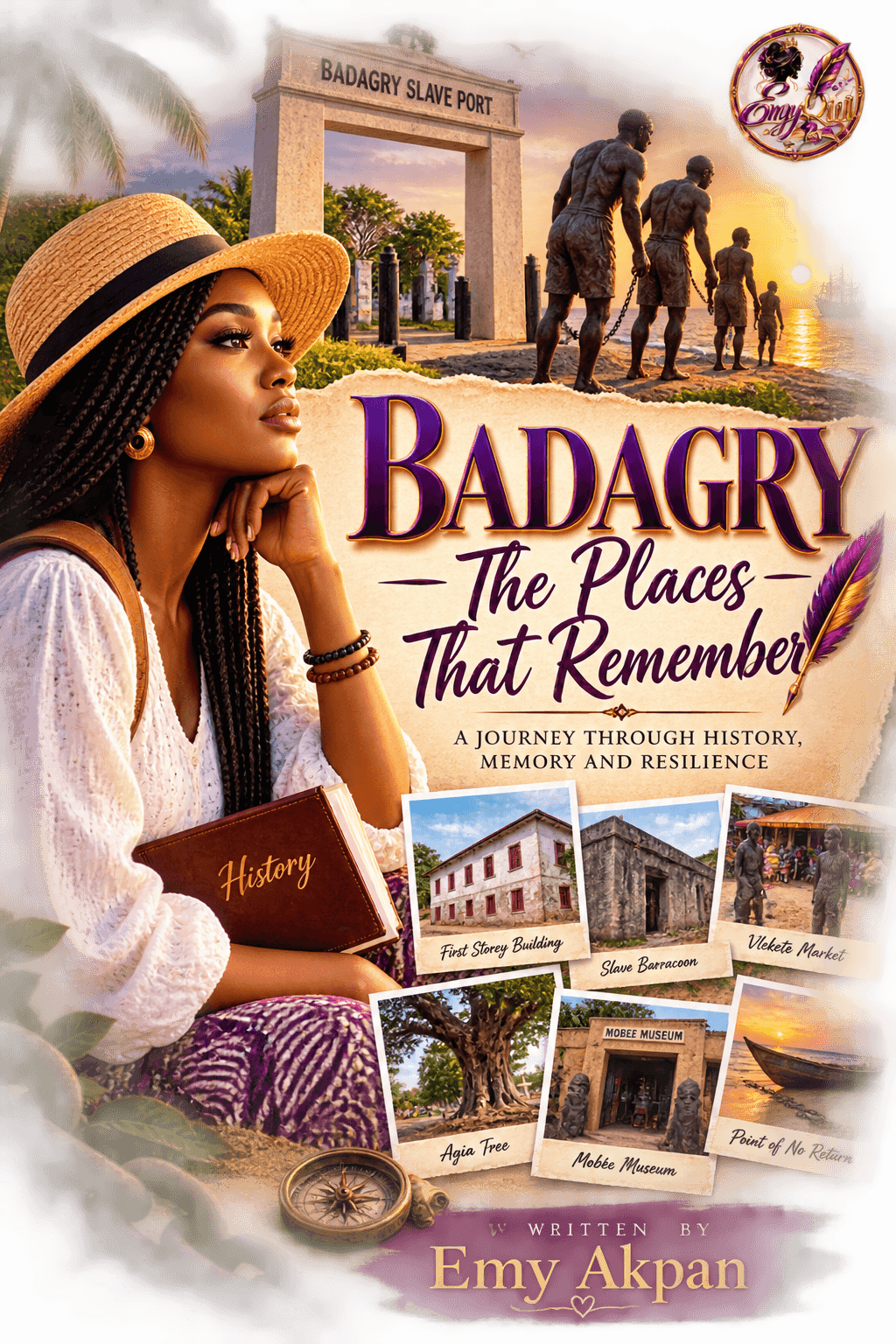
There are places you visit for the beauty they offer.
And then there are places you visit because they have something to tell you.
Badagry is one of those places.
At first glance, it may seem like another quiet coastal town in Lagos State. The air carries the smell of the sea. The roads stretch toward the border with the Republic of Benin. Life goes on around old buildings, markets, churches, houses and sandy paths.
But Badagry is not just a town.
It is a memory.
Its soil has witnessed trade, migration, religion, resistance, colonial encounters and one of the darkest chapters in African history. Some of its stories are preserved in museums. Others remain attached to old trees, buildings, roads, markets and stretches of coastline.
And perhaps that is what makes Badagry different.
The places remember.
The Town by the Water
Long before Badagry became associated with tourism and historical excursions, its location made it important.
Situated along the coast, close to the waterways connecting the interior with the Atlantic, Badagry became part of regional networks of trade and movement. People, goods and ideas passed through the area.
But the same location that made Badagry a centre of commerce also drew it into the transatlantic trade in enslaved Africans.
Between the seventeenth and nineteenth centuries, the wider Gulf of Guinea became deeply involved in this trade. Badagry became one of the important coastal points connected to the export of enslaved Africans across the Atlantic. UNESCO now includes Badagry among its network of places connected to the history and memory of enslavement.
That history is difficult to confront.
But it is a history must not be forgotten.
Because Badagry does not allow you to forget easily.
The Vlekete Market
Imagine walking into a market today. People are bargaining. Voices rise and fall.
Someone is selling food. Another person is calling customers. Children are moving about.
Now imagine a market where human beings were once treated as commodities.
That is part of the history associated with the Vlekete Slave Market in Badagry.
The Vlekete market became one of the places associated with the buying and selling of enslaved people. It was not an isolated event. It existed within a much larger network that connected inland communities, coastal traders and overseas markets.
Today, the site is remembered as part of Badagry's historical landscape.
And there is something unsettling about that.
The word "market" usually makes us think about things.
But the people who passed through places like Vlekete were not things.
They had names.
They had families.
They had homes.
They had languages.
They had dreams.
Some were captured during warfare or raids. Others were sold through systems of commerce and political power. Their lives were interrupted and their identities were reduced to numbers, categories and prices.
When we stand at such places today, we should remember that history was never made only by kings and traders.
It was also made by ordinary people whose lives were violently changed.
The Slave Barracoon
Not far from the stories surrounding the market is another painful reminder: the Slave Barracoon, also associated with the history of Badagry's slave trade.
According to UNESCO's account of the site, Abass Ifaremilekun Fagbemi, a man from the region, was captured by a Dahomean slave trader during conflict between Dahomey and the Egba. He was taken to Brazil and sold as a servant. After gaining his freedom, he eventually returned to the area and became involved in trade. In the early 1840s, he built and managed a barracks containing forty cells where enslaved people were held. The building is now preserved as a historical site and museum.
There is an uncomfortable irony in this story.
A man who had experienced enslavement eventually returned to the land of his birth and became connected to a structure involved in the same system.
History is rarely as simple as heroes on one side and villains on the other.
People made choices within complicated political, economic and social systems. Some participated. Some resisted. Some profited. Some suffered. Some experienced both sides of the system at different points in their lives.
That complexity is one reason history deserves more than a few dates in a textbook.
The Mobee Family and the Weight of Memory
Another important place in Badagry's historical landscape is the Mobee Slave Relics Museum, connected to the Mobee family.
The museum preserves objects and stories associated with the slave trade and the role played by local actors in that history.
For a visitor, the experience can be unsettling because the history becomes physical.
Instead of reading that people were transported, you are confronted with the objects and spaces associated with that process.
Instead of hearing that the trade existed, you encounter a place that remembers it.
This is the importance of historical sites.
A book can tell you that something happened.
A place can make you stop and imagine it.
The First Storey Building
But Badagry's story does not end with slavery.
One of its most famous landmarks is the building widely remembered as Nigeria's first storey building, constructed in the nineteenth century and associated with early Christian missionary activity in the area.
The building represents another major change in Nigerian history: the arrival and growth of Christian missionary work and Western-style education along the coast.
The story of Badagry therefore contains a striking contrast.
The same town that became associated with the painful history of the slave trade also became an important location in the development of Christianity and formal education in what is now Nigeria.
That contrast tells us something important about history.
A place can carry more than one story.
Badagry cannot be reduced to slavery.
It cannot be reduced to missionary history.
It cannot be reduced to tourism.
It is all of these things—and more.
The Agia Tree
Then there is the Agia Tree.
At first, it may appear almost ordinary.
Just a tree.
But according to local historical tradition, the site is associated with the arrival of Christianity in Badagry and with early missionary activity.
That gives the tree a significance beyond its physical appearance.
Trees usually grow quietly.
They do not speak.
They do not write down what they have seen.
But an old tree standing in a historic place can become a symbol of memory.
Generations pass.
Buildings change.
Roads are widened.
People move away.
Yet the tree remains.
And suddenly, something that looks ordinary becomes a witness.
The Path to the Sea
Perhaps the most powerful part of Badagry's historical landscape is not a building at all.
It is the route toward the water.
The Slave Port and Route, together with the area commonly remembered as the Point of No Return, forms part of the landscape through which the history of enslavement is remembered.
The phrase "Point of No Return" carries enormous emotional weight.
For those who were forced through such routes, the sea was not a beautiful holiday destination.
It represented separation.
Separation from home.
Separation from family.
Separation from everything familiar.
Some people would never see their homeland again.
UNESCO's documentation of Badagry describes the town as one of the important transatlantic routes for the export of enslaved Africans and identifies several connected sites, including the Slave Port and Route, Vlekete Slave Market and the Mobee Slave Relics Museum.
Today, visitors may walk these paths in daylight.
They may take photographs.
They may listen to guides explain what happened.
But the significance of the route is not in the photographs.
It is in the memory.
Badagry After Slavery
History did not stop when the transatlantic slave trade was abolished.
Badagry continued to evolve.
Trade changed.
Missionary activities expanded.
Colonial influence grew.
Communities adapted.
New generations were born who knew the old stories only through what their parents and grandparents told them.
And slowly, some of the places that once represented everyday life became historical monuments.
That is how memory works.
Yesterday's ordinary place becomes tomorrow's heritage.
A house becomes a museum.
A market becomes a monument.
A road becomes a historical route.
A tree becomes a symbol.
A shoreline becomes a reminder.
Why Badagry Still Matters
There is a temptation to think that history belongs in museums.
It doesn't.
History lives in the way communities remember themselves.
It lives in names.
It lives in traditions.
It lives in buildings.
It lives in stories passed from one generation to another.
And Badagry reminds us that Nigeria's history did not begin with colonial rule.
Long before colonial administrators arrived, African societies had political systems, trade networks, communities and cultures.
At the same time, our history also contains painful truths about conflicts, enslavement, exploitation and the ways Africans themselves became involved in systems that harmed other Africans.
We must be brave enough to remember all of it.
Not to shame ourselves.
Not to glorify the past.
But to understand it.
Because a people who forget their history can easily misunderstand their present.
The Places That Remember
Perhaps the best way to understand Badagry is to stop thinking of its historical sites as old buildings and begin thinking of them as pages of a story.
Vlekete tells one part.
The Slave Barracoon tells another.
The Mobee Museum preserves another.
The First Storey Building opens another chapter.
The Agia Tree carries another memory.
The Slave Route leads toward the sea and reminds us of what happened before those stories were carried across the Atlantic.
Together, they form something larger than a tourist attraction.
They form a conversation between the past and the present.
And perhaps that is why Badagry deserves to be visited, studied and remembered.
Because when you walk through Badagry, you are not simply walking through an old Nigerian town.
You are walking through layers of Nigeria's past.
Some beautiful.
Some painful.
Some inspiring.
Some difficult to accept.
But all worth remembering.
The buildings may become older.
The roads may change.
The people who once told these stories may no longer be here.
Yet the places remain.
Quietly standing.
Quietly waiting.
Quietly remembering.
Badagry remembers what we sometimes forget.
And perhaps our responsibility is not merely to visit these places.
It is to listen.