 Writers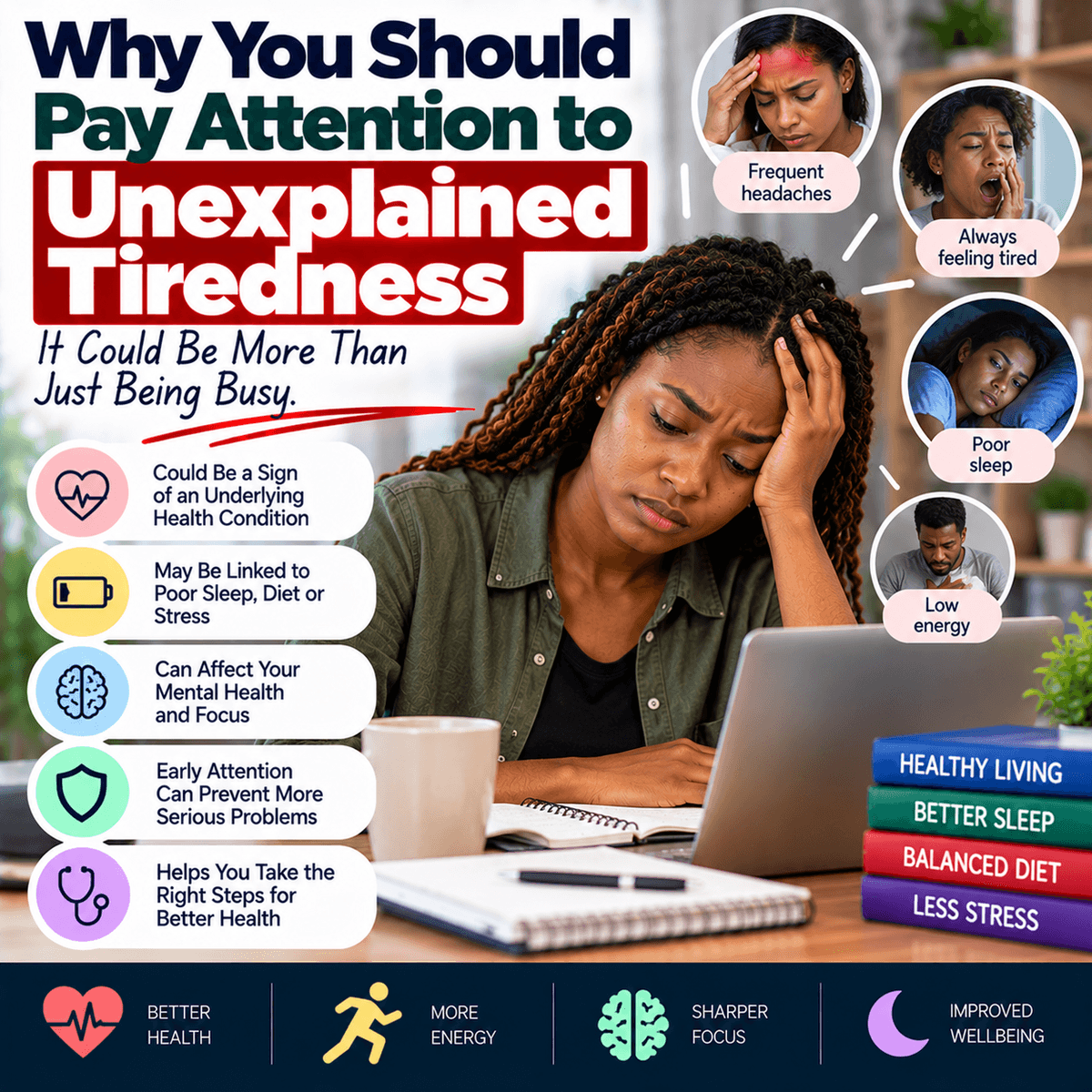
Feeling tired after a long day, a busy week, physical activity or a night of poor sleep is normal. In many cases, the body simply needs rest and recovery. However, tiredness becomes more important to pay attention to when it continues for a long time, appears without an obvious reason or begins to interfere with normal activities. Some people become used to feeling exhausted every day and begin to treat it as a normal part of adulthood. They wake up tired, struggle to concentrate at work or school, lose interest in activities they normally enjoy and depend heavily on caffeine or energy drinks to get through the day. While a demanding routine can certainly leave someone tired, persistent fatigue can have many possible causes, and it should not always be blamed on being busy. Sleep problems, stress, poor nutrition, dehydration, some medicines and different health conditions can all contribute to ongoing tiredness. This does not mean that persistent fatigue automatically indicates a serious illness. It means that the symptom deserves attention when it continues despite reasonable rest or when it represents a clear change from how you normally feel. Start by considering how long the tiredness has lasted and how much it affects your daily life. Are you struggling to complete tasks that were previously manageable? Do you regularly wake up feeling unrefreshed even after spending enough time in bed? Are you finding it difficult to concentrate or remain alert during the day? Questions like these can help you decide whether the problem is simply temporary tiredness or something that may need further attention. Your energy level can naturally change from one day to another, but a persistent and unexplained reduction in energy should not automatically become something you accept without trying to understand why it is happening.
Sleep is one of the first areas worth examining when unexplained tiredness develops because the amount of time spent in bed does not always reflect the quality of sleep a person receives. Someone may spend eight hours in bed but wake repeatedly during the night or have difficulty reaching restful sleep. Another person may stay awake late using a phone, watching television or working and then need to wake early the next morning. Repeating this pattern can create ongoing tiredness. Try to maintain a reasonably consistent sleep schedule and create enough time for sleep rather than expecting your body to function well on very little rest. Your sleeping environment can also matter. Excessive noise, uncomfortable temperature, bright light and frequent phone notifications can interrupt rest. Some people also experience sleep problems that they may not recognise themselves. For example, another person may notice loud snoring, pauses in breathing or unusual movements during sleep. If you regularly get what appears to be enough sleep but remain extremely tired during the day, discuss the problem with a healthcare professional rather than assuming you simply need more coffee. It is also useful to examine your use of caffeine. Coffee, tea, energy drinks and other caffeinated products can temporarily increase alertness, but relying on large amounts throughout the day can interfere with sleep in some people, especially when consumed later in the day. This can create a difficult pattern in which poor sleep leads to more caffeine, while the increased caffeine may make good sleep harder to achieve. Instead of using stimulants as the main solution to persistent tiredness, look at the quality and consistency of your sleep and seek professional advice if problems continue.
Food, fluids and daily activity can also influence how energetic you feel. Regularly skipping meals because of work or school may leave you feeling weak or unable to concentrate. A balanced diet provides the body with the nutrients and energy needed for normal functions, while highly restrictive diets may make it difficult for some people to meet their nutritional needs. Rather than depending heavily on sugary snacks or energy drinks for a temporary increase in energy, aim for regular meals containing a reasonable variety of foods. Staying adequately hydrated is also important. People who spend long hours working, travelling or studying sometimes realise late in the day that they have consumed very little fluid. At the same time, tiredness should not automatically be blamed on diet or dehydration without considering other possibilities. Physical activity also deserves attention. When you already feel tired, exercise may seem like the last thing you want to do, but regular physical activity can support general health and sleep for many people. This does not mean forcing yourself through intense exercise when you are unwell or extremely exhausted. Start at a level that is appropriate for your health and ability, and seek professional guidance when necessary. Long periods of sitting can also leave some people feeling sluggish, so simple movement breaks during the day may be useful. Stress is another factor that can affect energy. Constant worry, pressure at work, academic demands, financial concerns or difficult personal circumstances can make it harder to rest mentally and physically. When stress continues for a long period, a person may feel exhausted even without doing strenuous physical work. Healthy ways of managing stress, including appropriate rest, physical activity, talking with trusted people and seeking professional support when needed, can form part of addressing ongoing tiredness.
Persistent fatigue can sometimes be associated with health conditions, which is why self-diagnosis should be avoided. There are many possible medical explanations, and tiredness alone cannot tell you which one, if any, is responsible. A healthcare professional may need to consider your medical history, sleep, diet, medicines, other symptoms and individual circumstances. Depending on the situation, an examination or tests may be recommended. For example, certain problems involving the blood, hormones, infections or other body systems can sometimes include fatigue among their symptoms, but only proper assessment can determine whether any of these are relevant to you. Some medicines can also cause sleepiness or tiredness as a side effect. If you notice that your energy changed after starting a medicine or changing its dose, discuss this with the professional who prescribed it. Do not stop a prescribed medicine suddenly simply because you suspect it may be contributing to tiredness. Certain symptoms occurring alongside fatigue should receive more urgent attention. Seek prompt medical care if severe or sudden weakness occurs with symptoms such as difficulty breathing, chest pain, fainting, confusion or other serious changes. You should also arrange medical assessment when tiredness persists, becomes progressively worse, affects your ability to perform normal activities or occurs alongside concerning changes such as unexplained weight loss, persistent fever, unusual bleeding or other symptoms that worry you. These signs do not necessarily mean that a serious condition is present, but they should not be ignored. Searching online for a list of diseases associated with tiredness may increase anxiety without providing an accurate answer because many different conditions share similar symptoms. Individual medical assessment is more useful than trying to match yourself to a diagnosis from a general list.
The best response to unexplained tiredness is to pay attention to your body while avoiding unnecessary fear. Begin by looking at your recent routine. Consider whether you have been sleeping enough, eating regularly, drinking enough fluids, managing stress and allowing time for recovery. Think about whether the tiredness started after a major change in your work, studies, medication, sleep schedule or daily responsibilities. Keeping a simple record for a short period may help. Note when you go to bed, when you wake, how rested you feel, your general activity level and when the tiredness is most noticeable. Also record other symptoms that appear at the same time. This information can be useful if you need to speak with a healthcare professional. Avoid trying to solve persistent fatigue entirely with energy drinks, large amounts of caffeine, unverified supplements or products advertised as quick ways to increase energy. Such products may not address the reason you are tired and may create additional problems for some people. Most importantly, give yourself permission to seek medical advice when something does not feel normal for you. You do not need to wait until exhaustion prevents you from functioning before asking for help. Tiredness is a common experience, but there is a difference between being temporarily tired and constantly struggling with energy for no clear reason. Paying attention to that difference can help you make better decisions about rest, daily habits and professional care. Your body needs adequate recovery to function well, and persistent fatigue can be a useful sign that something in your routine or health deserves closer attention.
