 Writers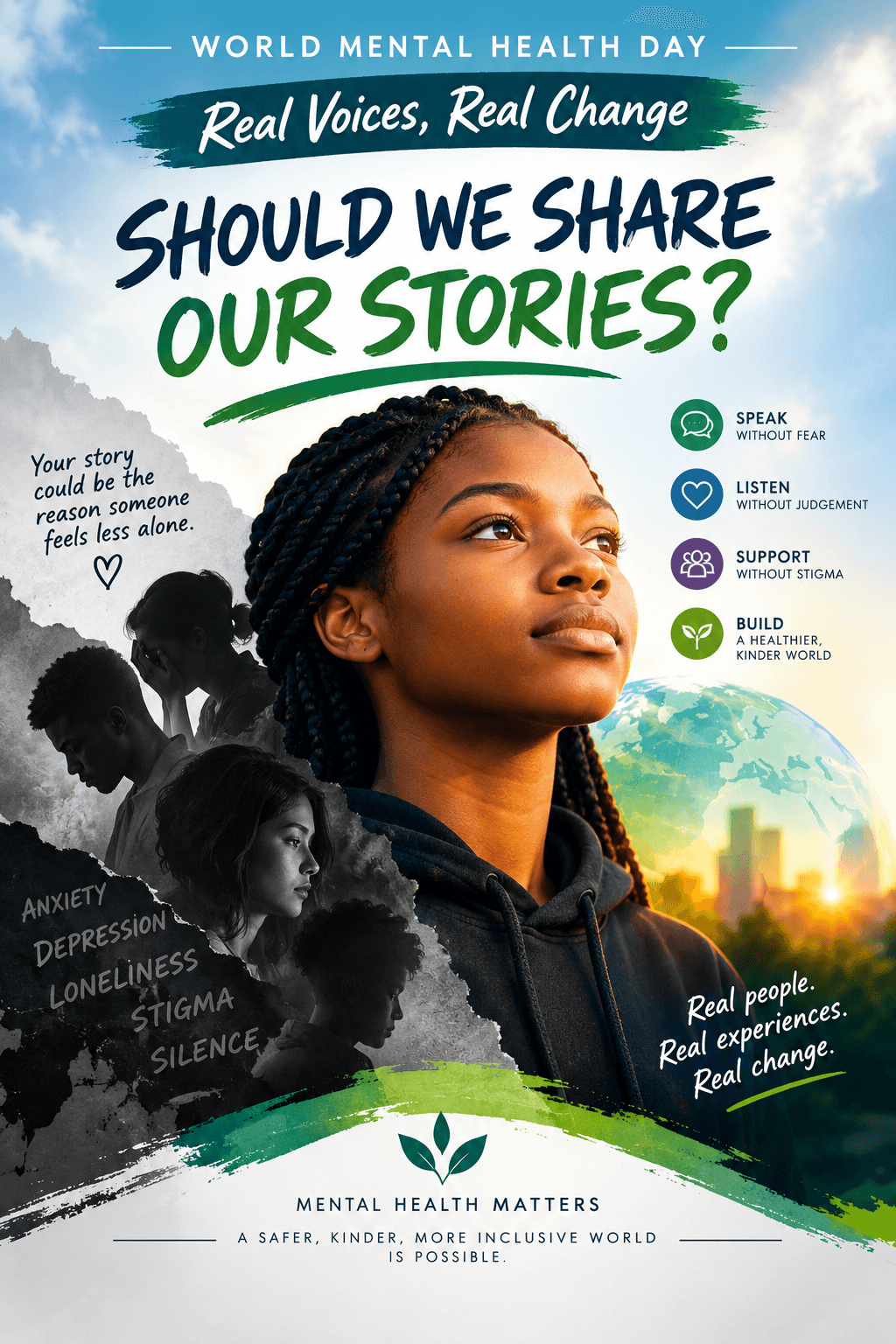
A story can be a bridge. It can cross the distance between one person’s pain and another person’s understanding. Sometimes, the words we are afraid to say aloud are the very words someone else needs to hear. But when sharing our stories can expose our most vulnerable moments to the world, an important question remains: Should we share our stories?
I believe we should—but not because everyone owes the world an explanation of what they have experienced. We should share because honest stories, when told safely and willingly, can challenge silence, reduce stigma and remind people that they are not alone.
Mental health struggles are often invisible. A person can laugh with friends, attend school, go to work and appear completely fine while carrying difficulties that nobody sees. Because these experiences are not always visible, misunderstanding can grow around them. Someone may be labelled “weak,” “dramatic,” or “attention-seeking” when what they actually need is understanding.
This is where real voices can make a difference.
When people courageously speak about their experiences, they can replace stereotypes with human stories. A statistic may tell us that millions of people experience mental health difficulties, but a personal story can make that reality feel human. It can help someone who has never understood mental health challenges look beyond assumptions and see the person behind the experience.
For someone struggling in silence, hearing another person say, in their own way, “You are not the only one” can also be powerful. A story cannot solve every problem, but it can open a door. It can make asking for help feel less frightening. It can begin a conversation that might otherwise never happen.
However, sharing stories is not automatically beneficial.
We must be careful not to turn someone’s pain into entertainment. Social media can reward dramatic content with attention, likes and comments, creating pressure to reveal more than a person is comfortable sharing. A deeply personal experience can also be misunderstood, copied, mocked or permanently attached to someone’s digital identity.
That is why choice matters.
No one should be pressured to tell their story simply because it might inspire others. Silence is not failure. Privacy is not shame. A person has the right to decide what to share, when to share it and with whom. And when someone chooses to speak, listeners have a responsibility to respond with respect rather than judgement.
We should also remember that stories are not substitutes for professional support. Sharing can create connection, but serious mental health difficulties may require trusted adults, counsellors, psychologists, doctors or other appropriate support. Telling someone to “just be positive” or “stay strong” is not always enough. Real change requires communities where people can speak—and systems prepared to listen and respond.
Perhaps the greatest value of sharing stories is not simply that people speak. It is that other people learn to listen.
A society can celebrate World Mental Health Day every year, post messages online and change its profile pictures. But if people continue to be mocked for seeking help, ignored when they speak or judged for experiences others do not understand, then awareness has not become meaningful change.
Real change begins when a story is met with compassion.
So, should we share our stories?
Yes—but on our own terms. We should share when we are ready, in spaces where our dignity is protected, and with the understanding that our experiences belong to us. We should listen without turning vulnerability into spectacle, and we should build communities where people do not have to reach a breaking point before someone takes them seriously.
On World Mental Health Day, perhaps the goal should not be to make everyone speak.
Perhaps it should be to make sure that when someone finally finds the courage to speak, there is someone willing to listen.
Because a real voice can start a conversation.
A conversation can change an attitude.
And changed attitudes can change lives.