Writers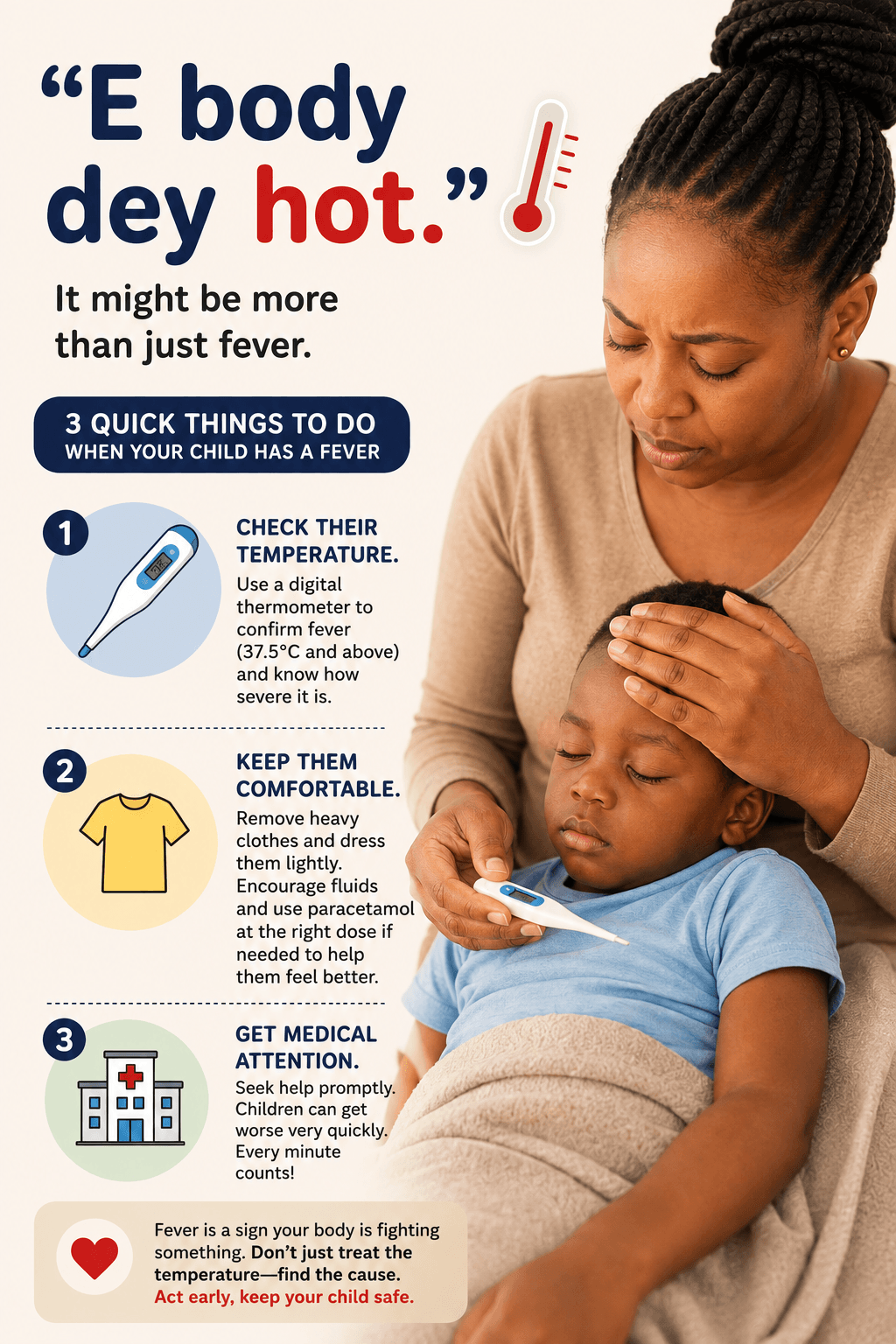
A lot of times, this is the primary complaint of parents who bring their sick children to the health facility. Sometimes, they only show up because the fever keeps coming back even after they have given the child paracetamol.
Newsflash! 🚨 Fever is not a disease that should be treated on its own.
Fever is a symptom of an underlying condition, which can range from something mild to something very serious. It is one of the ways your body responds when something is wrong.
This is why it is not enough to simply give a child paracetamol when their body feels warm and stop there. You need to find out why the child has a fever in the first place.
Fever is a rise in body temperature above the normal range. In children, an axillary temperature (taken in the armpit) of 37.5°C or higher is generally considered a fever.
Fever is often a sign that something needs attention, so it should not be taken lightly.
Why should you act promptly when your child has a fever?
• To identify an infection or other underlying problem early.
• To ensure appropriate treatment is started promptly when necessary.
• To prevent or manage complications such as dehydration and other problems associated with serious infections.
• Some young children may also experience febrile seizures when they have a fever.
Fever itself is part of the body's response to infection, but children can become seriously ill within a short period of time. This is why paying attention to their condition and acting promptly is important.
Here are 3 things to do when your child feels warmer than usual:
1. Check their temperature.
Use a digital thermometer. This is important for two reasons:
First, it helps you confirm whether your child actually has a fever.
Sometimes, what feels like hotness of the body may not actually be a fever. This is why every parent, especially parents with young children, should consider having a digital thermometer at home.
Yes, you should!
It is not just a fancy instrument used by nurses and doctors in the hospital. You can use one at home to monitor your child's temperature.
Second, the temperature reading provides useful information for the healthcare professional.
A temperature of 37.9°C is very different from 40.0°C, it is important to take note of the reading alongside other symptoms the child may have and communicate them clearly to your healthcare provider.
2. Keep the child comfortable.
Avoid wrapping the child in heavy clothing or blankets. Dress them in light clothing and encourage adequate fluid intake or breastfeeding, as appropriate.
If the child is uncomfortable, paracetamol may be used at the correct dose for the child's age/weight, but reremember, although paracetamol can bring down the temperature and make the child more comfortable; it does not treat the underlying cause of the fever.
3. Get medical attention promptly. Children can go from looking “okay” to becoming seriously ill within a short period of time.
Getting appropriate care early gives healthcare professionals the opportunity to identify danger signs and treat the underlying problem promptly.
The next time you hear, “E body dey hot,” remember this:
The fever may be the only thing you can see, but there may be a lot happening behind the scenes.
Don't just treat the temperature. Pay attention to the child. Act promptly!