Writers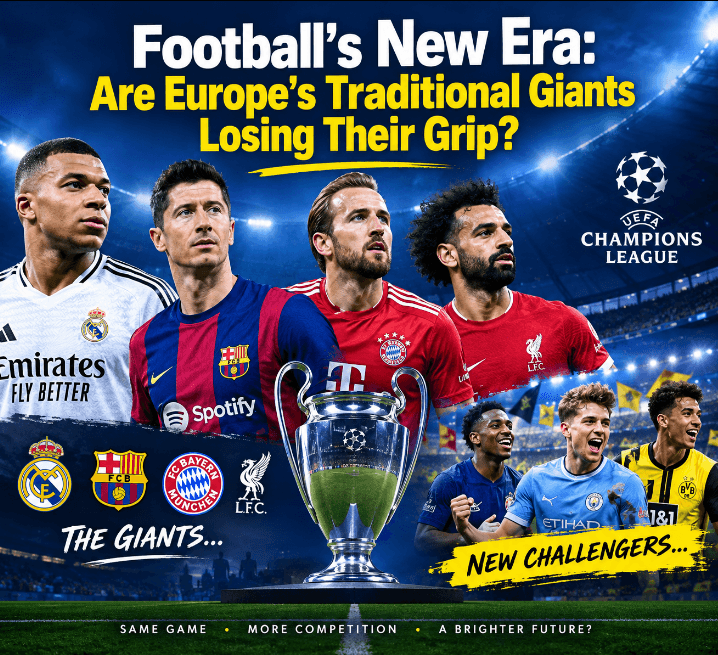
European football is entering another fascinating period, and one question is becoming increasingly difficult to ignore: are the traditional giants still guaranteed to dominate the game?
For decades, clubs such as Real Madrid, Barcelona, Bayern Munich and Liverpool have been viewed as some of the biggest forces in European football. Their history, financial strength, famous players and experience have helped them remain competitive at the highest level. However, the modern game is becoming less predictable, with ambitious clubs increasingly challenging the established order.
The Champions League remains the biggest stage for European clubs, but the competition is no longer simply about reputation. A famous name can attract attention, but performances on the pitch are what ultimately decide matches. Smaller or less historically successful clubs are becoming better organized, more confident and more capable of causing problems for Europe’s biggest teams.
One major reason for this change is the improvement in recruitment and player development. Clubs are investing heavily in scouting young talent from different parts of the world. Instead of waiting for players to become established stars, many teams are developing promising youngsters and giving them opportunities to perform at the highest level.
The transfer market has also changed the balance of power. Players now have more options, while clubs outside the traditional elite can attract talented footballers by offering competitive salaries, ambitious projects and important roles in their teams. As a result, the difference between the biggest clubs and their challengers is not always as obvious as it once was.
Tactics have become another important part of the story. Modern coaches are constantly studying opponents and using detailed tactical plans to limit the strengths of stronger teams. A well-organized side can make life extremely difficult for a club filled with expensive and famous players.
Young footballers are also changing the character of the game. Many teenagers and players in their early twenties are now trusted in major competitions. Their speed, confidence and willingness to take risks can give their teams an advantage against more experienced opponents.
Still, it would be too early to say that Europe’s traditional giants have lost their power. Clubs such as Real Madrid, Barcelona, Bayern Munich and Liverpool continue to possess enormous resources, worldwide support and valuable experience. When important matches arrive, that experience can become a major advantage.
What appears to be changing is not necessarily the disappearance of the giants, but the growth of the teams trying to catch them. The gap is becoming more competitive, and that could make European football even more exciting.
For supporters around the world, this is good news. Every season brings new questions, unexpected results and emerging stars. The old giants may still be leading the race, but the challengers are getting closer.
Football’s new era may therefore be less about replacing the traditional powers and more about creating a competition where nobody can feel completely safe. if that continues, fans could be heading into some of the most unpredictable and entertaining seasons in European football history.