Writers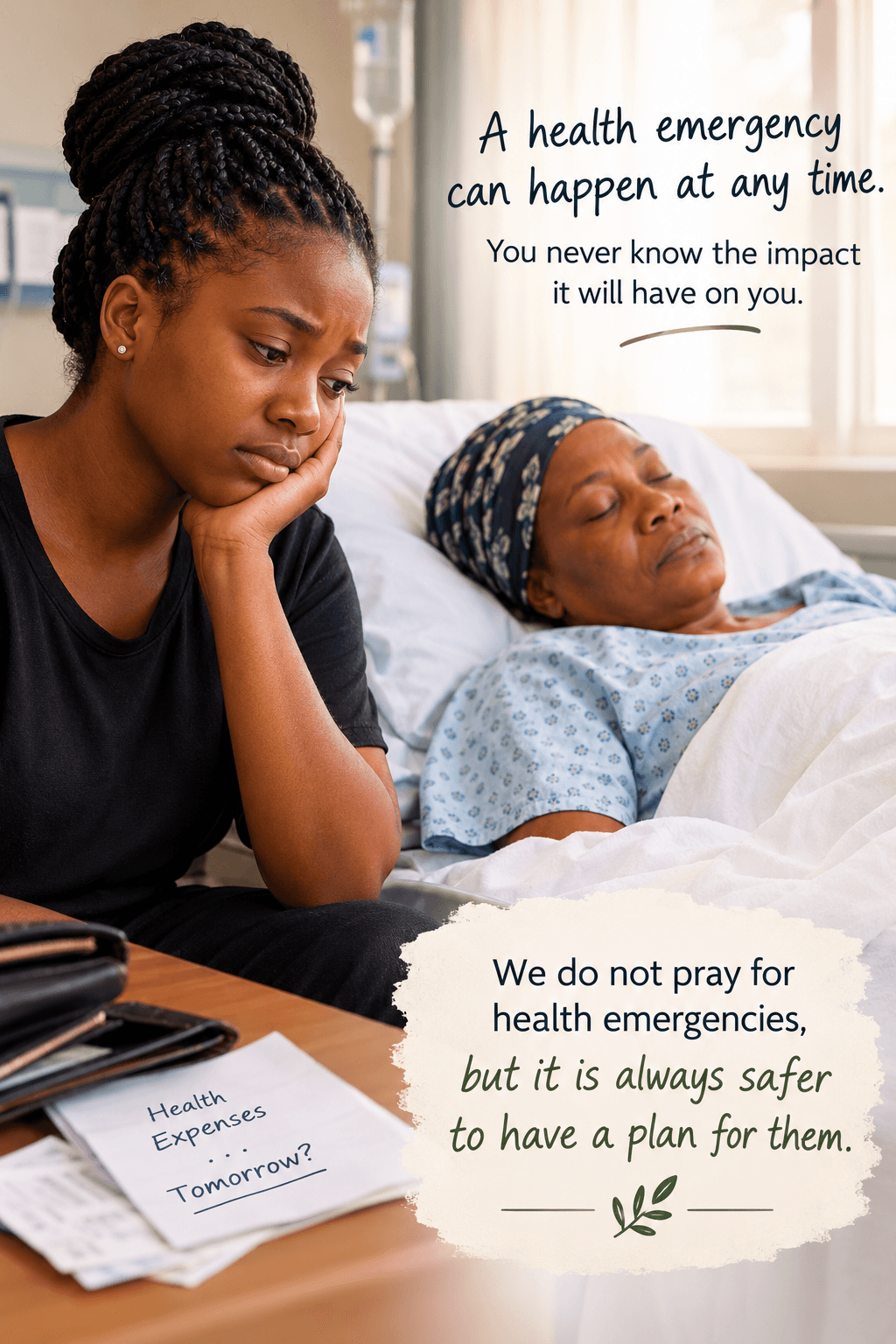
It started with a headache, but there was no improvement despite taking several doses of pain medication. The next thing, she was rushed into the emergency room of the hospital by her daughter, Tabitha.
“What happened to her?” the doctor asked Tabitha, who was panting heavily after the hard work of lifting her mother, whom she had found lying helplessly on the floor.
“She just fainted,” said Tabitha.
The doctor examined her, wrote down some notes, and then requested that some investigations be carried out and medications purchased. But that wasn't the end. Then came more investigations and even more prescriptions. As the results came in, new medications were prescribed as well.
Tabitha's finances were going down faster than a burning candle.
Her mother seemed to be recovering, but the rate of her recovery didn't match the amount of money she had already spent catering to her mother's health.
She had spent her last kobo on the latest investigation and was now surviving on the benevolence of people who had come to visit them at the hospital. But how long was that going to last? How long until the visits stopped and the people withdrew their hands?
Tabitha had never imagined that a day would come when she would find herself in such a situation. She looked at her mother, who was finally able to get some sleep after more than 24 hours of sleeplessness caused by severe pain. She had only been able to fall asleep after Tabitha received a donation from the women's fellowship at church, which enabled her to purchase the medication her mother needed to ease her pain.
“There is nothing left,” she thought to herself.
She lay on her back, wishing the night would linger on. She dreaded the morning and the doctor's review that came with each new day. What could they possibly request this time? What new medication would be prescribed? Where would the money come from?
Tabitha was a middle-income earner. Things had been going pretty well for her financially. But the thing is, life doesn't ask for your permission or readiness before throwing things at you. How prepared you are can determine how well you are able to handle what life throws at you.
Tabitha's story may sound extreme, but emergencies rarely announce themselves before they arrive. And when they do, the question isn't only whether you can afford the treatment; it's whether paying for that treatment will leave you financially stranded.
Health emergencies can happen at any time, and you can never tell for certain the impact they will have on you. Sometimes, the illness may be temporary, but the financial burden it leaves behind can last for years.
Tabitha never had an emergency fund to cover healthcare expenses. Now, not only had she drained her savings, she had also borrowed money, pushing herself into debt.
Setting aside a portion of your income regularly for healthcare emergencies could go a long way in situations like this.
We do not pray for health emergencies, but it is always safer to have a plan for them.