Writers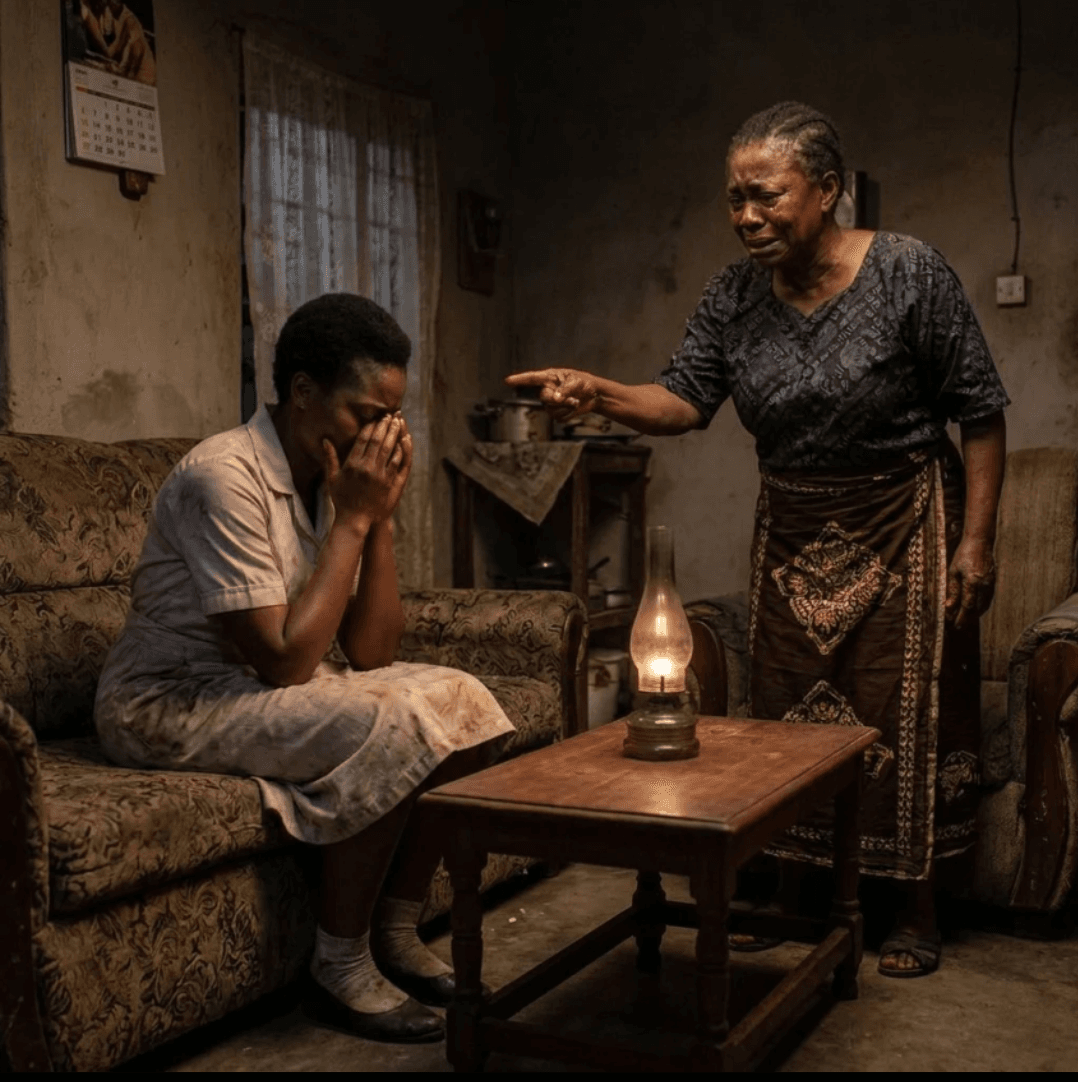
Mama Folasade went very still.
For a moment, nothing in her face moved at all — not her eyes, not her mouth, not even the slow rise and fall of her breathing.
"Wetin you talk?" she finally whispered.
"It was me, Mama." Ada's voice shook, but she made herself hold her grandmother's gaze. "Ten years ago. I was helping Iya Bimbo that night — I was nineteen, still in nursing school, still learning under her. I held the lantern. I ran for help when the bleeding started. I was there when—" Her throat closed. "I was there when she died."
Mama Folasade's hand came up to cover her mouth, and the sound that came out from behind it was not a word at all but just breath.
"You," she said, when she could speak again. "All this time. All these years I dey mourn my Yewande, dey ask God why, dey wonder who be the small girl wey watch my daughter die — and na my own granddaughter dey sleep for the next room. Dey eat my food. Dey call me Mama every morning."
"I didn't know, Mama! Not until, not until recently. I never knew her name was connected to you. I never knew—"
"You never ask!" Mama Folasade's voice rose, cracking down the middle. "Ten years, Ada, and you never ask me one question about my dead daughter's name on that headstone you dey pass every time you go hospital. You never wonder why I dey cry every August. You never—" She stopped herself, pressing her lips together hard, and when she spoke again her voice had dropped to something colder, more controlled, more frightening for its control. "Or maybe you knew. Maybe part of you knew, and you no wan know the rest, because knowing go mean you must carry am."
"That's not fair," Ada said, though even as she said it, some small, honest part of her wondered if it was true.
"Nothing about that night was fair," Mama Folasade said. "Not to Yewande. Not to the baby wey lost her mother before she ever open her eye. Not to me." Her eyes, red-rimmed now, fixed on Ada with an intensity that made Ada want to look away and made her force herself not to. "The baby. My grandchild — Yewande's daughter. What happened to her, Ada? You dey there. You dey hold her. Where did she go?"
And here it was — the second confession, the one Ada had been circling all evening without quite arriving at it.
"Mama," Ada said, very quietly, "I need to tell you something else. And I need you to let me finish before you say anything."
Mama Folasade's hands had begun to tremble in her lap. "Ada. Wetin you dey tell me."
"The baby — Yewande's baby — she's alive, Mama. She's sixteen years old now." Ada's voice broke on the next words, the ones she had been avoiding even inside her own head for two days now. "And two nights ago, she came into my hospital. In labour. With a baby of her own."
The room went utterly silent.
Somewhere outside, a dog began barking at nothing, and neither woman moved to acknowledge it, both of them frozen in the wreckage of a decade's worth of secrets.
"She's here," Mama Folasade said at last, the words coming out strange and distant, as though she were translating them from a language she'd only just learned. "My granddaughter. Yewande's child. She's here, in Ijebu-Ode, and she doesn't know who I am."
"No, Mama." Ada swallowed hard. "She doesn't even know who she is. She was raised by strangers. She doesn't know her own mother's name."
Mama Folasade rose slowly from her chair, walked to the small shelf where she kept her Bible and a framed photograph of Aduke — Ada's mother — that Ada had grown up seeing every single day without ever once being shown a photograph of Yewande beside it.
"Ten years," Mama Folasade said, her back to Ada, her voice barely holding together. "Ten years I don pray to God make He show me one sign, one small comfort, that my Yewande's suffering wasn't for nothing. And all this time, her daughter was alive, and my own granddaughter—" she turned, finally, to face Ada fully, and there were tears running freely down her face now, "—my own granddaughter knew, and said nothing."
"I was trying to protect—"
"Protect who, Ada?" Mama Folasade's voice cracked into something raw and furious and heartbroken all at once. "Protect yourself, or protect me? Because from where I dey stand, na the same person you dey protect all these years, and na me and that poor child wey suffer for your silence."
Ada had no answer for that. She sat with her grandmother's words settling over her like the rain outside, cold and unrelenting, and understood — with a clarity that felt like drowning — that the hardest part of this reckoning had not even begun.
Somewhere across town, in a hospital bed with a healing body and a mind full of questions Similoluwa slept beside her own daughter, unaware that the woman who had named her, and the grandmother who had mourned her mother for a decade, were sitting in the same house, finally speaking the truth neither had been brave enough to face alone.