 Writers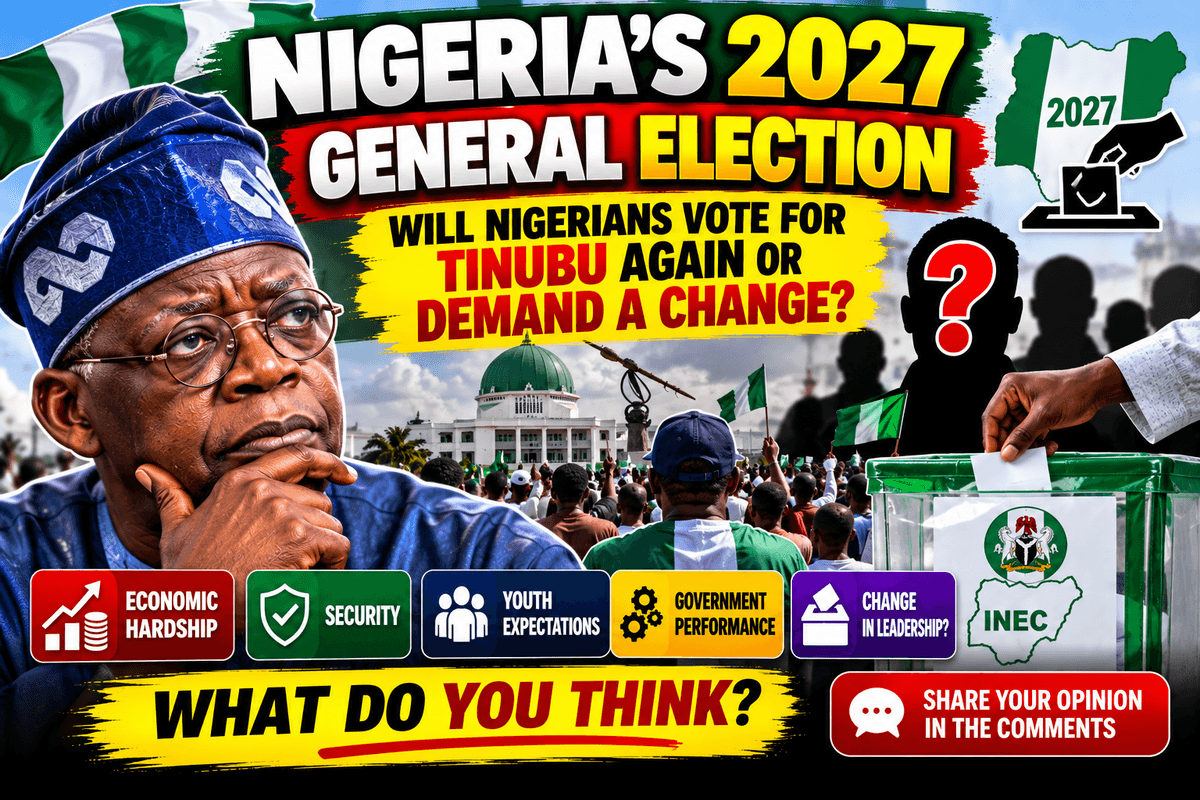
As Nigeria prepares for the 2027 general election, one question is attracting attention: Will Nigerians vote for President Bola Ahmed Tinubu again, or will they choose a different political direction?
The answer is not straightforward. Nigerians have different experiences, expectations and opinions about the current administration. While some support the government’s economic reforms and believe they should be given more time, others question whether the policies have improved their living conditions.
Recent public discussions and opinion research have reflected different views among Nigerians, particularly regarding economic conditions and security. However, opinions can change as the election approaches, and no survey can determine how Nigerians will ultimately vote.
1. Economic Hardship and the Cost of Living
One of the major issues surrounding the 2027 election is Nigeria’s economic situation.
Since Tinubu assumed office in 2023, his administration has introduced significant economic reforms, including the removal of petrol subsidies and changes to foreign exchange policy.
Supporters argue that these reforms are necessary to address longstanding economic problems, encourage investment and improve the country’s financial position.
Critics, however, point to the rising cost of living and question whether ordinary Nigerians are receiving sufficient benefits from the reforms.
For voters, an important question is whether they evaluate economic policies based on their immediate financial experiences or the longer-term benefits promised by the government.
2. Security and Public Confidence
Security is another major issue in Nigeria’s political discussions.
People want to live, travel, farm and conduct business without fear. The government’s responsibility to protect lives and property therefore remains an important subject for public debate.
As the election approaches, citizens may examine the security policies and proposals of both the incumbent administration and alternative candidates.
The question is not simply who makes the most attractive promises, but how voters assess the available evidence and proposed solutions.
3. Will Nigerians Give Tinubu Another Opportunity?
This is perhaps the most interesting aspect of the discussion.
Some Nigerians support continuity, arguing that major economic reforms take time to produce results. Others favour a change in leadership, citing concerns about living costs, security and government accountability.
Public opinion research has illustrated these competing attitudes. However, surveys have limitations in terms of their sample sizes, locations and timing, so their findings should not be treated as a definitive representation of every Nigerian voter.
Ultimately, voting decisions belong to individual citizens, and public opinion can change before election day.
4. The Role of Young Nigerians
Young Nigerians also have an important role in political discussions.
Beyond participating in elections, young people can examine government policies, attend public debates, question political promises and contribute to discussions about national development.
Social media provides opportunities for political engagement, but it also creates challenges involving misinformation and unverified claims.
Regardless of their preferred candidates, citizens can contribute to informed political discussions by examining credible information and respecting differences of opinion.
5. What Should Determine the 2027 Election?
As Nigeria approaches the general election, several important questions deserve consideration.
Should voters focus primarily on economic performance? How much importance should they attach to security, infrastructure, education and employment opportunities? Should political experience matter more than new ideas?
Different voters may reasonably reach different conclusions depending on their circumstances and priorities.
The forthcoming election presents another opportunity for Nigerians to discuss the country’s challenges, evaluate competing proposals and participate in the democratic process.
Conclusion: Let’s Hear Your Opinion
Nigeria’s 2027 general election raises important questions about leadership, economic development, security and public accountability.
President Tinubu’s supporters and critics offer different interpretations of his administration’s achievements and challenges. Ultimately, individual voters will decide how much weight to give these competing arguments.
The Big Question
Do you think Nigerians will vote for President Bola Ahmed Tinubu again in 2027, or will they prefer a change in leadership?
What will influence your assessment of the election: economic performance, security, political experience, campaign promises, or something else?
Share your opinion in the comments and explain your reasons. Respect other people’s political choices.
