 Writers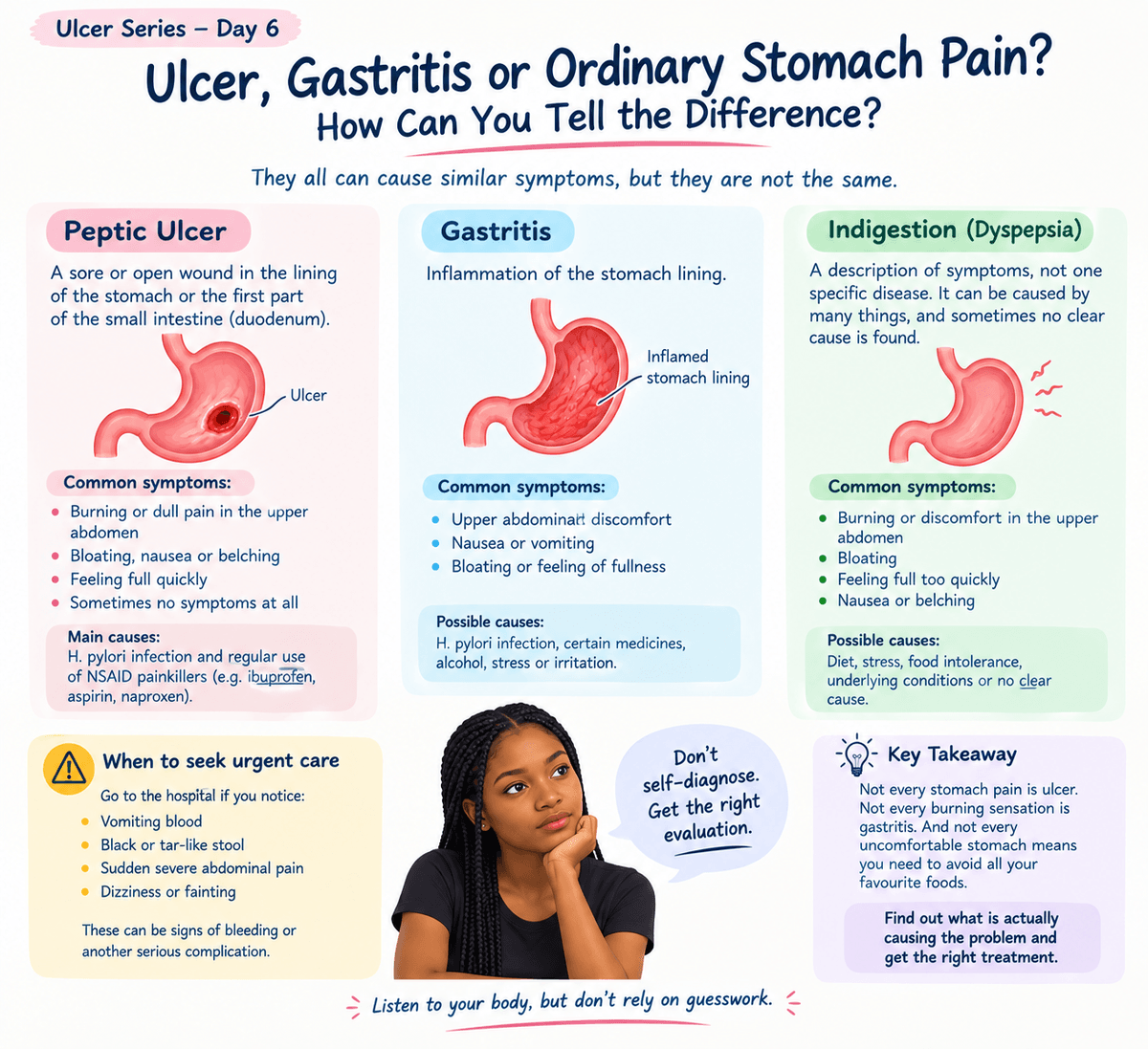
ULcer Series — Day 6
Ulcer, Gastritis or Ordinary Stomach Pain? How Can You Tell the Difference?
You feel a burning sensation in your stomach.
Maybe you have been feeling bloated. Maybe you ate and suddenly felt uncomfortable. Or perhaps there is that annoying pain in the upper part of your abdomen that comes and goes.
Then someone says, “That one is ulcer.”
Another person says, “No, it is gastritis.”
Someone else tells you to drink milk, avoid pepper, or take a particular drug.
And before you know it, you are trying to diagnose yourself from everybody’s advice.
But here is the problem: ulcer, gastritis and indigestion can have very similar symptoms.
So how do you actually know what you have?
First, what is an ulcer?
A peptic ulcer is an actual sore or open wound in the lining of the stomach or the first part of the small intestine, called the duodenum.
It is not simply “stomach pain.”
Some people with ulcers experience a dull or burning pain in the upper abdomen. They may also have bloating, nausea, belching or feel unusually full.
Interestingly, some people with ulcers may have no obvious symptoms at all until a complication develops.
The two major causes we have discussed in previous parts of this series are H. pylori infection and the use of NSAID painkillers such as ibuprofen, aspirin and naproxen.
Then what is gastritis?
Gastritis is different.
Instead of an actual ulcer or open sore, gastritis involves inflammation of the stomach lining.
It can happen for different reasons, including H. pylori infection and irritation associated with certain medicines or alcohol.
And just like ulcers, gastritis may cause upper abdominal discomfort, nausea, vomiting or a feeling of fullness.
That is why simply saying, “My stomach burns, so I have ulcer,” is not enough.
And what about ordinary indigestion?
Indigestion, also called dyspepsia, is more of a description of symptoms than one specific disease.
You may experience burning or discomfort in your upper abdomen, feel full too quickly, become bloated, feel nauseated or belch frequently.
Sometimes there is an underlying condition causing these symptoms. Other times, doctors may diagnose a type of indigestion when no other clear cause is found.
So yes, you can have stomach discomfort without having an ulcer.
This is where self-diagnosis becomes risky
Imagine three people.
The first has an ulcer.
The second has gastritis.
The third has indigestion.
All three might tell you, “My stomach has been burning.”
Would you be able to tell which one has an ulcer just by listening to that sentence?
Probably not.
Even the timing of the pain is not reliable enough to diagnose yourself. For some people with ulcers, eating may temporarily relieve the pain; for others, eating may make it worse.
That is why proper medical assessment matters.
Depending on what a healthcare professional suspects, they may review your symptoms and medicines and perform an examination. They may also recommend tests for H. pylori, such as a stool or breath test, and in some situations an upper gastrointestinal endoscopy.
Please don't ignore warning signs
Stomach discomfort is common, but some symptoms should not be treated casually.
Seek urgent medical attention if you vomit blood, notice black or tar-like stool, have sudden severe abdominal pain, or become very dizzy or faint.
These can be signs of gastrointestinal bleeding or another serious complication.
The bigger lesson
Not every stomach pain is ulcer.
Not every burning sensation is gastritis.
And not every uncomfortable stomach means you need to start avoiding every food you enjoy.
The goal is not to give your stomach a name based on symptoms you read online. The goal is to find out what is actually causing the problem and treat the cause.
So the next time someone tells you, “You definitely have ulcer,” remember this:
Pain can tell you that something may be wrong. It cannot always tell you exactly what is wrong.
Day 6 summary Don't diagnose your stomach by guesswork. Pay attention to persistent symptoms, your medicines, and warning signs and get the right evaluation when necessary.
