 Writers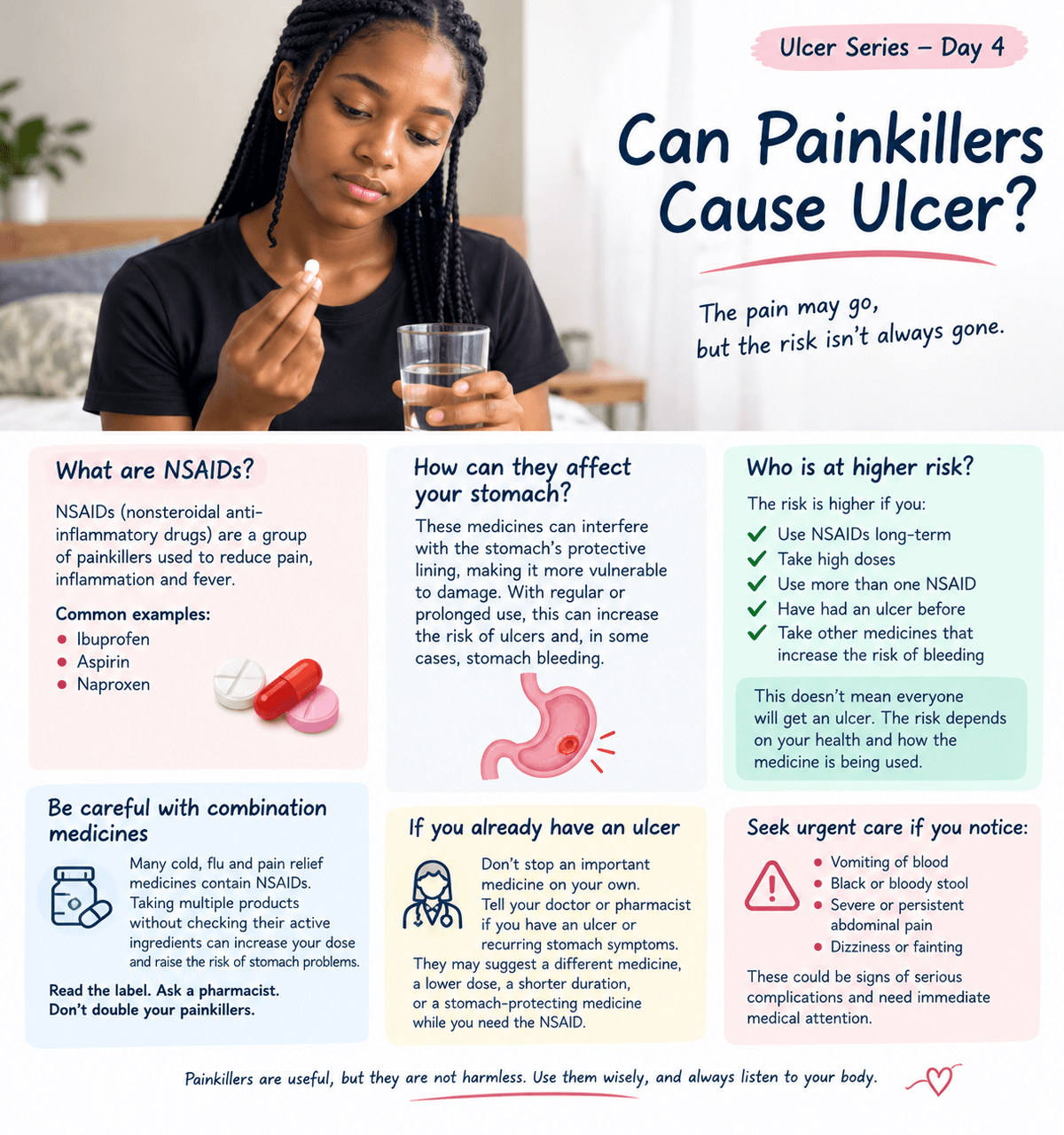
ULCER SERIES — DAY 4
Can the Painkiller You Take Actually Cause an Ulcer?
You have a headache.
Your body is aching.
You have menstrual cramps.
Your tooth is disturbing you.
What do you do?
You reach for a painkiller.
For many of us, taking a painkiller is almost automatic. Sometimes we don't even remember the name of the medicine. We just know, “This is what I normally take when I have pain.”
But there is something important we should know:
Some painkillers can increase your risk of developing an ulcer.
Not because painkillers are bad medicines. They are useful medicines when used appropriately. The problem is that certain types can affect the stomach, especially when they are used regularly, in high doses, or for a long period.
Meet NSAIDs
The group we need to pay attention to is called NSAIDs — nonsteroidal anti-inflammatory drugs.
Some common examples include:
Ibuprofen, aspirin and naproxen.
These medicines are useful because they can reduce pain, inflammation and fever. But they can also make the protective lining of the stomach more vulnerable to damage, increasing the risk of ulcers and, in some cases, stomach bleeding.
So that tablet you took for your headache isn't automatically dangerous.
The concern is how often, how much and under what circumstances you are taking it.
Why can they affect the stomach?
Your stomach has natural protective mechanisms that help shield its lining from digestive acid.
NSAIDs can interfere with some of these protective mechanisms. With repeated or prolonged use, the stomach lining can become more susceptible to injury.
That's one reason doctors pay attention to NSAID use when investigating someone with an ulcer. In fact, H. pylori infection and NSAID use are the two most common causes of peptic ulcers.
And here's something interesting:
A person can have both H. pylori and regular NSAID use, which can further increase the risk of developing an ulcer.
Who needs to be especially careful?
The risk isn't exactly the same for everyone.
The chance of an NSAID-related ulcer is higher with things such as long-term use, higher doses, taking more than one NSAID, having had an ulcer before, or taking other medicines that increase the risk of bleeding.
This is why saying, “But I've been taking this painkiller for years and nothing happened,” doesn't necessarily mean there is no risk.
Your risk can depend on your health, other medicines you're taking and how the medicine is being used.
Please don't double your painkillers
This is another mistake worth talking about.
Sometimes someone takes ibuprofen and later takes another medicine for cold, headache or body pain without checking what is inside it.
Some combination medicines can contain the same or related pain-relieving ingredients. Taking multiple products without checking their active ingredients can accidentally increase your dose. Reading the medicine label or asking a pharmacist can help prevent this.
More medicine doesn't always mean faster relief.
Sometimes it simply means more risk.
What if I already have an ulcer?
Don't simply stop an important medicine on your own.
If you have an ulcer or have been experiencing recurring stomach symptoms and you regularly use NSAIDs, tell your doctor or pharmacist.
Depending on the reason you need the medicine, a healthcare professional may recommend changing the medicine, reducing the dose, shortening the duration, or using another medicine. In some situations, a doctor may prescribe a medication that helps protect the stomach while an NSAID is needed.
The important thing is not to manage the situation by guesswork.
And please know the warning signs
If someone taking these medicines develops vomiting of blood, black or bloody stool, severe or persistent abdominal pain, dizziness or fainting, that should not be treated as an ordinary stomach ache.
These can be signs of gastrointestinal bleeding or another serious complication and require urgent medical attention.
The lesson for today
Painkillers are medicines, not harmless sweets.
Use them responsibly.
Read the label.
Don't combine medicines carelessly.
Don't keep taking them repeatedly without understanding why you need them.
And if you regularly depend on painkillers, talk to a healthcare professional rather than simply increasing the dose whenever the pain returns.
Sometimes the painkiller is helping the pain while another problem is quietly developing underneath.
Treat the pain, but don't forget to understand its cause.
