 Writers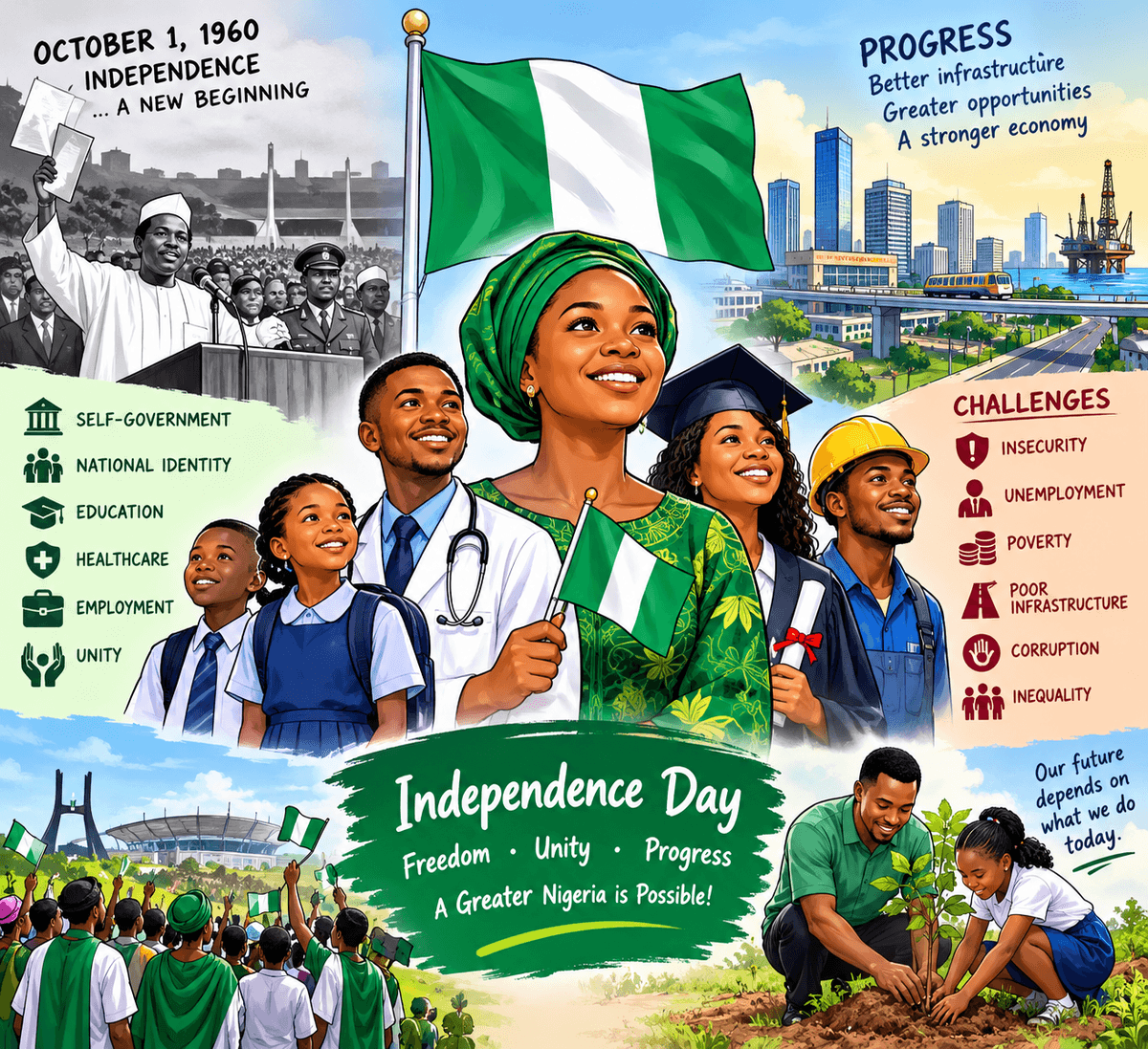
Nigerians celebrate Independence Day on October 1st each year to commemorate the day Nigeria gained freedom from British colonial rule in 1960. More than a public holiday, Independence Day. It represents national identity, freedom, unity, and the idea that Nigerians can decide their own destiny.
Nigerians have been able to consider the nation's progress since Independence Day in 1960. Numerous Nigerians anticipated a peaceful and affluent nation where residents would have access to improved education, healthcare, employment, and living conditions after independence. Despite the fact that the trip hasn't always been straightforward, the country has kept on changing and developing.
Self-governance is one significant benefit that independence has brought Nigerians. Prior to gaining independence, the British colonial government had a significant impact on significant choices concerning Nigeria. Nigerians have been able to create their own political institutions, choose officials, and engage in influencing the course of the nation since 1960. Democratic government has remained a vital component of Nigeria's growth despite its history of political challenges and military dominance.
Additionally, national identity has been reinforced by independence. Nigeria is a country with hundreds of diverse ethnic groups, languages, and cultural customs. Independence Day gives individuals from all walks of life a chance to celebrate the country. Despite their differences, the national anthem, other national emblems, and the green and white flag serve as a reminder to citizens that they are all part of the same country.
The ability to expand one's economy is another significant advantage. Nigeria has grown into one of Africa's leading economies since 1960, having developed industries, expanded its cities, and improved transportation and communication networks. Oil's discovery and growth brought a great deal of money to the government and attracted a lot of notice from other countries. Unemployment, poverty, and rising living costs are still major problems, and not all Nigerians have benefited equally from economic growth.
Professional growth and educational possibilities have also increased as a result of independence. Nigeria has founded several institutions, including universities, polytechnics, and colleges, that have trained educators, physicians, engineers, journalists, attorneys, scientists, and other experts. Additionally, Nigerians have made major contributions to the fields of science, technology, entertainment, sports, and business both domestically and abroad.
In addition to remembering the sacrifices of previous generations, Independence Day provides Nigerians with an opportunity to do so. The regular people and leaders who fought for freedom were confident that Nigerians could lead themselves and create a brighter future. Their initiatives serve as a reminder to the youth of today that nation-building demands bravery, accountability, and devotion.
But independence ought to be judged by more than just celebrations, ceremonies, and speeches. The quality of life of regular people should also be taken into account. Insecurity, unemployment, poor infrastructure, corruption, inequality, and problems obtaining quality healthcare and education are still problems for Nigerians. These difficulties illustrate that political independence is merely one component of nation-building.
The celebration of another Independence Day should inspire Nigerians to reflect on their commitments to their country. Citizens are responsible for abiding by the law, refusing to use violence, safeguarding public property, and making a positive impact on society, while the government is in charge of offering quality leadership and crucial services.
In the end, Independence Day provided Nigerians with freedom, self-governance, a sense of national identity, and the chance to create their own future. Since 1960, the narrative has been a combination of accomplishments and difficulties. It is now up to each generation to expand on the accomplishments of the past and strive for a Nigeria where everyone has access to peace, justice, opportunity, and prosperity.
