Writers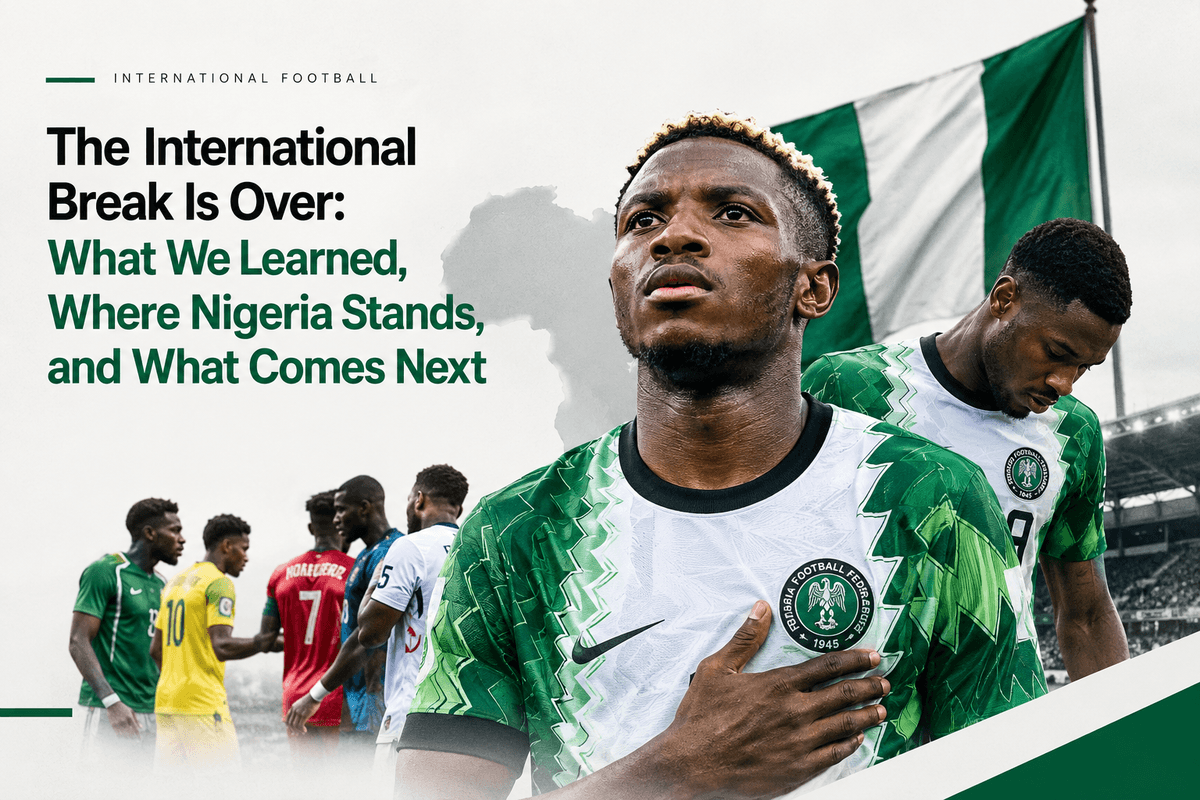
International Football Returns: The Stories, Surprises and Lessons From the Break
A new international chapter begins as the world champions set the standard, England respond, and Europe's traditional powers face early questions.
International football has a way of changing the rhythm of the football calendar.
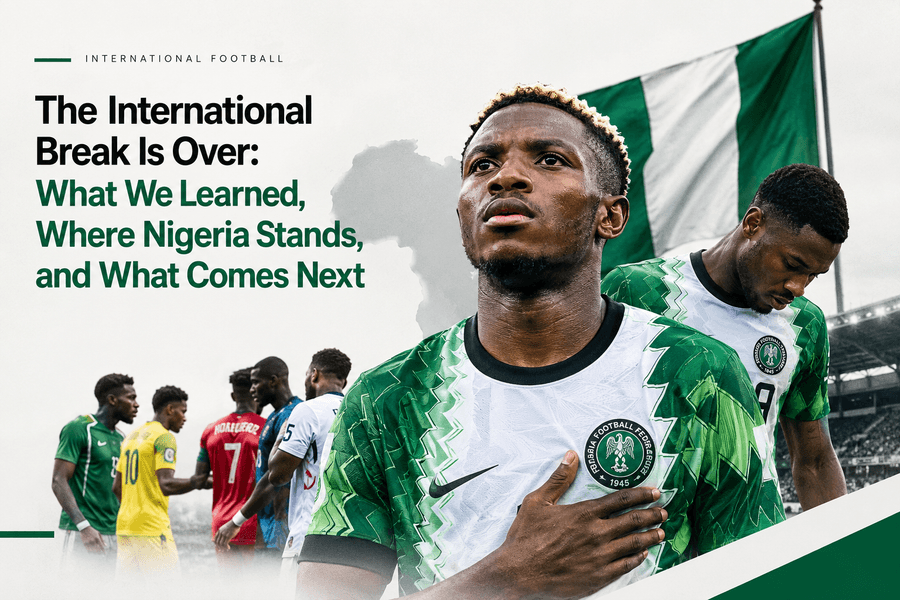
For weeks, attention belongs almost entirely to club football — packed stadiums, league tables, European nights and the weekly battle for points. Then the international window arrives, bringing a different kind of football with it.
The shirts change. The pressure changes. The atmosphere changes.
And suddenly, players who spend most of their careers competing against one another become teammates, representing something much bigger than their clubs.
The September 2026 international window has once again reminded us why international football remains such an important part of the game.
With the 2026 FIFA World Cup now behind us, European nations have begun a new cycle, and the UEFA Nations League has provided an immediate competitive stage. The 2026/27 Nations League began on September 24 and will continue through November, giving national teams meaningful matches rather than a calendar dominated by friendlies.
And within just two matchdays, there have already been enough stories to set the tone for what could become a fascinating international campaign.
Spain Continue to Set the Standard
If there was one team that immediately reminded everyone of its quality, it was Spain.
The newly crowned world champions entered the international window with enormous expectations. Rather than allowing the pressure of their World Cup success to slow them down, Spain began their Nations League campaign with two impressive victories.
First came a dramatic 3–2 victory over England at Wembley.
It was the kind of match that demonstrated why Spain remain one of the most technically gifted sides in international football. England twice found a way back into the contest, with Anthony Gordon and Harry Kane scoring after Spain had taken the lead through Lamine Yamal.
But Spain eventually found the decisive moment through Mikel Oyarzabal, completing a comeback that exposed the fine margins separating two elite teams.
Three days later, Spain produced another commanding performance, defeating Croatia 4–1.
Lamine Yamal was again at the centre of the story, scoring twice as Spain maintained their perfect start. The victory also extended Spain's unbeaten run to 40 matches.
There is something particularly impressive about the way Spain have continued to combine established experience with young talent.
Yamal represents the future, but Spain are not simply a team built around one young star. Their strength comes from the collective — possession, movement, technical quality and the ability to remain composed when matches become difficult.
The World Cup may have ended, but Spain have shown little indication that their era is ending with it.
England Respond Quickly
For England, the international break began with disappointment but ended with a response.
Losing 3–2 to Spain at Wembley was frustrating, particularly because England had taken a 2–1 lead before eventually surrendering the advantage.
Harry Kane also missed a penalty after slipping during his attempt, adding another dramatic moment to an already intense match.
But rather than allowing that defeat to dominate the entire window, England responded in Prague.
Thomas Tuchel's side defeated Czechia 2–0, with Anthony Gordon opening the scoring before Kane added the second.
The match changed considerably after Czechia were reduced to ten men following Pavel Šulc's red card, allowing England to control more of the contest.
The two performances tell an interesting story.
Against Spain, England were competitive but punished for important mistakes. Against Czechia, they were able to manage the match more effectively once circumstances moved in their favour.
That contrast is valuable for a team entering a new international cycle.
The goal for England is not simply to win matches against lower-ranked opponents. It is to develop the consistency required to compete with the best teams when the margin for error becomes extremely small.
The defeat to Spain provided one test.
The response against Czechia provided another.
Germany's Difficult Beginning
While Spain and England provided contrasting but encouraging stories, Germany's opening to the Nations League has been far more complicated.
Jürgen Klopp's first two competitive matches as Germany coach produced a 1–1 draw against the Netherlands followed by a 1–0 home defeat to Greece.
The defeat to Greece was particularly significant.
Germany controlled large portions of the match but struggled to turn possession into goals. Greece eventually found the winning goal through Dimitris Kourbelis in the 74th minute, securing Greece's first victory over Germany in eleven meetings.
For Klopp, it is an early reminder that rebuilding an international team is very different from managing a club side.
There is limited training time.
There is limited opportunity to correct mistakes.
And there is enormous expectation.
Germany still have plenty of time to respond, but the opening results demonstrate how quickly a new international project can become complicated.
Greece Provide One of the Break's Biggest Surprises
Greece, meanwhile, have emerged as one of the early stories of the competition.
After defeating Serbia 2–1 in their opening match, Greece followed that result by beating Germany 1–0.
That gives them six points from two matches and puts them at the top of their Nations League group at this early stage.
International football regularly produces moments like this.
A team can spend months preparing for a handful of matches, and suddenly one outstanding result changes the entire conversation around its campaign.
Greece have taken advantage of their opportunity.
The challenge now is maintaining that level when the attention increases and opponents begin preparing specifically for them.
Portugal Keep Moving
Portugal have also made a strong beginning.
They opened their campaign with a 1–0 victory over Wales before travelling to Norway and winning 2–1.
Gonçalo Ramos scored the decisive goal in Oslo, while João Félix was among the players involved in Portugal's attacking efforts. Cristiano Ronaldo was on the bench for that match, another reminder that Portugal are gradually developing beyond dependence on one generation of stars.
That transition will be one of the most interesting stories surrounding Portugal over the coming years.
The country still possesses extraordinary experience, but younger players are increasingly expected to carry more responsibility.
The question is no longer simply whether Portugal have talented players.
They clearly do.
The bigger question is how successfully different generations can be blended into one team.
France and Italy Offer Another Interesting Story
Elsewhere, France also began strongly.
They defeated Türkiye 1–0 and then Belgium 1–0, with Michael Olise scoring the decisive goal against Belgium.
Italy, meanwhile, experienced a more complicated opening.
After losing 2–0 to Belgium, they responded with a 4–1 victory over Türkiye.
That response demonstrates one of the most fascinating aspects of international football: there is very little time to dwell on disappointment.
A bad result can quickly become irrelevant if the next match produces a convincing response.
And the opposite is also true.
A strong opening can disappear just as quickly when a team fails to maintain its standards.
The Young Generation Is Taking Centre Stage
Perhaps the most exciting element of this international window is the continued emergence of younger players.
Lamine Yamal is the obvious example.
His performances against England and Croatia have placed him at the centre of Spain's early campaign, but he is part of a much wider movement across international football.
National teams are increasingly giving opportunities to players who might previously have been expected to wait several years before becoming central figures.
International football is changing.
The older generation still matters enormously, but the next generation is no longer waiting patiently in the background.
They are already asking for responsibility.
Why the Nations League Matters
There was a time when international breaks were often criticised for producing too many meaningless friendly matches.
The Nations League was introduced partly to address that problem.
Instead of simply arranging friendlies, European nations are placed into competitive groups where results have consequences for promotion, relegation and progression through the competition.
The current 2026/27 edition began on September 24 and features teams across four leagues, with the league phase scheduled to conclude in November.
That structure gives international managers something extremely valuable: competitive matches in which they can test ideas.
For developing teams, it provides opportunities to compete against stronger opposition.
For established nations, it creates pressure to perform.
And for supporters, it makes the international window feel like football rather than simply an interruption to club football.
What Comes Next?
The September window has only opened the story.
Spain have started perfectly.
England have responded to disappointment.
Greece have produced one of the biggest early surprises.
Portugal have maintained their momentum.
France have begun with two narrow victories.
Italy have shown their ability to respond.
And Germany have discovered that rebuilding a national team will require patience and immediate improvement.
The next rounds of matches will reveal whether these early patterns become genuine trends or simply the opening chapters of a much longer story.
That is one of the beautiful things about international football.
Two matches can change the mood.
One goal can change a group.
One young player can announce himself to the world.
And one unexpected victory can give an entire country something to believe in.
Final Thoughts
The international break is often described as an interruption to the football season.
Perhaps it is better understood as a change of perspective.
Club football is about belonging to a team for an entire season. International football is about coming together for a limited number of opportunities and representing an entire nation.
The players have different surroundings, different teammates and different tactical instructions.
Yet the objective remains the same: compete, improve and win.
The first international window of the post-World Cup era has already provided drama, surprises, emerging stars and important questions.
And if these opening matches are any indication, the road ahead could be just as compelling.
Football has moved into a new chapter.
The international game is writing its next story.