Writers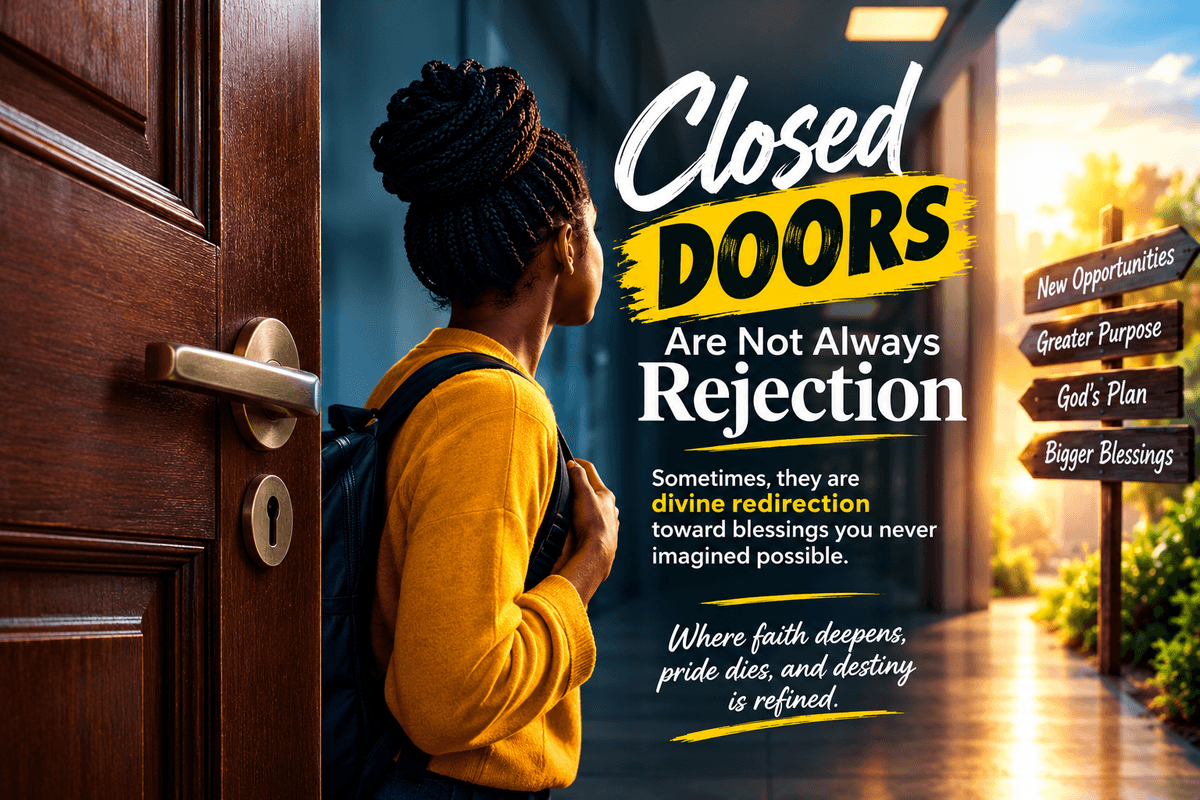
There is a distinct, heavy sound to a door swinging shut.
Sometimes it closes with the sharp crack of a sudden exit; other times, it glides to a quiet latch, so softly you hardly realize you have been left on the outside. We encounter these barriers everywhere the job offer that went to another candidate, the relationship that quietly dissolved, the community where we never quite found our footing.
A closed door is one of humanity’s most universal symbols of limitation; most people call it rejection.
Yet, the true difficulty of facing one is rarely the wood and iron of the barrier itself; it is the lingering gaze we cast upon it long after the lock has turned.
The Illusion of the Hallway
When a door closes against us, our instinct is to stand on the threshold and wait.
We knock, we reexamine our approach, or we simply press our forehead against the smooth grain, searching for a keyhole through which to glimpse what we are missing.
In these moments, we treat the closed door as a personal indictment a sign that we were inadequate, ill-prepared, or fundamentally misplaced.
We forget that a hallway is meant for transit, not habitation.
Lingering at a threshold keeps us suspended in an illusion, believing that the room beyond was the only place where our potential, affection, or ambition could thrive. We obsess over the specific shape of that single entrance, convinced that no other space could offer the same warmth or purpose.
The Discipline of Turning Around
The hardest part of encountering a closed door is deciding to turn your back on it.
Turning away requires a quiet act of courage, accepting that some spaces are not meant for us, regardless of how much effort we expended trying to reach them.
When you turn around, the perspective changes entirely.
You realize that the closed door was not an end, but a boundary.
It defines where one path stops and forces your eyes back onto the vast, open corridor stretching out in front of you. Rejection, in its unvarnished reality, is simply a redirection of energy a stern reminder that forcing entry into a room where you are not welcomed or aligned only diminishes your own value.
Reclaiming Your Own Space
Ultimately, closed doors teach us where our true agency lies.
We cannot control which locks turn against us, nor can we negotiate entry into spaces built for someone else's journey.
What we can control is the dignity with which we walk away.
Every turned key frees us from wasting time in rooms where we would have had to shrink or pretend in order to fit. The real work is not learning how to pick locks but learning how to build our own spaces rooms with wide doors, open windows, and floors sturdy enough to hold our full, unedited selves.
“Closed doors are not always rejection; sometimes, they are divine redirection toward blessings you never imagined possible." Where faith deepens, pride dies, and destiny is refined.