Writers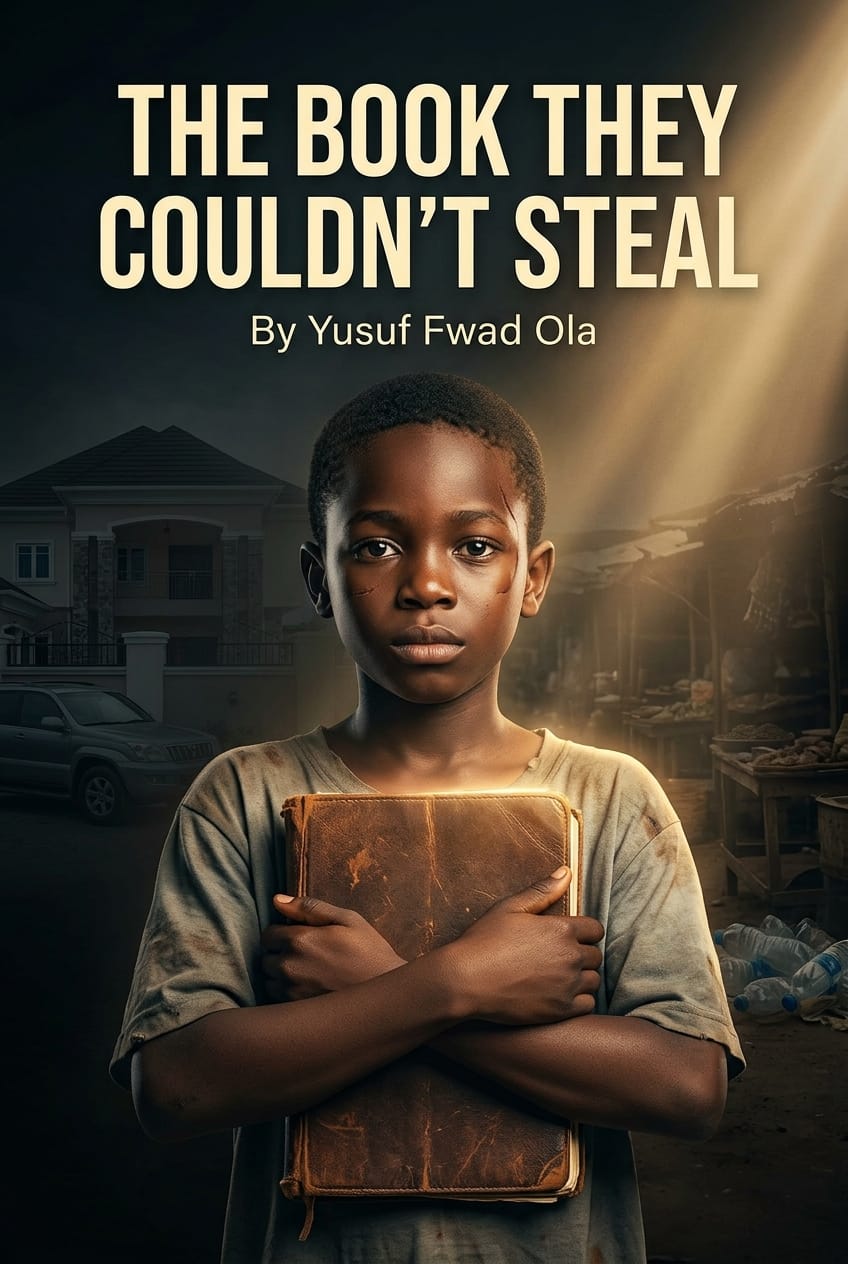
The first uncle arrived exactly ten days after the funeral. His name was Alhaji Musa, Suleiman's father's older brother, a man Suleiman had met perhaps four times in his life before that day. He came in a black SUV, dressed in an expensive agbada, with two other men Suleiman didn't recognize trailing behind him like shadows. He greeted Suleiman's mother with a warmth that felt, even to a nine-year-old, slightly too rehearsed.
"Sister," he said, using the polite term though they were not related by blood, "we need to discuss the business. There are things that must be sorted quickly, before confusion sets in."
Suleiman's mother, still deep in mourning, still waking up some mornings forgetting her husband was gone before the memory crashed back into her, agreed to sit and talk. She had no lawyer. She had no father or brothers of her own nearby to stand with her. She had only grief, and grief does not defend anyone in a room full of men who have already decided what they came to take.
By the end of that meeting, Alhaji Musa had convinced her to sign papers "temporarily transferring management" of Bello Motors into his hands, "for the sake of the business, until Suleiman is old enough to run it himself." He said it so smoothly, so reasonably, that Suleiman's mother — exhausted, isolated, and still in shock — signed without truly understanding what she was giving away.
It was the first of many signatures she would come to regret.
Within weeks, more relatives appeared. Cousins claiming their late father had personally promised them one of the buses. An aunty insisting she deserved the second house because she had "helped raise" Suleiman's father decades ago, a claim nobody could confirm or deny. A distant relative who produced a document — Suleiman's mother later suspected it was forged — claiming partial ownership of the family compound itself.
Each visitor came bearing prayers and sympathy on their lips and calculation in their eyes. Each one left with something.
Suleiman watched it all from doorways and staircases, too young to intervene, old enough to understand that something deeply wrong was happening to his family, piece by piece, in broad daylight, disguised as tradition and respect for elders.
"Why is Uncle Musa taking the buses, mum?" he asked one evening, after watching two of the family's vehicles driven out of the compound by men he'd never met.
His mother knelt in front of him, took his face in her hands, and for a moment said nothing at all. Then she said the only honest thing she could offer him. "Because he can, Suleiman. Because nobody is stopping him."
"Can't we stop him?"
"I have tried," she said quietly. "I don't have the money to fight them in court. I don't have anyone strong enough behind me. All I have is you."
It took less than a year. By the time Suleiman turned ten, the buses were gone, sold or absorbed into Alhaji Musa's own transport company. The three buildings had been divided among relatives who argued fiercely over which floor belonged to whom, then sold their portions one by one to strangers. The bank accounts, which Suleiman's father had always been careful to keep partly in his wife's name for safety, were slowly, quietly drained through a series of withdrawals his mother was too grief-stricken and too unfamiliar with the paperwork to properly track or challenge.
Eventually, even the family compound — the house Suleiman had been born in, the house where his father used to sit with him every night and write in his notebook — was sold. Suleiman and his mother were given two weeks to pack their belongings and leave.
Two weeks to dismantle nine years of a life Suleiman had believed was permanent.
As they packed, Suleiman watched his mother move through the rooms like a ghost, folding clothes, wrapping plates, occasionally stopping to press her palm flat against a wall as though she could hold onto the house through touch alone if nothing else worked. He didn't cry in front of her. He had learned already, faster than any nine-year-old should have to learn, that his mother needed him to be strong more than she needed him to be a child.
On their last night in the house, Suleiman crept quietly into his parents' old bedroom — technically no longer theirs, but still theirs for a few more hours — and found his father's leather notebook exactly where it had always sat, on the bedside table, untouched, unclaimed, ignored by every single relative who had passed through that room in the past year hunting for anything of value.
Nobody wanted a dead man's handwriting. They wanted his money and properties.
Suleiman picked up the notebook with both hands, the way one might pick up something fragile and sacred, and held it against his chest.
"They didn't take you," he whispered to it, in the dark, in a house that no longer belonged to him. "They forgot you existed."
He didn't yet know what was written inside those pages. He hadn't dared to open it, not once, since his father died — as though opening it might somehow make the loss more permanent than it already was.
But that night, holding the one object nobody had thought worth stealing, Suleiman made a silent decision that he would carry with him into every hard year that followed so that he would remember that was the only thing he inherited from his father.
Whatever happened next, wherever they ended up, however hungry or hopeless things became — he would never let this notebook out of his sight.
He had no idea, as he tucked it carefully into his bag, that this single decision would one day be the difference between a boy who disappeared into poverty forever, and a boy who found his way back out.