 Writers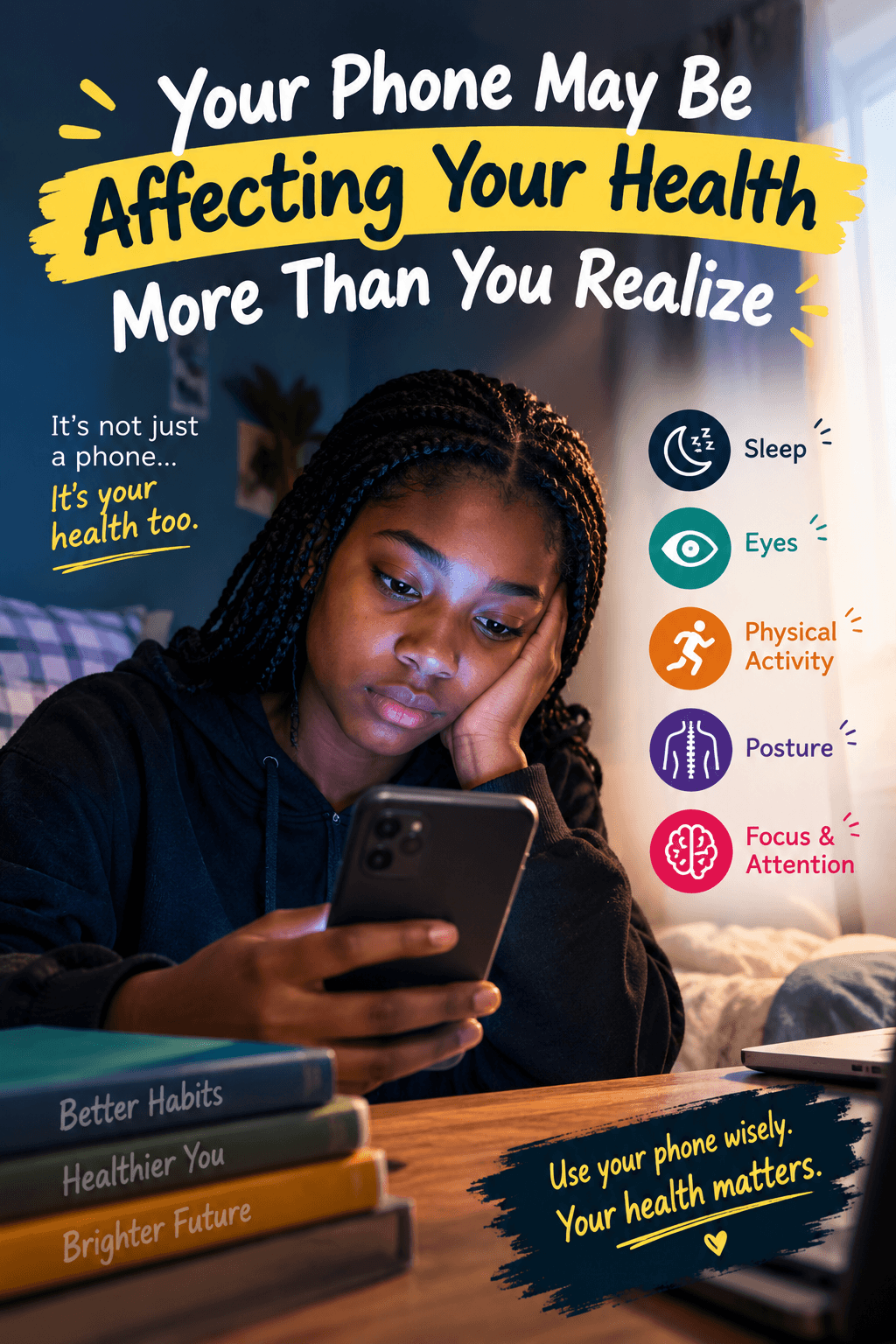
You check your phone when you wake up.
You check it while eating, studying, relaxing, travelling and even before sleeping. Sometimes, you reach for it without even thinking about why. A few minutes can easily become an hour, and an hour can quietly become several.
But have you ever stopped to ask yourself: What is all this screen time doing to my health?
Smartphones are not bad. They help us communicate, learn, find information, entertain ourselves and stay connected with people around the world. For students, phones can even be powerful educational tools. The problem begins when we spend so much time on them that other important parts of our lives are pushed aside.
One area that can be affected is sleep. Many people stay awake scrolling through social media, watching videos or chatting with friends when they should be preparing for bed. This can make it harder to relax and fall asleep. When poor sleep becomes a regular habit, you may wake up feeling tired and find it harder to concentrate at school.
Your eyes can also feel the effects of prolonged screen use. After staring at a phone for a long time, you may experience tired, dry or uncomfortable eyes. Taking regular breaks and looking away from the screen can help reduce this discomfort.
Then there is physical activity.
Imagine spending several hours sitting with your phone. During that same time, you could have been walking, playing football, exercising, dancing or simply moving around. Phones can make it easy to remain inactive for long periods. Our bodies need regular movement to stay healthy, strong and energetic.
Your posture matters too. How do you normally hold your phone? If you spend long periods bending your neck and looking downward, you may develop neck, shoulder or back discomfort. A small habit repeated every day can eventually become a bigger problem.
There is also something many people overlook: attention.
You sit down to study, and a notification appears. You check it for “just one minute.” Then another message arrives. Soon, you have spent fifteen minutes scrolling instead of studying. Constant notifications can interrupt concentration and make it harder to stay focused on important tasks.
So, should we stop using smartphones?
Not at all.
The answer is balance.
Take regular breaks from your screen. Move your body after sitting for a long time. Keep your phone away when you need to concentrate. Reduce unnecessary notifications. Give yourself time to relax without a screen, especially when preparing for sleep. Spend time talking with family and friends, reading, exercising or enjoying hobbies offline.
Your phone is a tool. It should serve you, not control you.
Technology can improve our lives, but only when we remain in control of how we use it.
The next time you unlock your phone for the tenth time in an hour, pause and ask yourself:
“Do I really need to check this, or have I simply become used to checking?”
Sometimes, protecting your health does not require a dramatic change.
Sometimes, it simply begins with putting the phone down.