Writers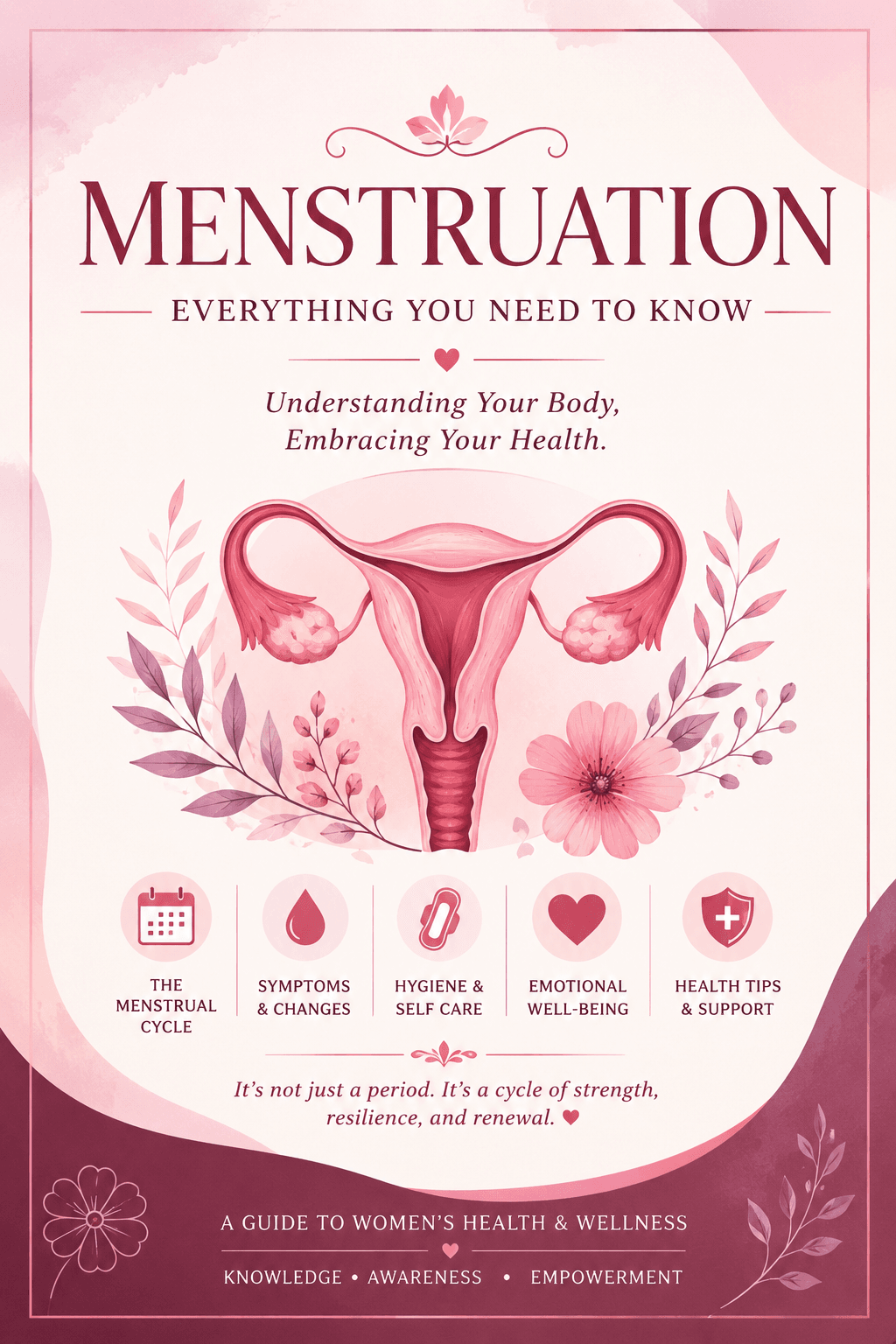
WHAT IS MENSTRUATION?
Menstruation, commonly called a period, is a normal part of the reproductive cycle. It happens when the lining inside the uterus is shed and leaves the body through the vagina as menstrual blood and tissue.
The first period is called menarche.
WHY DOES MENSTRUATION HAPPEN?
Each menstrual cycle, the body prepares for the possibility of pregnancy.
The uterus builds up a soft, blood-rich lining called the endometrium.
At the same time:
-An egg develops in an ovary.
-Hormones help prepare the body.
Usually, an egg is released during ovulation.
If pregnancy does not occur, hormone levels change.
The uterine lining is no longer needed.
The lining breaks down and leaves the body as menstrual flow.
Then the cycle begins again.
THE MENSTRUAL CYCLE
The menstrual cycle is counted from the first day of one period to the first day of the next period.
Although people often hear that a cycle is 28 days, normal cycles can vary, especially during the teenage years.
1. Menstrual phase
This is when the period occurs.
The uterine lining leaves the body through the vagina. The flow may last several days.
2. Follicular phase
After the period begins, hormones stimulate follicles in the ovaries. Usually, one egg becomes dominant and continues developing.
3. Ovulation
An ovary releases an egg.
Ovulation does not always happen on the same day of every cycle, especially if cycles are irregular.
4. Luteal phase
After ovulation, the body produces hormones that support the uterine lining. If pregnancy does not occur, hormone levels fall and the next period eventually begins.
WHAT CAUSES PERIODS?
The menstrual cycle is controlled mainly by hormones, including:
FSH (Follicle-Stimulating Hormone) – helps stimulate the development of ovarian follicles.
LH (Luteinizing Hormone) – helps trigger ovulation.
Oestrogen – helps build and regulate the uterine lining.
Progesterone – helps prepare and maintain the uterine lining after ovulation.
COMMON SYMPTOMS BEFORE OR DURING A PERIOD
Some people experience PMS (Premenstrual Syndrome) before their period.
Possible symptoms include:
Lower abdominal cramps
-Backache
-Headache
-Feeling tired
-Bloating
-Breast tenderness
-Acne or skin changes
-Changes in appetite
-Mood changes or irritability
The severity varies from person to person. Some people have very mild symptoms, while others experience more significant discomfort.
WHY DOES MENSTRUAL CRAMPS HAPPEN?
Menstrual cramps occur because the uterus contracts to help push out its lining.
Hormone-like substances called prostaglandins are involved in these contractions. Stronger contractions can sometimes cause more pain.
Gentle movement, rest, and a warm compress may help some people. If period pain is severe, suddenly worse than usual, or interferes with normal activities, it is a good idea to speak with a qualified healthcare professional.
HOW LONG DOES IT LAST?
The length and amount of menstrual bleeding vary.
A period often lasts around 2–7 days, though individual patterns can differ. It is useful to track:
-The first day of bleeding
-How many days it lasts
-Whether the flow is light, moderate, or heavy
-Pain or other symptoms
Tracking helps you understand your usual pattern and notice major changes.
MENSTRUAL HYGIENE.
During menstruation, people may use products such as:
-Sanitary pads
-Tampons
-Menstrual cups
-Period underwear
Choose a product that is comfortable and suitable for you, and follow the product's instructions for changing, cleaning, or using it safely.
Basic hygiene includes washing your hands before and after changing menstrual products and keeping the genital area clean with water and mild, non-irritating products if needed.
CAN PERIODS BE IRREGULAR?
Yes. Especially during the first few years after periods begin, cycles may be irregular because the hormonal system is still developing.
Stress, major changes in routine, intense physical activity, and some health conditions can also affect menstrual patterns.
If your periods are consistently very irregular, suddenly change significantly, or you have concerns, speak with a healthcare professional.
WHEN SHOULD SOMEONE SEEK MEDICAL ADVICE?
Consider talking with a doctor or other qualified healthcare professional if there is:
-Extremely heavy bleeding
-Severe pain that prevents normal daily activities
-A major or unexplained change in your usual menstrual pattern
-Periods stopping unexpectedly
Symptoms that cause significant concern.
IN SHORT
Menstruation is the monthly shedding of the uterine lining when pregnancy does not occur. It is controlled by hormones and is one part of the larger menstrual cycle involving the ovaries, uterus, and reproductive hormones.