 Writers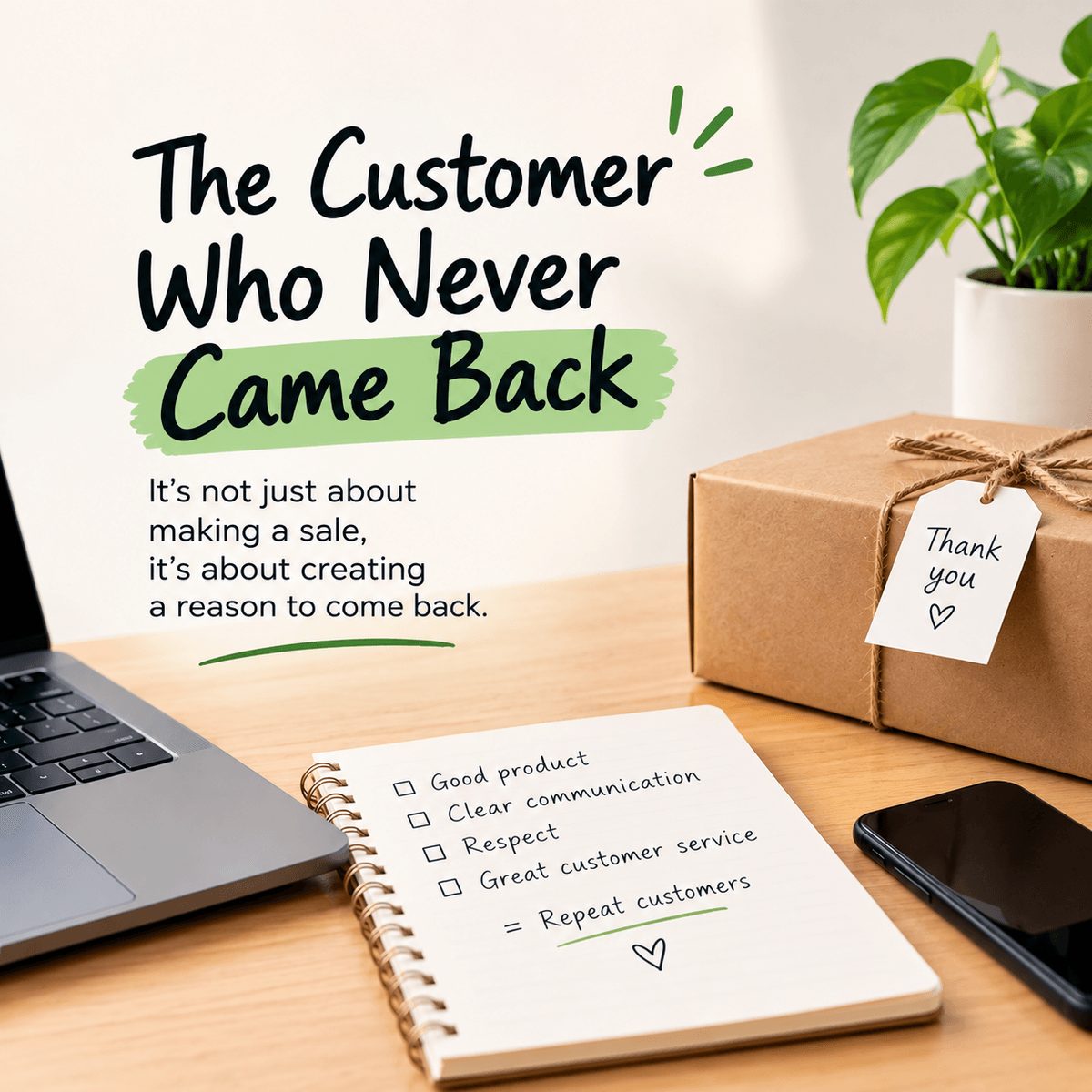
The Customer Who Never Came Back
A customer bought from you once.
They liked the product.
They paid.
You thanked them.
Order delivered.
Done.
Or so you thought.
A few weeks later, you notice something.
They haven't returned.
You check your WhatsApp status and see them viewing your posts. They even reacted to one of your pictures.
But they haven't bought anything again.
So you begin to wonder:
“What happened?”
Maybe they found another vendor.
Maybe your price was too high.
Maybe they didn't need the product anymore.
Or maybe, just maybe, the experience wasn't good enough for them to come back.
Selling is not the end of the transaction
One thing I have noticed about small businesses is that we sometimes celebrate the sale too quickly.
Someone sends:
“How much?”
You reply.
They say:
“Okay, I want it.”
Suddenly, everybody is happy.
Payment received.
Screenshot saved.
Order packaged.
Picture posted.
But the real test of a business doesn't always happen when someone buys for the first time.
Sometimes, it happens afterwards.
Did the product arrive as promised?
Was it what the customer expected?
Did you communicate when there was a delay?
Did you treat the person with respect?
Did you respond properly when they had a complaint?
These things matter because customers don't only remember what they bought.
They remember how buying from you felt.
Recent discussions about Nigerian businesses have also highlighted how trust, relationships, quality and customer service influence purchasing and repeat business.
Imagine this
You order something online.
The vendor is very sweet before payment.
“Thank you so much, dear.”
“God bless you.”
“Your order will be delivered today.”
Then you pay.
Suddenly, everything changes.
Your messages are ignored.
You have to ask three times about your order.
The delivery is late.
Nobody explains anything.
When you finally receive it, the product isn't quite what you expected.
Would you buy from that person again?
Probably not.
And the interesting thing is that you may never even tell the vendor why.
You simply stop buying.
That is why a business owner cannot always measure customer dissatisfaction by the number of complaints received.
Sometimes, the complaint is silence.
A customer who stops ordering may never send a long message explaining why.
They simply move on.
Your customer is also a person
This sounds obvious, but it is easy to forget when business becomes stressful.
Behind every order is a person.
Someone who worked for the money.
Someone who trusted you enough to send it.
Someone who may have recommended you to a friend.
That doesn't mean the customer is always right or that a business owner must accept unreasonable behaviour.
It simply means respect should remain part of the transaction.
Even when something goes wrong.
Especially when something goes wrong.
If an order will be delayed, communicate.
If you made a mistake, acknowledge it.
If something is unavailable, don't pretend it is.
If you cannot meet a customer's deadline, say so before taking the order.
Honesty may cost you one sale today, but dishonesty can cost you trust for much longer.
And customer service doesn't have to be expensive
Sometimes we think good customer service means giving customers gifts, discounts and free products.
Not necessarily.
Sometimes it is simply answering messages properly.
Calling someone by their name.
Giving clear information.
Packaging an order carefully.
Keeping your promise.
Checking that the customer received the item.
Saying “Thank you for trusting my business.”
Those things don't require a huge budget.
They require attention.
And in a market where recommendations and personal relationships can strongly influence buying decisions, that attention can matter.
Ask yourself one uncomfortable question
If every customer who bought from you last month disappeared today, would you know why?
Maybe your products are good.
Maybe your prices are fair.
Maybe your branding looks beautiful.
But business is not only about getting people to buy.
It is also about giving them enough reason to trust you again.
Because the best customer is not necessarily the person who buys the most expensive item.
Sometimes, it is the person who buys once, has a good experience, comes back months later, and tells someone else:
“I bought from them before. They're good.”
That sentence can be more powerful than a hundred advertisements.
So the next time you make a sale, don't just celebrate the money that entered your account.
Think about the person behind it.
What experience did you give them?
Because the goal shouldn't only be:
“I got a customer.”
It should be:
“I gave them a reason to come back.”
